It seems impossible to believe that the U.S. has a need for an annual Banned Books Week, but library activist Judith Krug was contacted by the Association of American Publishers in 1982 about rising concerns over book-banning. Krug then contacted the American Library Association (ALA) Intellectual Freedom Committee. Within 6 weeks, the first Banned Books Week was launched. This year’s week is October 1-7 with the theme, “Let Freedom Read!”
Concern over which books are “OK” for students’ knowledge and educators’ curriculum choices have escalated since the 1980’s. Furthermore, in 2011 the American Association of School Librarians named a Banned Websites Awareness Day, as school librarians reported that their schools were utilizing filtering software in school libraries. For speaking out, some librarian and teacher jobs are on the chopping block.
In 2022 ALA documented skyrocketing cases of banished books – 1,269! This nearly doubles book challenges reported in 2021 – 729. PEN America (Poets/Essayists/Novelists) lists even greater numbers. Why were books censored? Most were written by or about two discriminated groups of folks – the LGBTQ+ community and persons of color, plus a few other reasons.
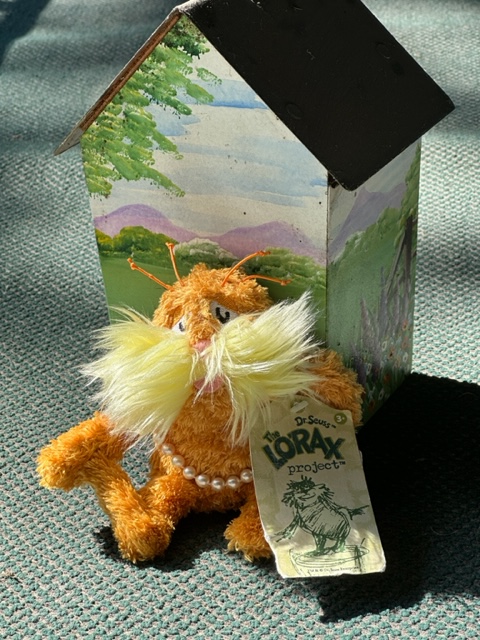
Charlotte’s Web by E.B. White was deemed unacceptable by a parent group in Kansas. They objected to talking-animal main characters and the theme of death, demanding book- banning in their school library. The Lorax by Dr. Suess was banned in a Laytonville, California Public School due to parents’ concerns that teachers were “brainwashing” children. This time a death fear related to dead trees — might students initiate an uprising against logging in the state?
ALA President Lessa Kanani’opua Pelayo-Lozada posts this response to book banning: “Closing our eyes to the reality portrayed in these stories will not make life’s challenges disappear. Books give us courage and help us understand each other.”
As a psychologist, I am appalled at the banning of books. Who decides for the rest of a community or country that certain books should be censored from youth? I agree that there may be certain ages that may be better choices for the introduction of certain books, but I do not think we should take books off the shelves of ANY school or public library. Education about “difference,” including death, is necessary for an informed education. When we do not have open discussions about differences, we operate out of a fixed (and closed) mindset. Book banning stifles our democracy.
As an author, I am appalled at the banning of books. It takes much time and dedication to write a book.
How long does it take a pearl to form? Estimates are that a freshwater pearl may develop within 6 months or up to 6 years to reach the average finish line. Many books take longer. To have one’s book banished at a one-time school board meeting by a few vocal parents is frightening.
Pearls of Peace (PoP) Quiz
225. Have you engaged in discussions over banned books?
226. What actions might you take today to support freedom of speech?




 Pearls of Peace: A Family Psychologist’s Circle-of-Life Blog