Legacy Labor Pains

Honoring workers on Labor Day became a national holiday in the U.S. on June 29, 1894, but an initial celebration occurred in New York City in 1882. Municipal ordinances followed to create local observances. Oregon became the first state to pass a law for the extra holiday, followed by Colorado, Massachusetts, New Jersey, New York, Connecticut, Nebraska, and Pennsylvania. Twenty-four states installed Labor Day as a holiday before President Grover Cleveland made the day official for the country.

The labor-pain backstory is what is compelling. It includes President Cleveland instructing federal troops to intervene in Chicago to quell strikes by workers. Low wages and 16-hour workdays at the Pullman Palace Car Company was the impetus for striking workers. American Railway Union members joined the strike, shutting down railroads and the supply chain crisscrossing the Midwest.

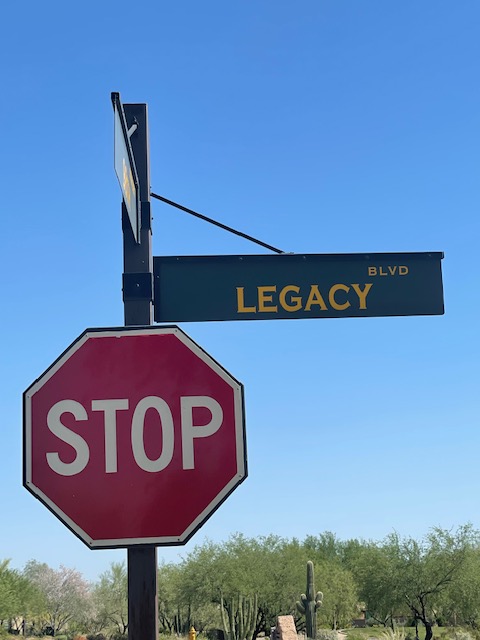
Besides divisions between employers and workers, I did not realize that there was a contested winner (founder) of the Labor Day holiday. Two workers laid claim that the holiday was their legacy–Peter McGuire, a secretary of the Brotherhood of Carpenters and Joiners, and Matthew Maguire, who later became a secretary of the International Association of Machinists. Both men attended the first parade in New York City, but in creating the federal law, President Cleveland declared that “…the souvenir pen should go to Alderman Matthew Maguire…the undisputed author of Labor Day as a holiday.”

Does this stormy tale bring to your mind the multiple divisions we are experiencing in the U.S. currently? How are we to understand such contentious dissension in the land?  

Writer and playwright James Baldwin had an explanation involving responsibility: “History is not the past, it is the present. We carry our history with us. We are our history.”  Baldwin shouldered his legacy of an unequal history while working tirelessly to break through painful chains of racism. World-class tennis player Serena Williams has hauled history with her as she worked through breakpoints in racism within her courts of influence. The operative word here is work. 

It takes work to create positive changes. The 1938 Fair Labor Standards Act initiated a course correction to limit child labor, set a minimum wage, specify a shorter workweek, and institute overtime pay for beleaguered workers. However, labor pains are still with us. Let’s STOP taking advantage of workers. We depend on workers. Let’s raise today’s minimum-wage standard–last increased in 2009 to $7.25 per hour. Families deserve opportunities to pass on a better legacy to their children.

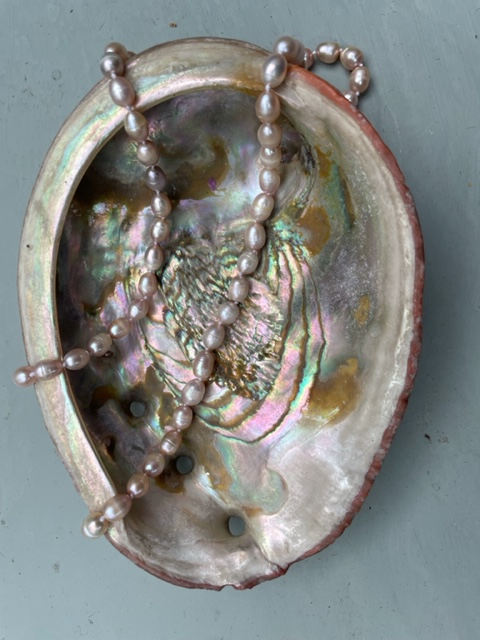
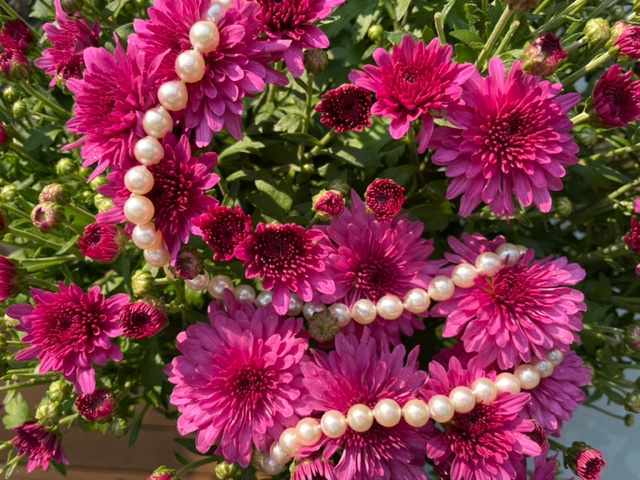
Consider, once again, how the pearl forms amidst an irritant in the parent oyster or mussel shell (see Pearls and Trauma, 7-21-21). Strikes are irritating, but they may be what works to deliver to workers the remuneration to provide a decent lifestyle. Hold onto to the notion that we are creating history every day. What legacy will we leave?

Pearls of Peace (PoP) Quiz:

113. What inequity draws your attention these days?

114. Can you think of one action to take on this Labor Day to honor workers?               

De-stress with Fractal Patterns

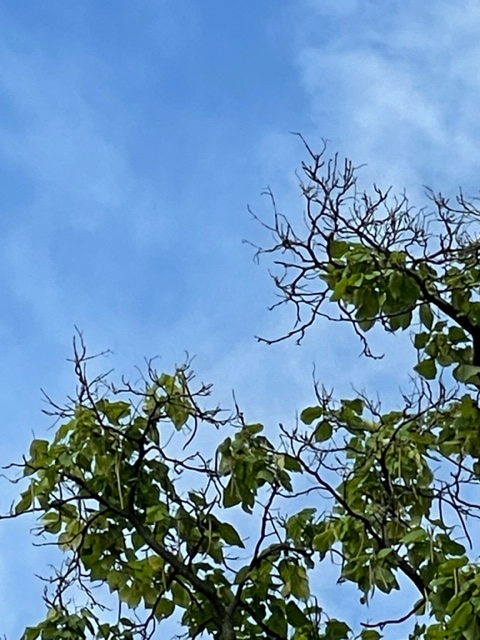
Catalpa “paws”

Is the Universe a fractal? No, but hundreds of billions of stars group together to form galaxies and are considered “fractal-like.” Do you understand this? I did not, so of course, I read a bit. Polish-French-American mathematician Benoit Mandelbrot is credited with putting forth Fractal Geometry where a mathematical formula frames “self-similar” repetitions in “…the geometry of deterministic chaos.” In other words, there is an order behind the scenes! Patterns repeat themselves at smaller and smaller scales in meandering river tributaries, mountain ranges and galaxies.  

A closer-to-the-backyard (and more understandable) description of fractals is to look at irregularly-shaped tree branches where any small twig resembles the whole tree. This notion that the basic form of the whole repeats itself over and over was initially offered by German mathematician Felix Hausdorff in 1918, but Mandelbrot coined the term “fractal” (from Latin fract, meaning “broken”). Stay with me, even if you find fractal geometry obtuse. This story, like all stories, has roots.  

Stay with the tree example. Trees are fractal from their roots to their leaves. Investigate the veins of tree leaves. Leaf midline veins look like a tree trunk with its many branches. Tree branches (from Latin branca, meaning “paw”) have connections. In shaking one branch, a cascading of shaking in other branches follows. Are you thinking about human connections now? The orchestration in your brain-branching of a neuron’s axons and dendrites is a connection-maker.

Here is what you really need to know: research studies (using fMRI) show that a person just looking at fractal patterns in nature can reduce their stress levels up to 60%. Architects discovered that patients recovered more quickly from surgery when their hospital rooms had windows that looked out upon nature. Nature-watching can produce a physiological resonance that occurs within the eye–which in turn, increases alpha brain waves in the brain–resulting in relaxation and a sense of wellbeing. Observing fractals may combat mental fatigue and even help with anger management.

Fractal self-similar patterns in nature are everywhere–in lightning, hurricanes, snowflakes, pinecones, flowers, and your own connection-maker tubular branches (bronchioles) in your lungs. Additionally, without being conscious of the self-similarity idea, we overlook how much art and music have fractal patterns. Some individuals relax by drawing or coloring mandalas with intricate, repeating fractal patterns. Georgia O’Keefe’s nature paintings feature fractals. Composers have repeating themes in their symphonies. Create fractal art! Hum fractal music!

Our personalities are a kaleidoscope of fractal patterns. All of us have changing melodies and rhythms that interact with other people’s fractal organizations. We stress out with some individuals and de-stress with others. Hmm…do trees have such strong preferences for certain other trees and want to turn their leafy backs to other trees?                                                      

Pearls of Peace (PoP) Quiz:

111. What determines your stress level when you encounter another person?

112. How do you spend time in nature?

(If you physically cannot be face-to-face with trees and other nature buddies, there are apps that can replicate naturally-occurring fractals). 

Grief Hours

On a particular day, the very hungry caterpillar stops eating. Do Monarch caterpillars grieve when they lose milkweed picnics and curl their many toes into chrysalis-stage? According to research, moths can remember what they learned when they were caterpillars! Could this suggest that these critters have hours of grief for the past?

When it is time to evolve, mature Monarch caterpillars immigrate for protection from predators like birds and spiders. They relocate as far as 30 feet away from milkweed homes.

Hanging upside down on a twig, the caterpillar releases enzymes to digest itself inside its chrysalis (insect pupa). Organized sets of cells (or imaginal discs) somehow survive digestive processing to take the shape of adult body parts as wings, antennae, eyes and genitals.

Becoming any kind of adult is challenging. Anything that touches a soft chrysalis may damage the interior butterfly. Less than 10% of Monarchs survive in the wild because of predation and natural causes of death. For the land of the free and home out-of-doors brave ones, meditating in cocooning lasts 8-15 days before a Monarch chrysalis becomes transparent, disconnects from its gossamer raincoat, and has its spectacular Reveal Party.

Have you noticed that time pauses for both exquisite beauty as well as for intense grieving? We might say about butterfly transformations, borrowing from writer John Steinbeck’s Cannery Row, “It is the hour of pearl—the interval between day and night when time stops and examines itself.”

In grieving, one examines their life that suddenly feels upside-down and precarious. Grieving hours are not “over” in 6 months or even a few years after a loved one has died. In fact, grief hours are not possible to record in regular timeframes. Moments of normal sadness involve emotional weight-lifting. Germanic origins for “sad” (satt) include “weighty or dense” meanings. The Old English origins (sæd or sated) suggest being “overfilled.” Actually, we hold onto brain connections in grieving.    

One of the best descriptions I’ve read about grieving is by psychologist/grief researcher Mary-Frances O’Connor (The Surprising Science of How We Learn from Love and Loss). “Grieving people often describe having lost a part of themselves, as if they have a phantom limb…once believed to be an entirely psychological phenomenon, studies have proven that…[phantom] sensations are actually nerve activity…the brain map has not yet rewired itself…so the sensations persist and are often painful…we might think it is simply a metaphor to say that we have lost a part of ourselves when a loved one dies, but…representations of our loved ones are coded in our neurons.”

Whether missing a particular time in your life and/or a loved one, grieving is both a disconnection from regular time and a brain connection. Grief hours will change in intensity, but poignant memories remain. Perhaps Monarch butterflies still have a taste for milkweed.

Pearls of Peace (PoP) Quiz:

109. How do you honor special memories from a particular time?

110. What evolving might you consider in your current life stage? (See “Grief Pearls,” 6-6-22.)  

Aging Pearls

Spanish philosopher and poet Moses ibn Ezra (1060-1139) captures the essence of ageless wisdom: “Dive into the sea of thought and find there pearls beyond price.”  Our thoughts may be gems or junk. What are your thoughts about aging? What if re-feathering your nest could change how you think about aging?

Designer Ingrid Fetell Lee (Joyful: The Surprising Power of Ordinary Things to Create Extraordinary Happiness) delivered a TED talk where the most discussed aspect of her performance later was her overnight stay in a candy-colored and stacked-architectural-form apartment with cube-sphere-and-tube spaces which led to her feeling energetic and well, a bit ageless. An apartment complex in a Tokyo suburb, Reversible Destiny Loft, surprises the senses. A circular room with a kitchen at the center–poles, ladders and electrical outlets dangling from above–delights people.  

There are directions for your stay in this curiosity paradise, such as: 

1. “As you step into this unit fully believe you are walking into your own immune system.” 5. “Go into this unit as someone who is at the same time both 2 or 3 years old and 100 years old.”                            

Designed by artist Arakawa and poet Madeleline Gins, the team took inspiration for their radical design from Helen Keller! They viewed Keller as an individual who exuded “reversible destiny.” They dedicated their innovated-living spaces to Keller’s memory. They believed that creative design could reverse aging!

Initially this may sound like junk thinking, but I believe it is gem thinking! Muscles atrophy without exercise and cognition takes a nosedive without stimulation. The intrepid artist/poet duo took a long look at the multiple beiges in our interiors, declaring such spaces contribute to a withering mind!  

The center circle of a Reversible Destiny Loft sports a floor of “an uneven compacted material with vertical poles to assist moving within the space.” It serves as a foot massage. Hmm…I just twisted my foot when I slipped sideways on a twig on uneven ground. But this is unusual behavior for me, so I’m still game on to try an overnight stay like Lee. Are you with me?    

Guests and residents of these stimulating spaces discover serendipity. It just sounds like fun! Fun makes you feel young at any age. OK, maybe we do not have to stay overnight in Reversible Destiny Lofts. What about adding more color, art, plants, and additional sensory stimulation to your home? Wear colorful clothes!

Arakawa admonishes, “People, particularly old people, shouldn’t relax and sit back to help them decline. They should be in an environment that stimulates their senses and invigorates their lives.” Afterall, when lab mice live in enriched environments with lots of physical movement, there are positive neurological changes in their brains that can relate to dementia.

It is National Wellness Month! Age is a number. Put on some pearl thoughts.

Pearls of Peace (PoP) Quiz:

107. What does your home offer that stimulates your senses?

108. Is your “feeling” age different from your biological age?  

Weedy Pearls

Joe Pye was a First Nations medicine man who used “wild” weeds (i.e., native plants) to cure typhoid fever. His tonic is reputed to have stopped an epidemic in Colonial Massachusetts. In his honor, a local plant was endowed with his name.

Joe Pye Weed is a beautiful wildflower that produces clumps of blooms and reaches 7+feet tall. Joe’s mauve flowers have a vanilla scent that attracts butterflies and other pollinators. Adaptable to many soil conditions, Joe Pye Weed thrives in full sun or partial shade. From my experience with Joe, it also is a native plant that thrives through-thick-or-thin rain/no rain weather. I planted one Joe and now have a forest of Joe’s progenies, even after giving away many baby Joe’s to foster homes each summer. 

Some children are given away to foster homes — not usually because there are too many of them — but because of trauma in their biological homes. Twice placed in foster homes, 8-year-old Chris Gardner did not know that his mother was convicted of trying to kill his father by burning down the house. And yet, young Gardner first met his three maternal uncles at this time and found positive male role models. Through-thick-and-thin trial/error jobs, Gardener became a successful stockbroker and philanthropist.   

Gardner coined this gem: “The world is your oyster. It’s up to you to find the pearls.” Also an author and motivational speaker, Gardner turned his autobiography covering his rags-to-riches story into a movie, “The Pursuit of Happyness” (yes, his own happyness brand)! Gardener’s wild childhood was beset with alcoholism, domestic abuse, child abuse and other family trauma. The story of his resilience through-thick-and-thin persistence to become a caring philanthropist is a model of true grit. 

Passion plus persistence (the definition of grit) relates to having meaning in life. Gardner had a knack for finding meaning through the many mentors he gathered in his life. Consider what makes one difference between a child falling into unhealthy territory versus thriving: the difference between illness and wellness is that illness begins with “I” and wellness starts with “we.” Healthy self-territory includes other people!   

Sonja Lyubomirsky, researcher of post-traumatic growth, explains how people can bounce back after experiencing trauma. Along with colleagues she offered a pie chart of happiness: 50% biology/genetics, 10% life circumstances, and 40% intentional activity. Today she admits that this was a gross oversimplification. You already were skeptical, I’m guessing. I know that I was skeptical. Percentages regarding people are tricky estimates.

There is a takeaway though — early life circumstances do not define you 100% and your intentional activities matter a lot! Individuals with passion and persistence traipse through weedy territory and find “cures.” People often become more mature post-trauma. There are pearls among the weeds.

Pearls of Peace (PoP) Quiz:

105. What post-traumatic growth have you experienced in your life?

106. How can you set an intention today to create your brand of happyness?

Ritual Pearls

“The itsy-bitsy spider climbed up the waterspout. Down came the rain and washed the spider out. Out came the sun and dried up all the rain and the itsy-bitsy spider climbed up the spout AGAIN.”

How many times do spiders have to begin over (and over AGAIN) when some trespasser or storm disrupts their carefully constructed home? We have this in common with spiders – transitioning!

Transitions are everywhere these days: from job changes to retirement, from belated weddings post-pandemic to divorces, from bodily repairs to death of loved ones. The pandemic stopped many in their web-building. It may be time to address some transition in your life. The pandemic is a transitioning coach.

Instead of focusing on isolation, some individuals savor working from home. Extra time and expense saved from a non-commute worklife seem too good to be true. Zoom created job flexibility. Many retirees learned how to zoom and find much to like about safe possibilities. Zoom weddings and divorces are not so desirable, while zooming doctor appointments and memorial services have both pluses and minuses.

Author and host of two prime-time series on PBS, Bruce Feiler has a new book: Life Is in the Transitions: Mastering Change at Any Age. Feilercollected 225 life stories from people of all ages and backgrounds from all 50 states. He copied Danish philosopher Soren Kierkegaard in engaging strangers in what the loner philosopher once referred to as “people baths.” Here are a few tidbits Feiler discovered in his 3-year-long “people bathing:”

  • We go through transitions more frequently today.
  • Today we face an epidemic of disruptions or lifequakes.
  • Our ability to handle lifequakes has not increased to keep up with so many changes.
  • 87% of lifequakes were personal; 13% were collective.
  • 43% of people’s transitions were voluntary (originated by the individuals), while 57% were involuntary (as in being fired at work or divorced).
  • 75% admitted that their biggest lifequake necessitated a re-write of their life story.
  • People enter a transition before their mind even realizes it.
  • Even if you do not mark a transition in some way, your body may remember.
  • Rituals or ceremonies can add meaning in transitions as they restore belonging and purpose.

Although we seldom think about it this way, minister Robert Fulghum points out that our lives are “endless ritual” (From Beginning to End: The Rituals of Our Lives). While graduations, weddings, and memorial services are common rituals, commemoration rituals are incredibly diverse. They may be public or private, spontaneous or arranged.

Are you re-writing your life story after any lifequake you may have in your life? People have a need to name their many transitions and find rituals to commemorate them.

Are there spider considerations of where to recreate the next web? Is it time to downsize? Does the spider take time for any ritual before beginning the new web?

 Pearls of Peace (PoP) Quiz:

103. What transitions have you experienced in pandemic times?

104. How might you create unique rituals for your transitions?  

Flourishing Pearls

What does flourishing mean to you? Is there an age span for flourishing? I do not put age limits on an individual’s thriving, but aspects of our culture have a bias against an individual’s abilities as they age.

Actor Cary Grant was sent a telegraph from Encyclopedia Britan­nica (oldie, but goodie territory). The telegram read, “How old Cary Grant?”  Whether he kept a straight face or not, Grant telegraphed back, “Old Cary Grant fine. How you?” It is a commentary on our culture’s views of aging that in his final movie-making years, Grant said that he was reviewed for how old he looked instead of how great or second-rate his movie was for public consumption.

All of us want to “rate” or flourish in some fashion. I feel privileged to have “rated” in this year’s Illinois Woman’s Press Association Professional Communications Contest for a blog entry. “Pearls of Strength” (12-13-21) won First Place in Web & Social Media: Blog, Nonprofit (government or educational category). Thankfully, no one asked me, “How old?”  

Flourishing is in the eye of the beholder and aging qualities, to a certain extent, also are variable. Consider the attitude of author Sarah Delany (On My Own at 107): “…friends that are 20, 30 years younger come in here and tell me they’re worried about me, but to tell you the truth, I think I look better than they do. They come huffing and puffing up the steps and I’m thinking, ‘I hope you don’t die in my parlor!’ Isn’t that naughty?”  

Another cultural misstep has been to look at flourishing predominantly within the limited lens of the mainstream population. Sociologist Deborah Carr intends to enlarge research findings to include looking into people who flourish in adversity. Through an ambitious grant application to the Templeton World Charity Foundation, Boston University’s Carr nabbed one of 11 grants to study flourishing. An interdisciplinary team currently is studying flourishing among school drop-outs embroiled in the juvenile justice system, inmates serving long-term sentences, and newly-arrived refugees from Somalia and Afghanistan.

Carr urges that we develop an “overarching theory of flourishing in adversity.” The goal is too good to be true: create a future that promotes possibilities for people living in categories of adversity! Every person deserves to feel a sense of belonging and safety; everyone needs opportunities for flourishing.                                                                                                                                                 

Reread my “Pearls of Strength: We are missing out if we do not care about the personal best from each person. We need each person’s flow in the flock…Is your flow tank full? It is a possibility that we could be a people of murmuration, flowing together to resolve the weighty issues of life.

What is one of your stories of flourishing in your life this year? If you cannot think of one, start something new today! Flow and flourish!

Pearls of Peace (PoP) Quiz:

101. How might you find more ways to flourish in the coming months?

102. What might you do to support flourishing in other individuals?   

Pearls and Perils of Peace

Blog Birthday! July 21st  marks the one-year birthday of my weekly Pearls of Peace blog! I am reminded of the double-faced Roman god, Janus, often thought to represent beginnings/endings.

The month of January is a namesake of Janus and represents a beginning. Romans held a festival on January 9th with offerings to Janus, but the beginning of a day and the beginning of a new month also were considered sacred. I like the idea of reflecting on beginnings. Each new day holds a potential for personal peace. Each beginning month offers new possibilities for beginning peaceful initiatives.

I was not named Janis for this Roman god (or king by some research), however I am intrigued by the symbolism that Janus represents. With double faces, one looking to the future and the other looking to the past, Janus represents transitions, time passages, doorways and dichotomies. Several possible dualities of Janus include beginning/end, youth/adulthood, birth/death, barbarism/civilization, and war/peace.                                       

Many jani, or ceremonial gates, were used for a departing Roman army. One particular gate was a shrine named Janus Geminus or “Twin Janus.” Shrine doors were left open when Rome was involved in war; closed doors were a sign of peacetime. According to one Roman historian, the Twin Janus gates were closed only twice between the 7th century BC and 1st century BC. For example, the doors to the Janus shrine were closed in 235 BC and Janus (briefly) was considered the “guardian” of peace. Apparently, Roman soldiers did not receive much leave time.

It is uncanny that in 2000+ years we have not learned how to problem-solve our differences across cultures and still have an “open door” to one war after another today. Peace always seems in peril. Is war easy compared to peace?

A lot has happened since last July — another month named for a Roman superstar, Julius Caesar, in 44 BC. Originally the month was named Quintilis, standing for the 5th month in the Roman calendar. Quintilis was renamed July as it was Julius’ birth month! Beginnings of people’s lives and their choices in evolving events hold great significance for many generations.

A lot has not happened since last July. We have a world in peril, embroiled in dichotomies. Who could have guessed the number of raw events in our country since last July? Who predicted a war-ravaged Ukraine? Yet, here we are. Peaceful problem-solving is still a possibility.

Emily Dickinson’s phrase, “the mob within the heart,” captures the notion of the many dichotomies we each carry in our minds. Yet, we have this new day for beginnings. How will you open or close gates in your mind today?  

If you have been reading these weekly Monday AM blogs, you already know that I have more questions than answers.

Pearls of Peace (PoP) Quiz:

100. Just one final question today: What has this blog meant — or not meant — to you?  

A Motto for Peace

I was traveling in British Columbia with my family on July 4th. There were no fireworks, but I did see a magnificent bald eagle. Canadian news showed violent fire working in Highland Park, IL, as gunfire showered down from a rooftop shooter onto a crowd of happy parade-watchers gathered to celebrate U.S. Independence Day.

There is something terribly wrong in America when war rifles are unleashed upon innocent folks who are watching a parade, studying in elementary, high school or college, attending their church or synagogue, buying groceries or shopping in a mall, enjoying an outdoor concert or music in a club, driving their car, or just walking on a city sidewalk.

We need a national motto for peace. Wait, we have one! E pluribus unam is Latin for “out of many, one.” Our democracy’s motto refers to the formation of one nation from 13 “original” colonies. This motto appears on the Great Seal of the U.S. established in 1782. A bald eagle holds a ribbon with the wording in its beak.  

The bald eagle grasps peace — symbolized in an olive branch with 13 olives and 13 leaves in one strong claw — however 13 arrows are clutched in the other claw to symbolize war. While the eagle is turned to face the olive branch, it is ever vigilant or ready for war. How did the founders of this seal use arrows in their messaging but did not consider that indigenous people might have been a “colony” of folks too? This oversight still exists in today’s turbulence.  

While singing about the land of the brave, we Americans are not very inclusive of brave people who appear “different.” It is significant that the mass killing fields in the U.S. are on the rise. By one account, there were 63 mass shootings in May and 65 in June.  

It seems that everyone feels edgy. With great uncertainty, there is an unraveling of our “we” ribbon where people look after each other and make the common good a priority. Researchers find that when neighbors share a belief that they can collectively overcome crime, there is significantly less violence. Psychologist Albert Bandura named this phenomenon collective efficacy. He discovered that when educators believe that their collective actions will influence student behavior, there are significant gains in student achievement.

In the wild, eagles demonstrate aspects of collective efficacy. They embrace family values, usually bonding for life. Life partners cooperate in building (or reusing) a giant nest and in tending young eaglets. Some eagle parents receive assistance feeding the young from one or more unattached adults: this collective effort contributes to survival of the species.

We are the handlers to contribute to the survival of our species. Let’s increase our human tending for ALL our precious young and fulfill a peaceful motto: “out of many, one.”

Pearls of Peace (PoP) Quiz:

98. Who might you look after this week? 

99. What collective actions can you initiate for the common good?

Pruning for Peace

Roses and garlic scapes (flower buds of hardneck garlic) are neighbors in my garden. Each has a distinctive scent. However, both combine their talents of beauty and whimsy in flower bouquets. Cutting-back is helpful, as both thrive best when pruned. Garlic scapes are tasty and by cutting back the scapes, the buried garlic bulb grows larger. Similarly, it is through pruning that future roses increase growing power.

What needs pruning in your internal garden of thoughts/emotions/sensations for your growth? This week I found several parts in my personality that could use a little cut-back. My worried thinking does not leave much room for creative problem solving. By cutting back “what-if________” fears about the future, there is space for growth in one’s total outlook. Mark Twain adds a note of humor: “I’ve had a lot of worries in my life, most of which never happened.”

Multi-instrumentalist Randy Armstrong, co-founder of Do’a World Music Ensemble, composed this worry advice: “Worrying does not take away tomorrow’s troubles, it takes away today’s peace.”

Anxiety and worry are at a high pitch in our world today. We are compromising our personalities with our crescendo worrying. What we need is more creative thinking. Pause your defensive worry thoughts. Ask if they hold any stereotypic thinking. 

Inventor and psychologist William J. J. Gordon (yes, there are 2 J’s) suggested that the mind has 2 basic jobs: 1) “Make the strange familiar” — through incorporating new experiences and facts into what you already know; 2) “Make the familiar strange” – by freeing something already believed from some stereotypes you have gathered throughout your life. Bill Gordon was a creativity guru. All of us might benefit from more creative thinking when the “strange” keeps propagating every day.     

Guns cannot be safe-guarded with open carry privileges and a political winner-takes-all agenda. There are no winners in “open carry,” unless you count gun manufacturers and gun stores as the A-team in America. History will not look favorably upon the U.S. obsession with guns. Ironically, it now is OK to have “open carry” guns while women’s liberty about carrying unwanted (and sometimes dangerous) pregnancies have been pruned. Will gun manufactures offer to pay hospital bills for those with gunshot wounds? Will state legislators take on raising children?

Just as a garden has opposite kinds of plants living in peace, we need to figure out how to make peace with those who hold different viewpoints. We must create harmony on our common planet with limited resources. Shared plants and music can bring people together. Perhaps we need a planetary anthem.

Anthropologist Margaret Mead has an encore quote: “One characteristic of Americans is that they have no tolerance at all of anybody putting up with anything. We believe that whatever is going wrong ought to be fixed.”  Let’s fix our thinking. Let’s celebrate independence from defensive thinking this July 4th!

Pearls of Peace (PoP) Quiz:

96. What can you do this week that stems from creative thinking?

97. How might you contribute to planetary peace?