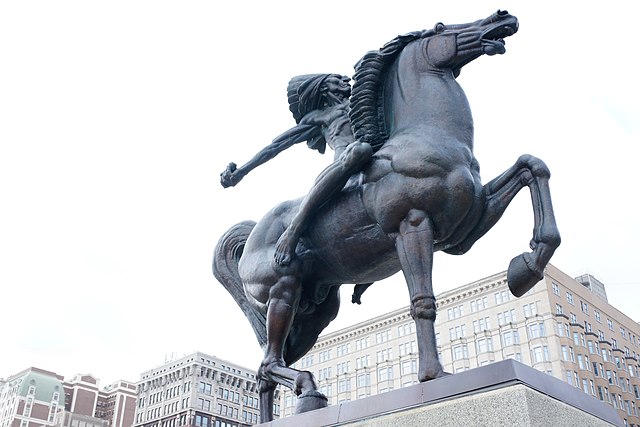
November is National Native American Heritage Month. American school children have been fed a regurgitated Pilgrims-and-Indians Thanksgiving story which continues to permeate our culture today. Early in the 20th century a Seneca Indian, Dr. Arthur C. Parker, requested the Boy Scouts to recognize a day honoring “first Americans.”
Parker was born in 1881 on the Cattaraugus Reservation (Seneca Nation of New York) to Frederick Ely Parker, who was one-half Seneca, and Geneva Hortenese Griswold, of Scots-English-American and Christian missionary heritage, a schoolteacher on the reservation. Parker’s family moved to White Plains, New York, where he entered public school at age 11 with a budding interest in the American Museum of Natural History in New York City. He became an assistant archaeologist there before attending college. Befriended by Frederic Putnam, professor of anthropology at Harvard, Parker was encouraged to study anthropology. It took years before following through, as Parker first tried on his grandfather’s plan for him to be a minister; he left seminary before graduation.
Parker became an incredible historian for his culture, as well as an archaeologist, folklorist, and museologist. He was one of the founders of the Society of American Indians to educate the public about Native cultures. His devotion to Native American lore is best demonstrated by this noble account of a fire in the New York State Capitol:
“Parker entered the building while it was ablaze and made his way up to the 4th floor…to save priceless historical artifacts. He brought a tomahawk, which had been passed down through the generations in his family, and began smashing display cases, saving as many items as he could. Of the approximately 500 Iroquois artifacts…he was able to rescue about 50 of them before the spreading fire made any further salvage efforts impossible.”
In 1990 President George H.W. Bush signed into law the month of November to honor the pearls of Native American culture, traditions, and achievements. One way to honor “first” heritage is to acknowledge the land you’re on – the Art Institute of Chicago built on lands of the Potawatomi, Ojibwe, and Odawa Native Americans.
According to historian and Potawatomi member John Low, the Potawatomi believed, “…the land is Mother Earth. You can’t own it — it’s like owning air, owning the stars.” The local tribes were tolerant and welcoming to Europeans, assuming these newcomers’ intentions were peaceful. Diagonal trails became Milwaukee Avenue and Ogden Street.
In 1833, the Treaty of Chicago outlined how members of the Potawatomi, Odawa, and Ojibwe nations living in Chicago had to leave. Along with cash payments for their land, the tribes were promised other land — east of the Mississippi River, in northern Wisconsin or Michigan’s Upper Peninsula. John Low’s people, the Pokagon Band of the Potawatomi, possessed a bargaining chip to remain; they had converted to Catholicism. What happened to freedom of religion?
Pearls of Peace (PoP) Quiz
235. When do you remember to give thanks for Native American contributions?
236. What ways can you incorporate your thanks into your Thanksgiving preparations?


At my church, recognition is always given to the tribes on whose land our building sits. It’s a small gesture but humbling
LikeLike
Yes, it humbles one to recognize that we are not the “owners” of America. I recently gave a workshop on transforming ageism, addressing legacy burdens and planning for legacy blessings at the Internal Family System annual conference. As an introduction, I named some Native American tribes who first settled Denver: Arapaho, Ute, and Cherokee. I then asked each participant to say their name along with naming the “first Americans” of their current homeland. People from all over the country could name these Native American tribes. One individual was a Native American. It was a special moment.
LikeLike