More than 20% of our planet — billions of individuals in China, South Korea, Vietnam, Singapore, Brunei, Cambodia, Indonesia, Malaysia, Myanmar, Philippines, and Thailand (as well as many who live beyond Asia) – will celebrate the Lunar New Year from February 10–24th this year. Celebrations follow the second new moon after winter solstice (December 21st). While each culture has various traditions, a major focus centers on prosperity and family reunions.
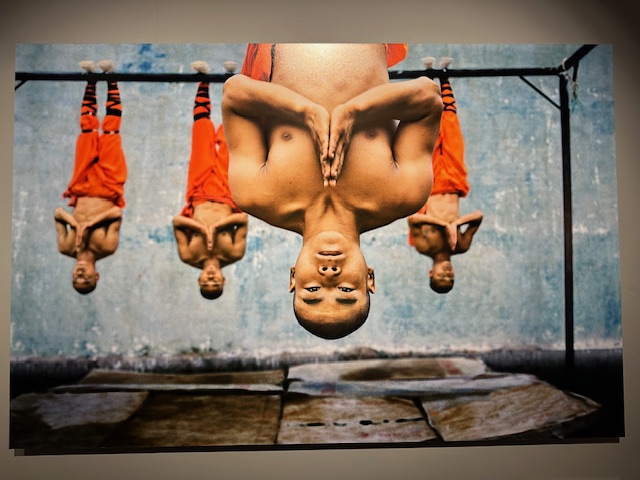
2024 is the Year of the Wood Dragon. The wood aspect relates to stability, honesty, loyalty, creativity and growth, while the dragon is a symbol of strength and power. Buddhist monks at Shaolin Monastery seem to epitomize “dragon” attributes in a photo on exhibit at Loyola University, Chicago, by photographer Steve McCurry.
Spring cleaning and paying off debts accompanies Chinese celebrations, also known as Spring Festival. The day before the new year kicks off is time to sweep away bad luck and make room for good luck. Spring Festival originally celebrated crop-planning for a largely agrarian culture. Alongside praying to ancestors for successful crops, a myth about a monster accompanies Chinese festivities. Since a young boy fought off the monster named Nian with firecrackers, people enjoy fireworks today to ward off bad luck at midnight on Chinese New Year’s Eve. Festival observers set off another round the following morning for good luck.
Traditionally, families swept the tombs of their ancestors and burned fake money to symbolize bringing their ancestors good luck in the afterlife. Families today give money to children, other family members, friends and employees in red envelopes. The digital world has taken this monetary gifting into a new realm; digital “red pockets” have become trendy. People may wear red clothes as red symbolizes energy, happiness and good luck.
The final day of Chinese Lunar New Year celebrating is Festival of Lanterns and includes spiritual traditions. A recognized practice for more than 2000 years (beginning in the Western Han dynasty), many continue to view the holidays (holy days) as religious. The emperor of Eastern Ming dynasty was a Buddhist who initiated the lighting of lanterns. Monks offered prayers.
On a secular note, in early times Chinese women were not allowed to leave their homes. An exception was made for this final day of celebrating Spring Festival; females could be outside the confines of their family, light lanterns, moon gaze, and interact with men. Some call this China’s Valentine Day.
Just writing about spring festivities, I am developing a strong case of spring fever. If we add a Pennsylvania groundhog myth to this possibility-filled celebration, 2024 will be an “early” spring! Cultures embody myths, whether a furry groundhog or a fire-breathing dragon. What else escapes our reality-check these days?
Pearls of Peace (PoP) Quiz
263. How might you recognize some symbol in your “early” springtime?
264. Where are you in your pursuit of any New Year’s resolutions?


Thanks Jan for another great blog of information. My Tai Chi teacher gives out Dragon stickers to students that work hard. Now I better understand what the dragon symbolizes. The best symbol of Spring for me is the resurrection of all the crocus and snowbell flowers!
LikeLike
Yes, my first bloom of 2024 in my yard today — the tiny yellow winter aconite — made my spring fever soar! This tiny woodland bloomer is a good example of the Wood element, but I did not find any dragon lurking nearby under my maple tree (yet).
LikeLike