Pandemic Polling

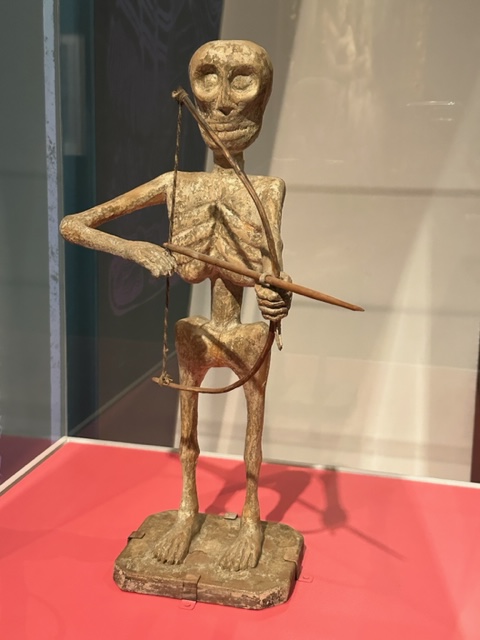
Figura de la Muerta, Unknown artist (1800’s, New Mexico) Denver Art Museum

Survey results show that mental health and substance abuse numbers remain high 3 years after COVID’s rude viral entrance. The overall drug overdose death rate had a 50% rise in the U.S. during the pandemic. While this death rate increased in all ethnic and racial groups, the increased rate was greater for people of color. White folks make up the larger portion of deaths due to drug overdose in a year, but the numbers for people of color keep rising. The numbers for 2021 are chilling: American Indian Alaska Natives’ drug overdose deaths were 56.6 per 100,000, while Black people had 44.2 per 100,000 and White people had 36.8 per 100,000.   

According to CNN/KFF polling (October, 2022), 90% of U.S. adults say mental health is in a crisis in the United States. KFF or Kaiser Family Foundation (endowed initially by industrialist Henry J Kaiser) is a non-profit health information organization that has interest in global as well as national health. In addition to the stark increase in drug overdoses, other mental health concerns reported by participants were loneliness, job loss, financial instability, sickness, and grief.     

The Pew Research Center reports that 89% of Americans cited at least one negative change in their lives during the pandemic, while 73% listed at least one unexpected positive; 67% experienced both negative and (at least one) positive change as the pandemic gripped the nation. Women were more likely to report negative consequences than men, with the single-most reported negative outcome relating to belonging — people missed family/friend connections.  

A research team studying 7,000+ U.S. adults published their results in December, 2022, in PLoS ONEon personality changes during the pandemic. They had a ready population for study in their longitudinal monitoring of “Big Five” personality traits since 2014. There did not appear to be significant changes in personality through the start of the pandemic. However, as the COVID fallout just kept rolling into 2021-2022, personality changes emerged:

  • “Extraversion: We became less likely to seek out company and enjoy time with others;
  • Openness: We lost capacity to seek out novelty and engage with new ideas;
  • Agreeableness: Sympathy and kindness declined, affecting our ability to get along with others;
  • Conscientiousness: We became less motivated to pursue goals and accept responsibilities.
  • Neuroticism: The sharpest decline occurred in younger adults during the pandemic; they became more angry, anxious, irritable, and depressed.”

While some thrived during the pandemic, many others did not. Since the “worst” pandemic death strikes (before vaccines were available), our global world has entered two war crises. There have been more U.S. mass shooting tragedies than days in 2023. We have polling numbers, but what about solutions to underlying problems?

One take-away message is that we cannot escape change. Irish playwright and critic George Bernard Shaw said it best:Progress is impossible without change; and those who cannot change their minds cannot change anything. “

Pearls of Peace (PoP) Quiz

233. How are you changing your mind in pandemic times?

234. Where are unexpected positives today?  

Golden Rules & Platinum Rules

Thirteen of the world’s religions have similar wording for the ancient Golden Rule as a moral compass for followers. Compiled by interfaith consultant Paul McKenna, the following list is in alphabetical order (https://static1.squarespace.com/):

Bahá’í Faith:  Lay not on any soul a load that you would not wish to be laid upon you, and desire not for anyone the things you would not desire for yourself. Buddhism: Treat not others in ways that you yourself would find hurtful.                                        Christianity: Do to others as you would have them do to you.                                                          Confucianism: One word which sums up the basis of all good conduct….loving-kindness. Do not do to others what you do not want done to yourself.                           Hinduism: This is the sum of duty: do not do to others what would cause pain if done to you.       Islam: Not one of you truly believes until you wish for others what you wish for yourself.                 Jainism: One should treat all creatures in the world as one would like to be treated.                      Judaism: What is hateful to you, do not do to your neighbor. This is the whole Torah; all the rest is commentary. Go and learn it. Native Spirituality: We are as much alive as we keep the earth alive. Sikhism: I am a stranger to no one; and no one is a stranger to me. Indeed, I am a friend to all.   Taoism: Regard your neighbor’s gain as your own gain and your neighbor’s loss as your own loss.                         Unitarianism: We affirm and promote respect for the interdependent web of all existence of which we are a part.        Zoroastrianism: Do not do unto others whatever is injurious to yourself.

Each listed religion has an accompanying symbol. Many contain either circular or semi-circular images which suggest unity or “oneness.”   

The “Platinum Rule,” like the Golden Rule, is about communication and relationships. Made popular by a book, The Platinum Rule: Discover the Four Basic Business Personalities and How They Can Lead You to Success, authors Tony Alessandra and Michael J. O’Connor claim that the Platinum Rule is not at odds with the Golden Rule but is a “more sensitive” version: “Do unto others as they’d like done onto them.” The idea is to recognize that people are NOT wanting/needing exactly the same things.

The authors set up 4 personality “styles” under their definition of Platinum Rules; they believe “…everyone basically exhibits one of these styles – Directors, Socializers, Relaters, or Thinkers.” Furthermore, they explain that categorizing another’s needs-based-cues is not for the purpose of manipulating them but is a “…way to speak their language.”

Actually, people are not so easily defined. Most of us have personality parts dipping into each “style” (and many more) depending upon the situation. Aspects of Platinum-Rule-thinking that “work” are empathy for differences plus pausing before rushing into any conversation. Ask yourself, “Can I listen well?”

Pearls of Peace (PoP) Quiz

231. How do you adjust your personality when talking with certain people?

232. What rules do you follow in everyday relating?

Unrealized Peace Possibilities

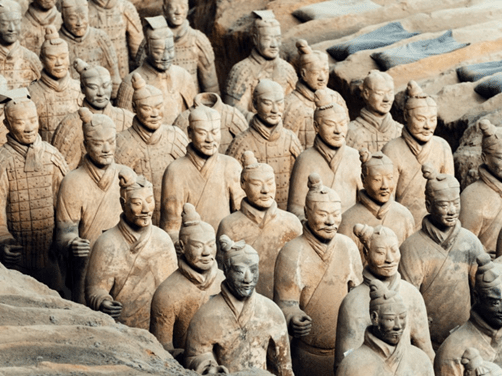
Terracotta Warriors. Credit: Nikada/ iStock

Last weekend I was with an amazing group of therapists at a retreat center in Northern Michigan, a lovely hideaway with no TV availability. I enjoyed the break from heart-breaking catastrophes in Ukrainian families plus the lack of political civility and problem-solving in U.S. Congress. Listening to music stations on my car radio while driving home, I was unaware of the devastating attacks upon Israeli families.

My mind is a wandering journeyer as you know if you have read any of these Monday blogs. While my home TV screen flashed one terrorist trauma after another, I recalled the Terracotta Warriors in Xi’an, China. On a trip over 20 years ago, I grasped an eyeful of the tenacious and long-standing nature of war.

Close to the unexcavated tomb of Qin Shi Huangdi, the 13-year-old self-proclaimed first emperor of China in 221 B.C.E., lies a mammoth burial of an estimated 7000 warrior army of life-size terracotta soldiers. Standing strong with near-life-size horses (plus a few chariots), row- upon-row warriors seem formidable even in clay. Assembly-line production of Qin’s terracotta army shows modern technology; bodies were mass typecast, but separate head molds for warriors were individualized to reflect different soldiers.  

Qin reportedly did not embrace Confucianism (common elsewhere in China) where the belief was that well-run governments might follow similar tenets of well-run families – mutual obligation and respect. Instead, Qin’s version of ruling was “legalism” where punitive laws were the norm. Conquering a vast frontier through massacre and destruction, Qin built fortifications which became the basis for the Great Wall. Not only did this dominant Chinese leader plan for his immortality, but he is accredited with many innovations. Qin standardized currency and writing, as well as built advanced roadways and canals to connect regions of China. Were these roads built so soldiers could more easily reach distant lands?

War is horror, both for soldiers as well as the slayed or traumatized survivors. The 22-square-acre Terracotta Warrior site delivers harsh realities: war is ancient and often humankind’s go-to version of political problem-solving. What have we learned from wars about problem-solving possibilities? The unfolding Israeli-Hamas tragedy seems destined to deliver yet another sad example of how war is not situated in any solution camp.

John O’Donohue (1956-2008), Irish theologian, philosopher and poet, had an uncanny wisdom: “… for so many of us…we have to be in trouble before we remember what’s essential.” How much trouble do people have to endure before acknowledging our essential connection with one another?

I often turn to John’s gift of words when grieving some loss. The loss of peace and justice for so many people around the globe seems overwhelming. Fortunately, John’s philosophy survives him. He asked good questions. I am recalling John’s words from a therapist workshop with him in 2006: “Where do unrealized possibilities hang out?”

Pearls of Peace (PoP) Quiz

229. What lessons do you take away from our planet’s perpetual wars?

230. Where do your unrealized possibilities hang out?                                

October Reframe: Indigenous Peoples’ Day

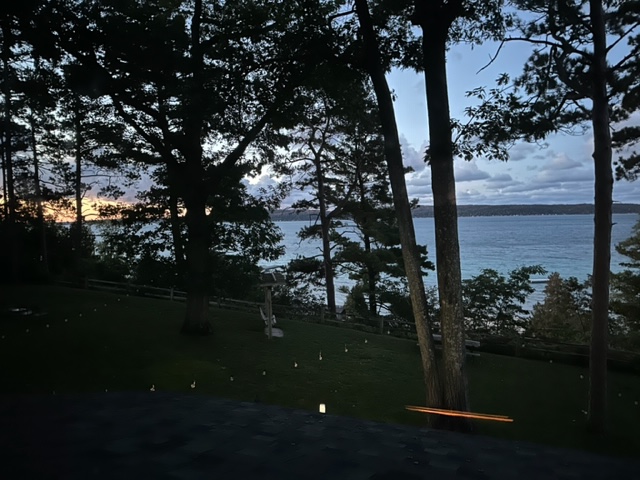
“Crystal Lake,” Michigan, on prior Cherokee & Ottawa lands

    We can thank the United Nations’ International Conference on Discrimination Against Indigenous Populations in the Americas (meeting in Switzerland in 1977) for Indigenous Peoples’ Day. The first U.S. celebration took place in Berkeley, California, in 1982 to mark the 500th anniversary of Italian Christopher Columbus’ landing in the Americas. Gradually other cities and states adopted the reframed holiday. Naming and claiming truth are first steps to any positive change.

    In 2021 President Biden set Indigenous Peoples’ Day in motion as a country-wide holiday with these Proclamation words: “…a day in honor of our diverse history and the indigenous peoples of our diverse history…people who contribute to shaping this Nation.” Currently, 29 states no longer celebrate Columbus Day; 195 cities renamed the second Monday in October as Indigenous Peoples’ Day. Canada has embraced a national holiday recognizing contributions of indigenous people since 1996.

    This day recognizes that Native people were treated as intruders despite their spiritual connection to their ancestral lands for generations. Biden recognized that many indigenous people are leaders in environmental causes. In 2020 he named the first Native American Secretary of the Interior to his Cabinet, Deb Haaland, a prior member of the House of Representatives and a 35th generation member of the Pueblo of Laguna (in currently named “New Mexico”). Both of Haaland’s parents served in the U.S. military; her mother was employed in the Bureau of Indian Affairs.  

    The Smithsonian National Museum of the American Indian has worked for over two decades to esteem the stories and achievements of Native communities while debunking tragic myths—including the false fairy tale that Christopher Columbus “discovered” America.

    While there are detractors to the new national holiday, the correction of white peoples’ history lessons for our children is crucial. Perhaps the most important children to receive a corrected, factual history are Native children. Discrimination runs rampant throughout the sacred lands of these youngsters who are more likely to suffer from gender violence, substance abuse, and various health challenges as they age. Bringing attention to this holiday, while uncovering scars of old issues, may enable a change in the nation’s psyche toward First Nation people (Canada’s name for indigenous peoples).

    Discrimination is rampant in other populations as well. October 7th was Ageism Awareness Day, as named by the American Society on Aging (ASA). We need to reframe aging; it is estimated that 50% of the U.S. population has some negative bias toward any seasoned citizen, my preferred naming instead of old fart, codger, geezer, or “dirty” old man. While ageism joking may seem funny initially, no, we are not age 39 forever. Naming is salient. At the annual ASA conference, participants are encouraged to tell everyone their actual age with pride.

    Now, let’s address our sports teams that use First People naming without any permission.  

    Pearls of Peace (PoP) Quiz

    227. What discrimination in U.S. culture can you name today?

    228. How might you take some positive action to address this discrimination?   

    Banned Pearls

    It seems impossible to believe that the U.S. has a need for an annual Banned Books Week, but library activist Judith Krug was contacted by the Association of American Publishers in 1982 about rising concerns over book-banning. Krug then contacted the American Library Association (ALA) Intellectual Freedom Committee. Within 6 weeks, the first Banned Books Week was launched. This year’s week is October 1-7 with the theme, “Let Freedom Read!”

    Concern over which books are “OK” for students’ knowledge and educators’ curriculum choices have escalated since the 1980’s. Furthermore, in 2011 the American Association of School Librarians named a Banned Websites Awareness Day, as school librarians reported that their schools were utilizing filtering software in school libraries. For speaking out, some librarian and teacher jobs are on the chopping block.  

    In 2022 ALA documented skyrocketing cases of banished books – 1,269! This nearly doubles book challenges reported in 2021 – 729. PEN America (Poets/Essayists/Novelists) lists even greater numbers. Why were books censored? Most were written by or about two discriminated groups of folks – the LGBTQ+ community and persons of color, plus a few other reasons.

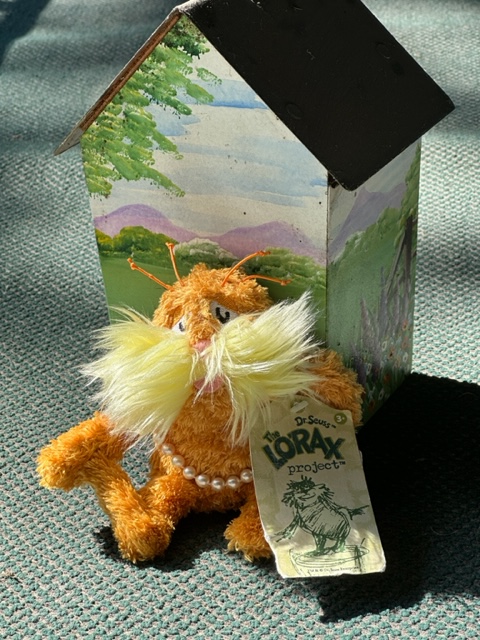
    Charlotte’s Web by E.B. White was deemed unacceptable by a parent group in Kansas. They objected to talking-animal main characters and the theme of death, demanding book- banning in their school library. The Lorax by Dr. Suess was banned in a Laytonville, California Public School due to parents’ concerns that teachers were “brainwashing” children. This time a death fear related to dead trees — might students initiate an uprising against logging in the state?

    ALA President Lessa Kanani’opua Pelayo-Lozada posts this response to book banning: “Closing our eyes to the reality portrayed in these stories will not make life’s challenges disappear. Books give us courage and help us understand each other.”

    As a psychologist, I am appalled at the banning of books. Who decides for the rest of a community or country that certain books should be censored from youth? I agree that there may be certain ages that may be better choices for the introduction of certain books, but I do not think we should take books off the shelves of ANY school or public library. Education about “difference,” including death, is necessary for an informed education. When we do not have open discussions about differences, we operate out of a fixed (and closed) mindset. Book banning stifles our democracy.

    As an author, I am appalled at the banning of books. It takes much time and dedication to write a book.

    How long does it take a pearl to form? Estimates are that a freshwater pearl may develop within 6 months or up to 6 years to reach the average finish line. Many books take longer. To have one’s book banished at a one-time school board meeting by a few vocal parents is frightening.  

    Pearls of Peace (PoP) Quiz

    225. Have you engaged in discussions over banned books?

    226. What actions might you take today to support freedom of speech?   

    Peace as a Practice

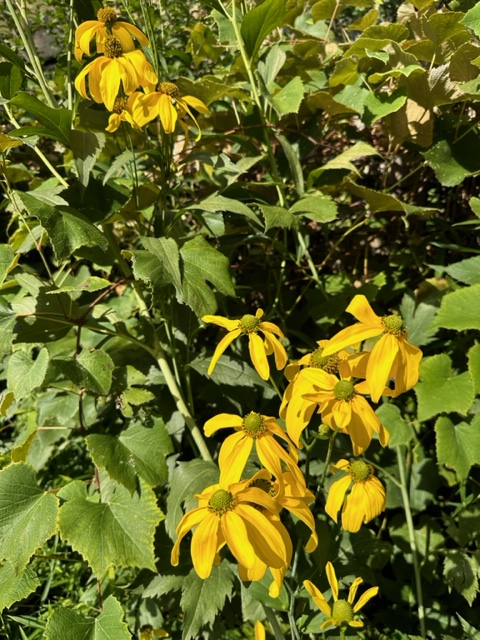
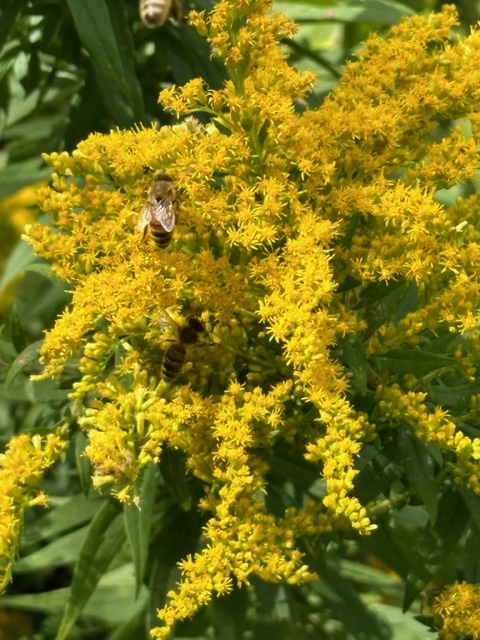
    How many individuals observed Thursday, Sept 21st as the International Day of Peace? War actions in Ukraine did not seem to take notice, but honeybees were partnering for a productive and peaceful hive on a gorgeous goldenrod plant as Autumn makes its debut. The United Nations initially recognized this day for intended non-violence in 1981. The World Council of Churches has recognized Sept 21st as an International Day of Prayer for Peace (since 2004).

    The U.N. set this year’s theme as “Actions for Peace: Our Ambition for the #GlobalGoals.” The overarching goal of the International Day of Peace is to recognize both individual and collective responsibilities to bring about peace; 17 development goals set by the U. N. are named:

    No poverty

    Zero hunger

    Good health and well-being

     Quality education

    Gender equality

    Clean water and sanitation

    Affordable and clean energy

    Decent work and economic growth

    Industry, innovation, and infrastructure

    Reduced inequalities

    Sustainable cities and communities

    Responsible consumption and production

    Climate action

    Life below water

    Life on land

    Peace, justice and strong institutions

    Partnerships

    Who does not want development in these goals as a blueprint for progress for the next precious generations? And yet, we have little agreement in the human hive about HOW we can move forward in problem solving in our own country.

    Participant countries meeting in New York last week were asked to choose an issue from this blueprint for peace and make positive actions happen. There is a mobile app (by AWorld – “because there is no Planet B”) to track progress in meeting the 17 goals. For the app-happy, you too can participate at https://www.un.org/actnow.

    The Jewish High Holy Day, Yom Kippur, the Day of Atonement, began last evening at sunset after 10 Days of Awe, a time set aside for introspection and repentance. Individuals might volunteer their time as one way to atone. The sacred holiday lasting 24 hours is observed with a fast and by people making amends for their errors as well as offering forgiveness for others’ errors. This powerful annual discipline of atonement is a practice for peace in our fractured world.

    Errors are ever-present, but atonement is scarce. Forgiveness is a key ingredient in every healthy relationship, whether between family members, friends, colleagues, neighbors, or countries.

    Peace needs our collective attention. I am reminded of this motto for peace (erroneously attributed to Jimi Hendrix) by UK prime minister William Gladstone (1809-1898): “When the power of love overcomes the love of power, the world will know peace.”                   

    Pearls of Peace (PoP) Quiz

    223. Which of these 17 goals might you embrace today?

    224. What are some steps you could take in partnering with others on the goal you selected?

    Pearls of Exercising

    Theologian Howard Thurman, the first African American dean of chapel at a traditionally white U.S. university (Boston University) taught, Don’t ask what the world needs. Ask what makes you come alive and go do it. Because what the world needs is people who have come alive.” 

    Thurman likely was referring to being intellectually, interpersonally, and spiritually alive, but it takes a bodymind approach to be “alive” actively. Having the energy for aliveness is a necessary first ingredient. For those with physical limitations, this bodymind talk can be off-putting, but I do not intend for anyone is be left behind on some off-ramp that does not apply to them. Let’s investigate possibilities.

    A recent article in the New York Times featured 97-year-old Elaine Lalanne, widow and business partner of fitness guru, Jack Lalanne. Jack was a proponent of exercise aliveness with his brand of fitness moves on a daily TV show for 34 years (1951-1985). He modeled what he preached, exercising up to his death at age 96.

    Elaine continues to shape up aliveness with this mantra: “20 minutes a day gets me on my way.” She starts her routine before leaving her bed in the morning with 25 jackknives. While at her bathroom sink she engages bodymind with incline push-ups. After dressing, her routine finishes in a home gym. With machine guidance, she walks uphill on her treadmill and then finishes with lat pull-downs on other equipment.

    Here is a kickstarter: “Everything starts in the mind,” Elaine advises. Having the discipline to exercise one’s physical body is key. But there is more to the story. Jack had this advice: “Exercise is king. Nutrition is queen. Together you have a kingdom.” Bodymind integration is one path to aliveness. Working out a traditional way was good for the Lalanne couple.

    • What about exercise for those without fancy equipment? PBS and the internet offer wonderful exercise programming.
    • What about exercise for those in wheelchairs or those with limited overall mobility? On a PBS TV station in the morning, there are two chair-exercise programs; one features chair yoga (in beautiful outdoor settings to inspire you) and another promotes half-hour stretches accomplished from a seated position. The internet provides many variations of exercises from a wheelchair.
    • And what about exercises in spirituality? I find a morning Mindful Reflections meditation group (started during the pandemic) as well as a church community meaningful.

    Let’s come full circle to embrace more of Howard Thurman’s wisdom: The hard thing when you get old is to keep your horizons open. The first part of your life everything is in front of you, all your potential and promise. But over the years, you make decisions; you carve yourself into a given shape. Then the challenge is to keep discovering the green growing edge.”

    To embrace “aliveness,” keep growing in all bodymind ways.

    Pearls of Peace (PoP) Quiz

    221. How do you describe “aliveness?”

    222. What are your exercises for growing aliveness? 

    Aging Possibilities

    Aging moonflower bloom lasts a single day

    Aging: So cool everyone’s doing it! I love this message-button from the National Center to Reframe Aging. ALL OF US AGE, if we are fortunate to be alive. However, aging often is cast in a negative light and applied to people of a certain age.

    Even when positive vibes are intended, an assumption is made that seasoned citizens are the ones who are aging. For example, September is “Healthy Aging Month” in the U.S. If you Google the suggested actions for the month, they refer to bodymind health of older adults: “…as we age, our minds and bodies change…Move more, sit less….” We might also apply such practical advice to precious children and grandchildren who sit glued to their digital devices.

    It is positive that we now have a global focus upon improving the lot of older adults. The United Nations initiated a “Decade of Healthy Aging” (2021-2039) with The World Health Organization asked to take the lead in proactive initiatives for older adults and their families.

    My proactive initiative for inspiration for your own aging is to read journalist David Von Drehle’s The Book of Charlie: Wisdom from the Remarkable American Life of a 109-year-old Man. Von Drehle intended to write a legacy book for his children that might unlock fountain-of-youth secrets through perpetual thick-and-thin times. What he uncovered in the life story of his centenarian neighbor is part history and part parable about possibilities in life.

    Dr. Charlie White always made the most of possibilities in his 100+ years: “He had a gift for seizing joy, grabbing opportunities, and holding on to things that matter. And he had an unusual knack for an even more difficult task: letting go of all the rest.” If you read no further than this gem on page 12, you will gain perspective. Yes, treasure the gift of joy over and over! This might be useful as a mantra for longevity. And add this follow-up mantra — live more in the present moment when you let go of what cannot be changed in your past.

    Von Drehle always found a take-away thought or two after visiting Charlie: “…his past was a forward-looking place.” When Charlie had no money for college and medical school, he bought a used tenor saxophone from a friend and taught himself how to play with this wisdom: “When you don’t have income, you create.” Not only did he improvise with a small band to make ends meet, he improvised in his house visits to sick patients when he had to think outside of his black doctor bag.

    Ageism stereotypes people and hampers possibilities. Let’s follow Charlie advice: “Think freely. Practice patience. Smile often. Savor special moments. Feel deeply. Observe miracles. Make them happen. Be soft sometimes. Cry when you need to. Make some mistakes. Learn from them.”

    Pearls of Peace (PoP) Quiz

    219. When is the last time you recognized joy in your life?

    220. How might letting go of the past increase your life wisdom?    

    Pearls of Labor

    “We delight in the beauty of the butterfly, but rarely admit the changes it has gone through to achieve that beauty.” Maya Angelou’s words are poignant, as change is our future.

    Recently I spotted a caterpillar with its fashion-worthy spots lining a growing tummy being towed with 6 hands/feet and clinging to a slender stalk of parsley on my deck. I discovered that caterpillars have two kinds of “legs.” The “true” ones near the head are 6 segmented legs with claws, like hands and feet combined. Secondary “prolegs” (about 8) are extra insect-mover appendages that bump along from a midsection. The change from a dull round egg to colorful caterpillar (larva) stage is stunning! Even more amazing is the transformation of covered-up chrysalis (pupa) overcoat to flash into butterfly adulthood!

    Watching the labor of this butterfly-in-the-making reminded me of Eric Carle’s picture book (The Very Hungry Caterpillar) which has spots on my book’s cover, a bit worse for the wear from my toddler children years ago. To my surprise, I later discovered 4 more caterpillars picnicking in parsley. All 5 caterpillars were devouring my curly parsley, so I turned to my flat leaf parsley for my own munching. The caterpillar tribe is finishing off their food supply. I wonder how the delicate littlest one will survive to labor onward.

    We celebrate Labor Day today to pay tribute to U.S. workers and their important contributions to all of us. How often do we overlook the multitude of hands/feet that it takes to put food on our tables and to juggle a myriad of other necessary jobs for our wellbeing? Are we paying workers enough for their survival? What changes are needed in our workforce?

    The U.S. Senate passed a resolution in 2022 naming September as Workforce Development Month. For 2023, a focus word was chosen – “seamless,” as in creating recruitment/training/employment opportunities in a seamless manner for those looking for work. Innovation grants in New York and Pennsylvania are encouraging local organizations  to form coordinated training opportunities for new immigrants.

    It often takes many changes for people to find meaningful employment. A suggested way to streamline a successful ready-to-work process is through offering apprenticeships. In Germany students from 9th grade onward are offered apprenticeships to prepare them for productive careers.

    An apprenticeship approach fosters more than skill development. It has the potential to teach life-skills such as time management and goal-directed persistence. Chicago-based parenting support center New Moms, for moms 24 years-old or younger, delivers workforce development with candle-making at Bright Endeavors (see Pearls of Peace blogpost, “Birds, Bees, and Babies”).

    Consider these worker statistics:

    • 65% of employees in the U.S. are satisfied with their job.
    • However, only 20% of employees in the U.S. are passionate about their job.

    Clearly, we could use some invigorating workplace changes and more passionate employees.

    Pearls of Peace (PoP) Quiz

    217. What is your most invigorating job in your work history?

    218. How might you contribute to Workforce Development this month? 

    Nature’s Beauties and Beasts

    Ring around the rosie / A pocket full of posies / Ashes, ashes / We all fall down. How many readers recall childhood days of singing this simple “nursery” rhyme, followed by pretend-falling and a gaggle of giggles? I do not recall my two brothers ever engaging in Kate Greenway’s Mother Goose (1881) ring-singing, but I remember being a fun-loving and innocent participant. No one mentioned that this ditty may tell the sad story of the Black Plague beast which killed one-fifth of London’s population, or about 75,000 individuals, in 1665.  

    This interpretation of the British rhyme is scary, but historical. The “ring of rosie” represented the deadly rashes of bubonic plague; the “posies” were a supposed prevention. The final two lines refer to death. However, some folklore experts deny such explanations, preferring to endorse happier themes. One argument against the Plague version suggests that when children jump back up after singing the rhyme, there is no foreshadowing of death.  

    When rhymes (and misinformation) pass by word of mouth before any versions receive verification, wording and meaning changes run rampant. Nursery rhymes initially were used for children’s reading phonological awareness, not history lessons. Memorizing rhymes aids in reading fluency and memory building, among other learning skills. Nursery rhyming is fun, an educational ingredient we sometimes forget.

    Of course, real life is not always fun. Adults know this. However, as Swiss psychologist Jean Piaget reminded adults, “Education, for most people, means trying to lead the child to resemble the typical adult of his (her, or their) society… but for me…education means making creators…you have to make inventors, innovators, not conformists.”

    How can we better educate precious children to be creative, innovative, and yet understand life’s complexities? We cannot shield kids from learning about ring-around-the-rosie plagues, pandemics, or beastly wildfires in Canada, Greece, and Maui. When I see the charred remains of cars reduced to ashes — trying to rescue beloved adults, children and pets in Maui — I cringe. This is tough stuff that calls for educating both adults and children to be innovators in fixing our climate and maintaining sustainable resources.

    Piaget’s wise words are helpful: “The principal goal of education should be creating men and women who are capable of doing new things, not simply repeating what other generations have done.” We simply must address reality as a first step. No, climate change is not a hoax. Tropical Storm Idalia with sustained winds of 65 mph has the current potential to turn into hurricane winds reaching 74+ mph tomorrow; projections are for a curving storm center to head into Florida’s west coast.

    We must acknowledge the beasts among the posies or beauties of nature. Innovators can identify positive resources and share creative solutions across countries. We need a ring-around-the-planet approach.   

    What is your new rhyme for children?  

    Pearls of Peace (PoP) Quiz

    215. When are you most innovative?

    216. How might you contribute to some child’s creativity?