Are You Ageist or Sagest?

Time is ticking for all of us. How do you spend your time each week? Answers from 125 individuals, ages 55-96, provide possibilities. I found both ageist and sagest responses, sometimes coming from the same individual, in my Johnston Retirement Survey for my book, Transforming Retirement: Rewire and Grow Your Legacy. Survey samples define retirement:

65, female (works 30 hours a week): “To withdraw—I don’t see any blessings in retirement.” 

68, male (retired 1 year): “Boredom.”

72, male (retired 5 years): “I hadn’t anticipated a divorce.”

73, female (works 18 hours/week; volunteers 15 hours/week): “For my parents/grandparents, [retirement] meant no longer working. It is difficult for me to envision retirement—it seems, as I think about this, that I equate it with poor health. I think I am in the process of letting go of self-limiting beliefs.”

73, male (retired 7 years; volunteers 10-20 hours/week): “Helping my children enjoy life…being an activist to change our world for the better.”

75, male (retired 3 years; volunteers 20 hours/week): Sometimes I feel isolated when I’m not doing volunteer work, or otherwise in social situations…retirement allows me to focus on developing as a real person…it allows me to pursue my real passions.”

80, female (semiretired 20 years; volunteers 15 hours/week): “Time to make and keep connections with important people and the larger earth…treasure each day and let go of regrets.”

93, female (retired 29 years; volunteering varies): “No more days to go away to work…it’s a special time to use as planned.” (She uses expert sewing skills to mend others’ clothing in her assisted-living residence.)

Yes, retirement has the possibility of special time. Our perception of “time” is ever present in aging. Yet, there is timelessness to stockpiling wisdom. For all who maintain their cognition, and embrace possibilities, wisdom consolidation is available 24/7. As M. Scott Peck, psychiatrist and author (The Road Less Traveled), sagely stated: “Until you value yourself, you won’t value your time. Until you value your time, you will not do anything with it.”                

Unfortunately, many associate aging with a narrowing, rather than a growing, self-definition. They find it difficult to value themselves, buying into our culture’s ageism. I recently heard a woman loudly proclaim, “I am old,” as if she expects others to cut her some slack for anything she does. Her investment in time appreciation seems limited. If seasoned citizens do not rewire and value their gift of life’s time, boredom can cut their interest-in-life rates. 

David Romanelli, author of Life Lessons from the Oldest & Wisest, found many among the sagest: “An elder’s wisdom is often raw, unscripted, unbranded, poignant, and deeply personal…if you ask an elder to share their story…spend some time…they will teach you something that you cannot learn from even the most successful self-help gurus.”  

Let’s urge everyone, regardless of age, to invest in possibilities. Transforming Retirement has numerous “Possibility Time” exercises.

Pearls of Peace (PoP) Quiz

530. Do you consider yourself more ageist or sagest?

531. What is on your possibility list? 

What Makes a Champion?

Pearls of Peace was a “champion” blog multiple times in its every-Monday 5-year run of 500 words. Recognized by Illinois Press Women’s Association (IWPA) and National Federation of Press Women (NFPW), here are some reviewer comments:

“One of the more compelling and emotional statements I have read with an associated entry…the blog is…inquisitive…and with a firm perspective.” It is an honor to have positive acceptance of my musings on disparate topics. My goal is to offer curious connections that might lead readers to pause for mindful moments.

What does firm perspective mean to me? It encompasses my belief in cultivating a growth-and-grit mindset to live one’s life with meaning. It takes both continual learning and considerable grit – passion plus perseverance – to keep working on some goal for any extended amount of time.

Writing a blog is not the same as being a soccer player, but a firm perspective about one’s craft is also necessary for the passionate and persistent soccer players making their way to World Cup championship rounds. I cheered for many different teams, but mostly I cheered for players’ relentless resolve, their stick-to-itiveness in their performances. Being a champion is not just about winning accolades.

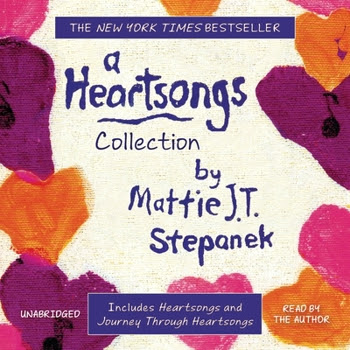
Another champion is a boy named Mattie J.T. Stepanek who died at age 13 from a rare genetic neuromuscular disease that also claimed the lives of all 3 of his older siblings. His mother, Dr. Jeni Stepanek, did not know that she possessed an adult-onset form of this genetic condition. Mattie lived with a firm perspective when it might have been otherwise. He embodied a growth-and-grit mindset in his short lifetime. Beginning to read and write at age 3, Mattie wrote poetry to grieve the death of his brother. He named his poetry Heartsongs and eventually published 7 books of poetry and peace essays. Here is his 9-year-old poem, On Being a Champion:  

A champion is a winner, / A hero…  / Someone who never gives up / Even when the going gets rough…Someone who overcomes challenges / Even when it requires creative solutions / A champion is an optimist.  /A hopeful spirit…  / Someone who plays the game, / Even when the game is called life…  / Especially when the game is called life.  / There can be a champion in each of us, / If we live as a winner, / If we live as a member of the team, / If we live with a hopeful spirit, / For life.

Mattie advocated for improved hospice laws for children. He referred to “global neighbors…in the mosaic of humanity.” His call for “pathways and choices” for personal and global peace were messages for world leaders. Mattie’s birthday on July 17th is honored in his hometown (Rockville, Maryland) as Peace Day.

My blog’s 5th birthday is July 21st. Let’s share Mattie’s hopeful passion for peace among global neighbors.

Pearls of Peace (PoP) Quiz

516. What are you passionate about?

517. Where does your resolve and perseverance take you these days?

The World Works Better When Equality Works

July is Disability Pride Month, celebrating a key civil rights victory since 1990 when the Americans with Disabilities Act (ADA) was signed into law. Boston held the first Disability Pride Day, but the first official celebration of this important milestone happened in July 2015 when marking the 25th anniversary of the ADA. The 2026 theme captures the best of inclusiveness: “The World Works Better With Us.”

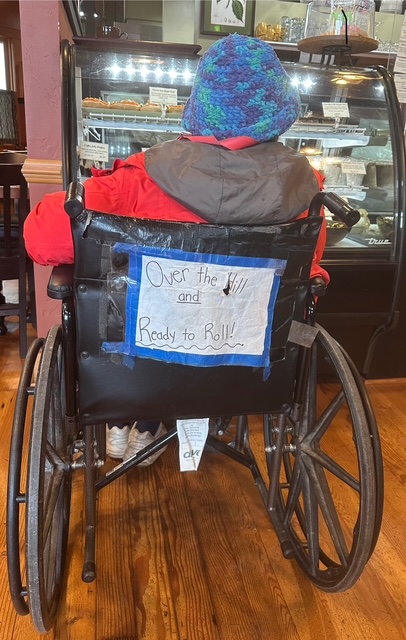
As the Seattle Children’s Hospital Research Foundation points out, we are all “different” in some way: Just as wearing glasses is a way to clear blurry vision, using a wheelchair is another way to get around if walking is a challenge. Approaching the concept of disabilities this way keeps the emphasis on ways we are similar, rather than on differences.”

Parents and schools educating children about disabilities is key to changing stereotypes about certain “differences.” Consider English astrophysicist and cosmologist Stephen Hawking, a genius who espoused “Multiverse” theory, offering a new mathematical framework for astronomers to discover the existence of parallel universes. At age 21 Hawking was diagnosed with Amyotrophic Lateral Sclerosis (ALS) that paralyzed him and confined him to a wheelchair. Losing his capacity for speech, his understanding of general relativity remained intact. Using cheek-muscle control, a computer helped him communicate. Disabilities often require swimming-upstream challenges.

All of us might consider conscious changes in our views of disabilities. Recognize that many institutions do not embrace employees with disabilities; unconscious prejudice is systemic. We must start with simple advocacy for those with disabilities: say that a person has a disability rather than a person is disabled. This connotes that disability or illness is just one aspect of a person, not their total identity. Those with disabilities who are people of color and/or members of the LGBTQ+ community face discrimination on several fronts.

According to the Centers for Disease Control and Prevention, approximately 1 in 4 Americans (about 70 million adults) have some type of disability with 10% coping with invisible disabilities. You may not recognize that a neighbor or colleague suffers from chronic pain, mental health disorders and/or neurological differences. COVID may have shed some awareness on disabilities initially, but people tend not to dwell on infirmities; it is a reminder of what can “go wrong” at any age.

Barbara J. Howard is American Bar Association President-Elect. In a commencement address for Ohio Northern University Pettit College of Law, she urged new lawyers to speak out, because “silence is complicity.” She reminded law graduates that lawyers are uniquely qualified, as well as obliged, to uphold the Rule of Law: “Constitutional protections are a reality for all.”  Howard and her associates specialize in family law, including custody and parenting issues. Her firm prioritizes use of collaborative processes.

My version of inclusiveness is this: the world works better when equality works.

Pearls of Peace (PoP) Quiz

514. When have you advocated for an individual with a disability?

515. What is one change that you might make to foster equality for those with disabilities? 

Holiday Relationships & Wellness

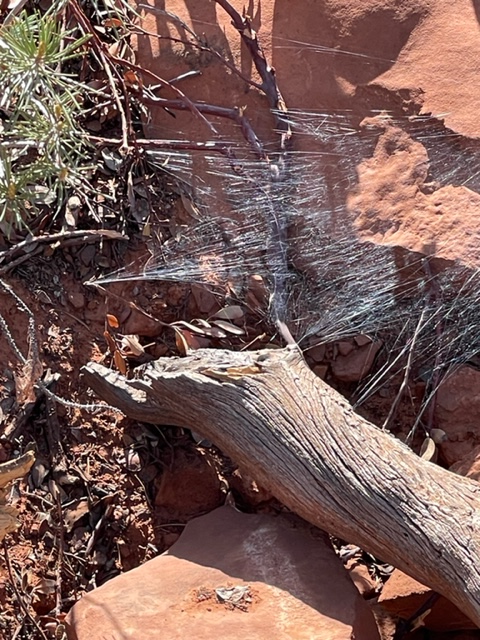
In a spider web, everything is connected. Everything you do is connected to others. No one can do everything alone. Celebrating holidays is best when celebrating in healthy ways with others!

Blackfoot scholar Dr. Leroy Little Bear looks at the big picture and captures everything: “Existence is a web of relationships. What you do to the land, to the animals, to the water, you do to yourself.”

Little Bear tells about dreaming that he was a bubble. His wife also was a bubble. He joined their bubbles. Half awake, he asked if his dream was real; the joined-bubble dream appeared a second time. When Little Bear shared his dream with his wife, she gave this interconnected interpretation: “I know what you are thinking…if we spread this among relatives, things will happen. Everybody is of one mind.”

As we roll through this holiday season, interconnected relationships are a key ingredient. In fact, relationships are key everywhere. According to Little Bear, the Western mind focuses on the social values of bigger and faster. To consider the social values in the Blackfoot mind, think about energy waves always in a state of flux. This is also scientific-minded territory. For an example of how this relational way of thinking might translate to the workforce, think team building, shared authority, and treating employees like a work family. As Little Bear suggests, this approach often results in team players producing better quality work.

Little Bear was instrumental in being part of creating Indigenous studies 50 years ago (in college at the University of Lethridge in Canada). Since many of us were not privy to Indigenous college courses, try on some Indigenous ways of relating:

  • Think holistically and relationally, rather than through the narrow lens of an individual paradigm;
  • Emphasize interconnectedness not just with your relatives and best friends, but also with land, spirit, and community for mental wellness and healing — understand life as energy, not just facts; 
  • Consider how language, story, dreams, and holiday rituals may shape pathways to healing.

Considering a lifetime of teaching, advocacy, and cultural stewardship, Little Bear challenges us to understand what thinking globally means as a rhythm of relational connections. He recalls his childhood when he heard both of his parents always singing! Yes, music is one of our best connectors. I go to many choral concerts and always feel a sense of renewal in the company of singers who harmonize with each other as if they are of one mind.   

What about the times when you are with relatives or friends and you do not sense any renewal of lifelong tuning in one-mind relating? There are good reasons, you say. Figure out where the disconnect story began. I have a “throw” pillow that says, “Home is where your story begins.” Start there.  

Pearls of Peace (PoP) Quiz

458. Do recall any dreams that hold special meaning for you?

459. How does telling your stories to a good listener bring lifelong tuning?  

Purpose Pearls

At age 80 Betty Kellenberger becomes the oldest woman to ever hike the entire 2000-mile Appalachian Trail. While Kellenberger grew up in Michigan, she always had a fascination with seeing the Georgia-to-Maine landscape along the Appalachian Trail. Her imaginings materialized when she retired and had a 6-month timeframe to devote to her dream.

Like fulfilling many dreams, the reality of inevitable along-the-way struggles is daunting. Kellenberger faced bruising, dehydration, falling, a concussion, Lyme disease, and hurricane damage to trails in the South. She had to change her route heading north. Then cold weather forced a pause until spring. She also experienced inner pauses, both on the trail and upon completion: “You hike alone, and so you have your thoughts…You have so many emotions because you’re excited about finishing,” she recalled. “I was really looking forward to saying, ‘I am done.’ But you also know you’re going to miss this big-time. You’re not going to have what you have out on that trail. That peace, the serenity.”

Kellenberger’s decades-long teaching career was teaching English and social studies to seventh graders, along with night classes for adults. Having achieved her Appalachian Trail dream, she ponders what comes next. This transition time is where life’s dreams require rewiring. There are many choices of how to spend one’s time in retirement and how to create a sense of purpose.

Some, like 100-year-old Jiro Ono, famed chef and restaurant owner of Sukiyabashi Jiro in Tokyo, are never-retire advocates. While Ono has passed the baton to his son as head chef, he maintains that the secret to longevity is to keep working! And yet, he must rewire to accommodate his Centenarian body’s needs as he realizes that his hands “…don’t work so well…I can no longer come to the restaurant every day…but even at 100, I try to work if possible. I believe the best medicine is to work.”

Ono’s health habits include no alcohol, regular walks, and to no one’s surprise, eating well. He continues serving and eating sushi as the first sushi chef to earn 3 Michelin stars. He is the oldest head chef of a three-star restaurant. What possibly could be his next purpose? Yes, he has one! Ono wants to outlive Japan’s oldest man who died at age 113.  

Both Kellenberger and Ono are seasoned citizens who believe in living with purpose. Hopefully, purpose in one’s life starts at an early age, but an overarching purpose in one’s life can change. Life transitions often are a time of upheaval; they may signal either decline and/or renewal to dream big after a muddling-through stage. No matter what your current age or circumstances may be, start affirming purposes that have meaning for you. Please know that you can rewire at any age!

The following questions come from my book, Transforming Retirement: Rewire and Grow Your Legacy.

Pearls of Peace (PoP) Quiz

442. What are you doing with your precious time today?

443. What kind of rewiring might you tinker with today?

“Fast” Talkers Live Longer

The Berlin Aging Study (BASE) is a multidisciplinary (sociology, psychology, psychiatry, and internal medicine) study of seasoned citizens (my name for older adults) between ages of 70-105. Initially, detailed information was gathered for 258 men and 258 women who lived in Berlin. The longitudinal research originated under the direction of the late German psychologist Paul B. Baltes and German sociologist Karl Ulrich Mayer. Along with his American psychologist wife, Margret Baltes, Paul Baltes viewed lifespan development in terms of “plasticity” in cognitive abilities, a context of adaptation, and multidisciplinary factors such as one’s biology, family, schooling, religious affiliation, and profession. The Baltes couple promoted successful aging through optimizing one’s cognitive functions and the ability to adapt to change, including loss. Research supported their belief that cognitive abilities can continue to develop in late adulthood with participation in stimulating activities. A current longitudinal study (BASE II) of 1600 seasoned citizens (ages 60-80) is underway at the Max Planck Institute for Human Development in Germany.

BASE research results are fascinating. General intelligence did not predict who might live longest. Instead, verbal fluency was key in long-living folks. The participants with low (versus high) verbal fluency had a median survival time that was 9 years shorter! Verbal fluency requires broad abilities, including fast information retrieval and a crystallized knowledge base. One only hopes that a fast-talking individual possesses a truthful knowledge base.

Here are a few pointers for increasing your verbal fluency. Heather Hurlock, Founder and Editor of Super Age (an online source of health and wellbeing), names the first three well-established ones.

  • Read out loud. This suggestion also is endorsed by a 30-minute-daily program, StrongerMemory, for those in mild cognitive decline. Do not wait for cognitive deficits to appear to make a reading-out-loud practice for yourself! You will build on articulation and rhythm skills when you read to yourself or others. Both skills link to verbal fluency.
  • Hand-write often. While cursive is being dropped from many elementary schools, I believe that is a mistake. There is evidence that suggests learning cursive handwriting is helpful in one’s overall learning and retention. Handwriting (but not typing) is related to letter processing which translates to successful reading in youngsters. Also, handwriting is part of the StrongerMemory workbook exercises. https://goodwinliving.org/strongermemory-the-fight-against-cognitive-decline/
  • Think (and take deep breaths) before you speak. Take mindful pauses to provide your brain with a chance to retrieve some linking thoughts. Not only will this increase your confidence level, but it may enlist a better (or more humorous) verbal outcome.
  • Give speeches or read a poem (as in open-mic venues). You have talents to share and your brain will reward you for using a variety of sensory inputs.
  • Talk regularly; ask people questions. You may surprise yourself with what you can learn about others in a few sentences.

Have fun talking!

Pearls of Peace (PoP) Quiz

413. When is the last time you wrote a letter by hand?

414. How might you practice your verbal fluency in a new way?        

Transition Pearls

Are you in transition? Every day is a mini-transition, but I’m asking about bigger changes, the kind rated on the Holmes and Rahe Stress Scale. The “top” 10 events on the stress scale are death of spouse, divorce, marital separation, jail term, death of close family member, personal injury/illness, marriage, fired at work, marital reconciliation, retirement…moving is #32.  

Transitions are everywhere. Consider your breath moving constantly, from inhale to exhale. As singer/songwriter George Strait, reminds, “…life’s not the breath you take, the breathing in and out / That gets you through the day ain’t what it’s all about / You might just miss the point if you don’t slow down the pace / Life’s not the breaths you take, but the moments that take your breath away.”

I have experienced moments recently that take my breath away. The reaching out of many friends cools down my stress thermometer. I am moving cross-country for a fourth time. I finished college in the Midwest and moved to Boston for graduate school and career-building. The second move was a shorter hop to Philadelphia where my husband had a new job waiting. Parents by then, we each found employment that was mind-stretching. A third move back to the Midwest was both job-related for my beloved husband and closer to extended families. We found mind-bending jobs and grew a whole lot. Death-of-spouse solo, I plan a west coast move where I will be closer to where my children have settled. They need mountains and hiking; it feels healthy for me too.

We cannot know in advance the outcome of our many transitions, but we can take notice when something “moves” us and takes our breath “away.” A cook for all seasons, Ina Garten, lived in Washington DC and was a regular hostess of dinner parties. She left her government job with the White House Office of Management and Budget decades ago to buy a cheese and gourmet shop, the Barefoot Contessa on the Hamptons. She cheerfully quipped, “You figure it out along the way!” Without knowing how her maiden entrepreneurial venture would turn out, she had a bird’s-eye view. She stepped into uncharted territory one breath at a time. On a small stage, isn’t this what we all do when we wake up each morning?

After two decades of operating her specialty shop, Garten sold her business and took a year to figure out her next stage. When she slowed down her pace, Garten next became a cookbook author in the very crowded field of cookbook authors. With cookbook success, she was offered her own TV cooking show on the Food Network, receiving inclusion in the inaugural 2021 Forbes “50 Over 50” list of leaders and entrepreneurs. Her 2024 memoir has a catchy second title, Be Ready When Luck Happens.

Garten inspires me to make big changes. Who inspires you?

Pearls of Peace (PoP) Quiz

399. When is the last time that some action took your breath away?

400. What transition calls out to you?

Every Day is Earth Day

We celebrate our 55th anniversary of Earth Day with its theme, “Our Power, Our Planet.” The global focus for this year is energy – solar, wind, hydroelectric, geothermal, and ocean tidal-generated energy. Themes chosen each year gather collective plans for facing facts on ticking-clock climate awareness where it seems most needed. President of EarthDay Organization, Kathleen Rogers, delivers a summons: “The collective power of a billion voices is vast and one billion people speaking out on an issue is hard for governments, institutions, or industry to ignore.” Yes, but how many believe (or care) there is climate change?

Earth Day was initiated by Wisconsin U.S. Senator Gaylord Nelson. His foresight of impending climate issues led Americans in 1970 to advocate for environmental reforms. Establishing the Environmental Protection Agency (EPA) has roots in this movement. By 1990 Earth Day extended to 141 countries. In 2016 the Paris Agreement signed by 175 countries at the United Nations was a commitment to limit global temperature rise. The 192 countries currently observing Earth Day make it the largest global secular celebration.

Some celebrations are short-lived. On Earth Day, April 22, 2025, EPA reduction-in-force letters reached nearly 200 employees who were in limbo since their placement on “administrative leave” in February. They worked for the Office of Environmental Justice and External Civil Rights, or translated, they worked on “protecting low-income and minorities most at-risk from air and water pollution.” One employee, Ellie Hagen, received her layoff notification at 5 PM. Her whole team (Environmental Justice Community Health) was deemed “wasteful.” Hagen’s non-partisan work was to reduce lead exposure in Ohio family homes. It seems ironic that these government edict letters were delivered on Earth Day.

In March there was a rollback of environmental regulations. EPA’s “reorganization”has a proposed 65% budget-cut figure. Meanwhile, China has the world’s largest investment, as well as production, of renewable energy relying mainly on hydroelectric energy. Costa Rica has produced 98% of their electricity from renewable sources for 10 years. Sweden’s powerhouse goal is to reach 100% renewable energy by 2040.

Our precious Earth has limits. According to the Chicago Botanic Garden, one-third of plant species in the U.S. are at risk of extinction. The World Wildlife Fund (WWF), a Swiss-based international non-governmental organization (the world’s largest conservation organization), calculates that between 10,000-100,000 species become extinct each year. It is so unclear what the actual number may be. What is clear is that the current rate of extinction is due to a single species causing it – people. According to WWF, humans use 25% more natural resources than are sustainable on Earth. https://wwf.panda.org/discover/our_focus/biodiversity/biodiversity/

Whatever the actual extinction numbers are, Earth and her citizens are suffering from a biodiversity crisis. Put Earth Day on your calendar every day.

It is bloom time for the short-lived forget-me-not. 

                                                                 Pearls of Peace (PoP) Quiz

389. Is there some movement that you might join to caretake Earth for future generations?

390. What personally will you do today to return care for Mother Earth? 

Eustress/Distress: A Brain Teeter-totter

April is Stress Awareness Month (since 1992) with sponsorship by The Health Resource Network, founded by Mort Orman, M.D. https://healthresourcenetwork.org/ A non-profit in the UK, The Stress Management Society, joined sponsorship in 2023.

The theme for 2025 is #LeadWithLove. This is not some far-fetched notion but realize that “love” takes many brain moves. Love entails daily practice.  

Dr. Orman’s mission is to promote knowledge about stress and life mastery skills to cope with inevitable challenges of life. Orman lists 30 key mastery skills. Consider how often you light-up your brain for bodymind health: Emotions mastery, Relationships mastery, Advanced stress mastery, Self-discipline, Happiness creation, Honesty, Humility, Telling the truth, Integrity, Personal responsibility, Critical thinking/reasoning, Wisdom, Values, Purpose, Commitment, Communications skills, Leadership skills, Self-love, Self-esteem, Compassion, Exercise enjoyment, Love of learning, Fearless public speaking, Healthy lifestyle, Money/finances, Success mindset, Understanding human beings, Helping others, Leaving a legacy, Personal power.

Orman uses the American Psychological Association’s definition of stress: “…a normal reaction to everyday pressures but [stress] can become unhealthy…stress involves changes affecting nearly every system of the body, influencing how people feel and behave.  By causing mind-body changes, stress…affects mental and physical health, reducing quality of life.”

Most people consider stress to lead to burnout or exhaustion, but that is an incomplete understanding of stress. Stress is more similar to a brain teeter-totter; it can move in one direction, then abruptly reverse course. Stress can motivate you; it is not always negative. From a book chapter I wrote, “Families in Stress” [In S. Wadhwa Editor, Stress in the Modern World: Understanding Science and Society], there is a range to stressors in your life:  

“Endocrinologist Hans Selye made the word stress a household staple, suggesting that life would be boring without stress. Many positive family situations entail stress. Selye labeled positive stress as eustress and negative stress as distress. He created the word stressor to describe the stimulus or event that precipitates a stress response. Examples of positive stressors in the family are a child’s piano recital or sporting event, and a parent’s new job. Family distress ranges from community natural disasters like Hurricane Katrina, to inside-the-family reactions to death or illness of a loved one, to juggling a myriad of everyday decisions and deadlines. Parents need to learn how to detect smoke before their own reactions, and/or their child’s stress reactions, blaze out of control.”

Simply, we need more adults in the room, whether as models for youngsters, or as companions to other adults who have their own melt-down reactions. We all vacillate when the flames of stress reach us, but biological stress responses can save your life. Fight/fight/freeze stress reactions are biological survival mechanisms in the animal world as well as the human world.

Psychological survival is less clearcut. Many stressors relate to fear, both real and imagined future fears. “Name it to tame it,” advises psychiatrist Dan Siegel.

Pearls of Peace (PoP) Quiz

387. What is a stressor for you?

388. Is your approach lead-with-love? If not, why not? 

Pearls of Brain Awareness

Brain scan data, Human Connectome Project: Credit Matthew F. Glasser, David C. Van Essen

Growing up in farmland with paternal grandparents who produced their own beef and pork, I was offered cow brains for dinner in butcher season. While my parents relished this delicacy, I recoiled and could not partake of this unique delicacy. I had no awareness about missing the nutritional benefits of beef brains (vitamins A, B6, B12, C, D, E, K, phosphatidylserine, folate, niacin, magnesium, zinc, and choline, among others), but I still am not a proponent today. I am a proponent of taking care of one’s own 3-pound brain at mealtimes, sleep times, exercise times, and well, any time!

I like the global focus on Brain Awareness Week (the third week of every March), which serves as an annual launch for year-round brainy activities. This is the 30th annual Brain Awareness Week, the “brainchild” (I could not resist) of the Dana Alliance for Brain Initiatives and the European Dana Alliance for the Brain. The Dana Foundation is a nonprofit organization with the lofty goal of promoting brain science internationally to create better futures for everyone.

Dana foundation-sponsored programs such as one in Bamenda, Cameroon, and promoted by physician, Mundih Noelar Njohjam (founder of Cameroon Epilepsy Awareness and Aid Foundation), delivered brain science education to 5000 students. Njohjam provided her grant feedback: It was really interesting to watch [the students] as we explained the wonderful nature of the brain and how neurological diseases occur…especially epilepsy, because in our country epilepsy is often attributed to witchcraft. After listening to us talk, one student openly told us that before we came, he was one of those who usually stigmatized people with epilepsy,” she said. “So many confessed after the presentation that their mindset about epilepsy has really changed.” Truth matters.

Consider some facts offered by the Global Council on Brain Health: https://extension.illinois.edu/blogs/family-files/2025-02-24-celebrate-brain-awareness-week-all-year-long

  • Most of us are capable of learning at ANY age, especially getting involved with cognitively stimulating activities such as meeting new people, growing new hobbies or expanding knowledge.
  • Dementia is NOT normal aging. Typical age-related changes in the brain are different from those caused by disease.
  • Children are not the only ones who can master a foreign language – age does not prevent you from learning a new language.
  • Memory skills can improve with practice. The adage, “Use it or lose it,” is as important to memory skill training as it is to taking care of one’s physical health. 
  • Retaining details is just easier for some people than others, but this is true for all ages.
  • Strategies can ripen your memory. Chunk information into smaller bits for enhanced memorization. Use mnemonic devices. Practice retrieval (spacing out repetition works better than cramming). Make flash cards. Quiz yourself.
  • Neurons are created throughout your lifetime.

Being a life-long learner is invigorating! I am grateful for my many opportunities to keep my workhorse brain on the move.

Pearls of Peace (PoP) Quiz

377. What new learning have you embraced recently?

378. How might you become a better caretaker of your brain?