Stop. Look, Listen, and Love….

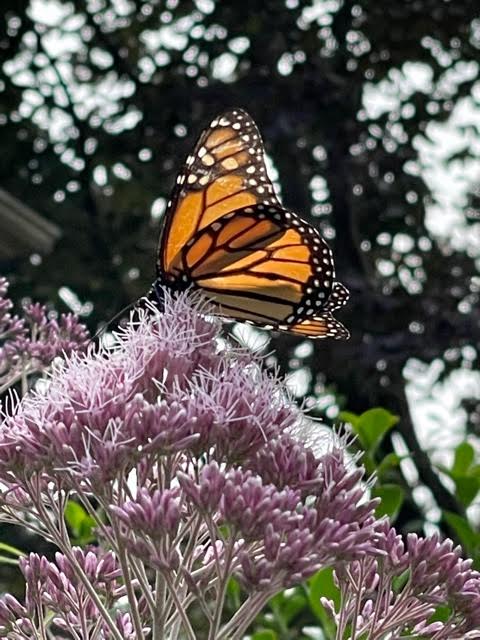
Monarch stop on Joe Pye Weed

STOP. Embrace 3 L’s – LOOK, LISTEN, and LOVE. Do you stop completely at a stop sign or are you a rolling-stop kind of person? Many of us adopt the rolling-stop at intersections unless we see a police car near-by. It may be an indication of how we live our lives. What’s next? I can’t wait to ______! We are so eager to “be there,” wherever that may be. What about being HERE?

Do you STOP at the intersection of one thought before going into the next thought? Often, I do not make even a rolling-stop between thoughts. What does it take to come to a full STOP in your mind? I find that a 20-minute meditation practice is helpful, but not foolproof. How do you practice stopping your mind chat for inner peace?                                                                                           

What is important is that you find ways to LOOK. Look in both directions. Look at negative chat and positive chat. Look with curiosity. Look without judgment. Look with flexibility. Look at THIS MOMENT and listen. What? What is there to listen to in “this moment?”  

LISTEN for your breath to slow down. Listen to your in-breath. Listen for your out-breath. After listening to your body, listen to your inner thoughts. Listen to what you tell yourself in the intersections of your driving. Listen to what you tell yourself in intersections of your thinking. Recognize that you can experience space between busy thoughts. Holocaust survivor Victor Frankl is attributed with the wise saying: “Between stimulus and response there is a space. In that space is our power to choose our response.” That space is a “pearl” of peace – a calm and compassionate state of being. Generations of people have labeled such spaciousness with many names.

LOVE. What? That’s part of stopping at a frigging stop sign? Yes! Love how you have the freedom to drive yourself somewhere. Love how the intersection STOP sign is for your safety and the safety of others. Love this moment of time. Take time to watch a butterfly. Love how you have constant intersections between thoughts. Love how consciousness of your many thoughts is a possibility. Too often we are not aware of our own thinking patterns and how they attach to traumas we experienced in the past.

Pearls of Peace (PoP) quiz:

4.What are the times that you recognize the spaciousness of calmness and compassion?

5. Do you have a name for such a state of being?


Pop Bead “Pearls,” Peace and Personalities

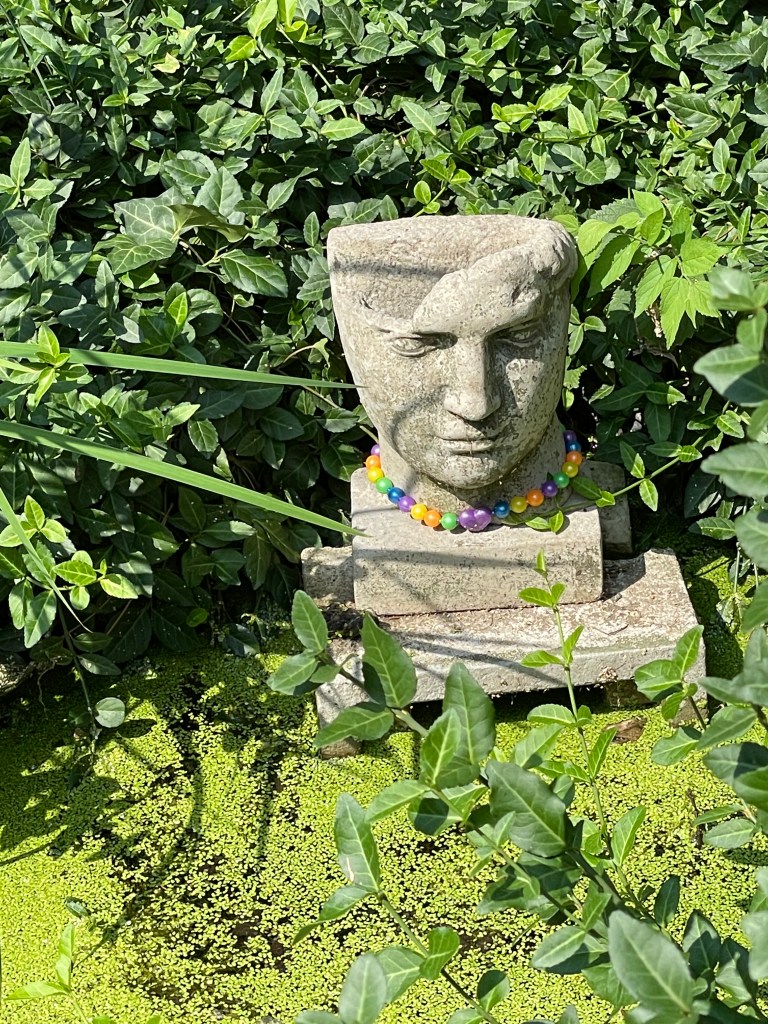
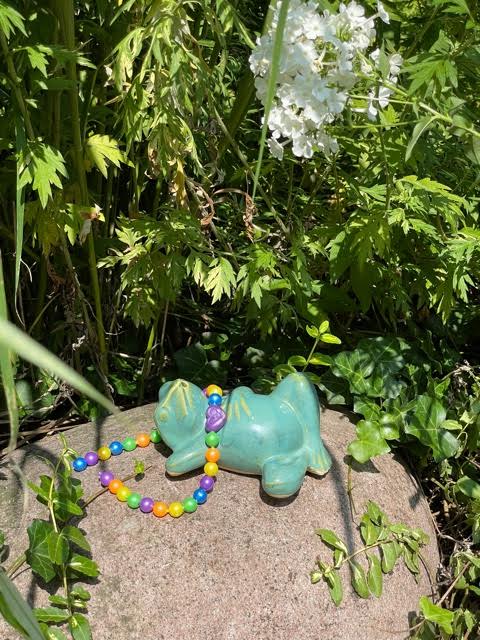
Pop bead “pearls” and phlox

Pop bead “pearls” have flexibility as they can be pulled apart to make new combinations of beads. Sometimes people lose any sense of flexibility. They struggle to make new configurations in their personalities. There are no easy developmental paths. Most of us have tripped up, slipped up or even flipped upside-down when we encountered irritants along life’s journey. In the teen years, as a parent, and in retirement we grapple with the perennial question, “Who am I, really?” There is no one answer, as we play many parts or roles in our personality through the decades. Shakespeare’s As You Like It called the world a “stage” and told of each person “playing” many parts. Pop beads offer play, but adults may forget they have playful parts in their personalities. Remember, you are writing your own script.

People used to think of personality as set like plaster at age 30, but the reality is that personalities have plasticity like pop beads! You can make personality changes! The “Big Five” traits of personality in research–conscientiousness, agreeableness, neuroticism (a pessimistic attitude characterized by anger, anxiety, and/or depression), openness, and extraversion–are open to shifts for inner peace in adulthood.

How might pearls relate to peace? Born from adversity, pearls have something in common with peace. We marvel at the luster and simple beauty of a natural pearl without considering its fragile beginnings. Similarly, we admire peace–within ourselves, in our families and community, nation and planet–often with little appreciation of the struggles involved along the way before peacefulness could shine through.

It can take centuries to create peace within a nation. It may take decades to form some semblance of inner peace in your personality. Start creating more inner peace within yourself today. It is a possibility. Pop a pearl of peace into your thinking today.

Pearls of Peace (PoP) Quiz

2. What have been irritants in your life?                                                                                                                 3. Did you grow wiser in any way because of some “irritant”? If so, in what way(s)?  

To read more about Jan and her books, please visit Janis Johnston’s website.

Pearls-of-peace Farmers

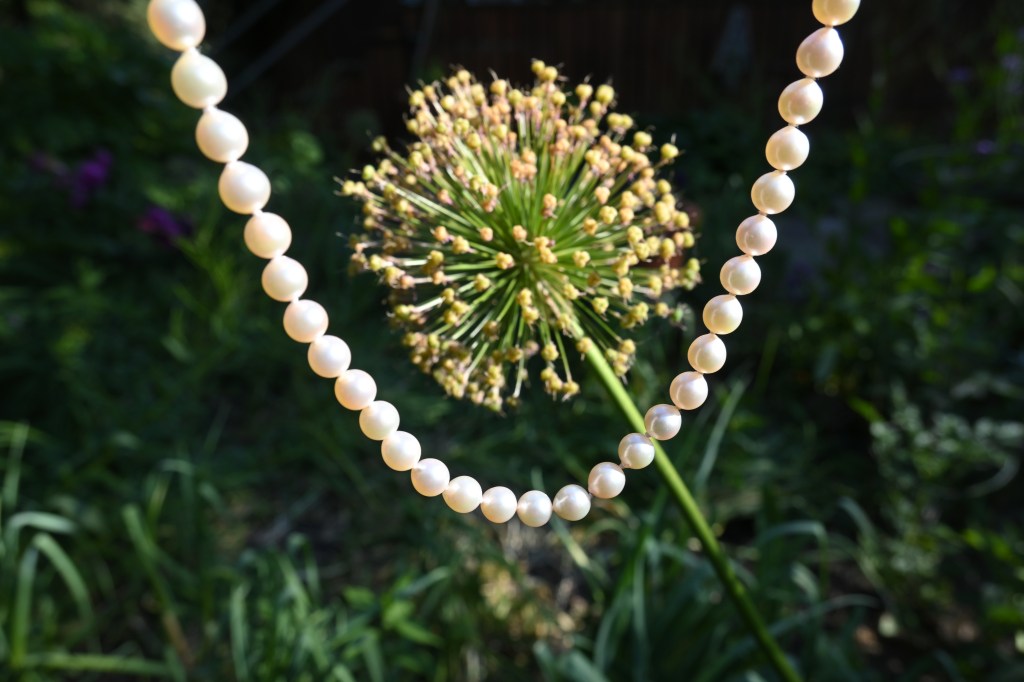
Pearls and purple sensation allium (retirement stage)

We will be pearl farmers in this blog, pearls-of-peace farmers. I read online directions for how to “farm pearls” at home: “Place a small bead made from another oyster’s shell into the reproductive organ (if you can find it).” Hmm…this is getting interesting. “Place a piece of another oyster’s mantle (the organ which makes the shell) with the bead…close the oyster, put it back in water, and wait for 2-3 years.” This pearl-raising makes waiting 9 months for a baby sound less daunting. However, some pearls fail to form in their parent shell and some babies fail to thrive. Miscarriage and other baby traumas are more common than most people realize.  

At a further point along personal odysseys, some individuals cannot wait for their retirement. Then they arrive “there” and do not find the peace of mind that was imagined. Successful pearl farming may appear to be an easy way to make a living, but it is a long-term investment. A successful retirement also is a long-term investment of time and money for a quality outcome. More importantly, I believe that a quality retirement experience requires one to rewire their personality and ability skillset in this important developmental stage of living. Regardless of your present age, what parts of your personality might benefit from rewiring?

The word rewire has meanings for both electricity and psychology. Rewiring refers to replacing faulty electrical wiring when thinking of electrical work. Psychologically, rewiring is a personality self-reorganization to provide a greater sense of purpose and meaning. Like pearls strung together for a necklace, you have various parts of your personality strung together. Is it time to restring or rewire?

Pearls of Peace—PoP quiz:

  1. What is your association to pearls?  

My first pearls were a gift from my mother-in-law. She gave me her mother’s pearls. Legacy pearls are a metaphor for ancestor importance.    

To read more about Jan and her books, please visit Janis Johnston’s website.                    

Pearls and Trauma

Peony and pearls

Pearls have a trauma ancestry. Their family of origin story begins in marine oyster or freshwater mussel shells. Pearl conception occurs as a natural defense against an intruder. An irritant–such as a parasite–enters the innocent “parent” oyster or mussel between the mantle (or muscle) and the shell. The protective mantle gets busy, laying a fluid on top of the irritant. This layering substance, called nacre or mother of pearl, raises a pearl to adulthood. Jewelry is a pearl’s final or retirement developmental stage.  

You may have a trauma history as well. Whether you experienced big-T trauma, or a series of little-t traumas in your life, your personality also acts as a defender like the pearl’s story. Most of us experience traumatic intrusions in our lives. Our bodily and/or mind integrity becomes threatened. It is natural to want to protect yourself. Only sometimes you place so many limits onto yourself in protector-mode that you cannot use your full potential. You can find little peace.

Pearls are diverse. They form in various shapes and sizes, not just in the familiar round shape. Pearls, like people, come in a variety of colors. Black pearls get their color from their oyster’s nacre. Natural pink and lavender pearls come from freshwater pearl mussels. Pearl farming does not kill the parent shell. Pearl farmers maintain a sustainable practice by being careful in handling the parent shells. As oysters age, they typically birth better pearls than first-generation pearls.

Pearls seem to need attention. If a pearl necklace is locked away, over time the pearls lose their sheen and become dull. While pearls are categorized as a gemstone, pearls are unique in claiming the only gem status to form within a living creature! Unique among diamonds and other gemstones, pearls require no cutting or polishing before use. Pearls are precious.

Pearls represent a fresh start. Peace in the family, post-grief peace, and retirement peace all benefit from a fresh outlook. In these blog posts, we will explore how to string pearls of peace wherever you find yourself on your life’s odyssey.