Black History & Herstory Month

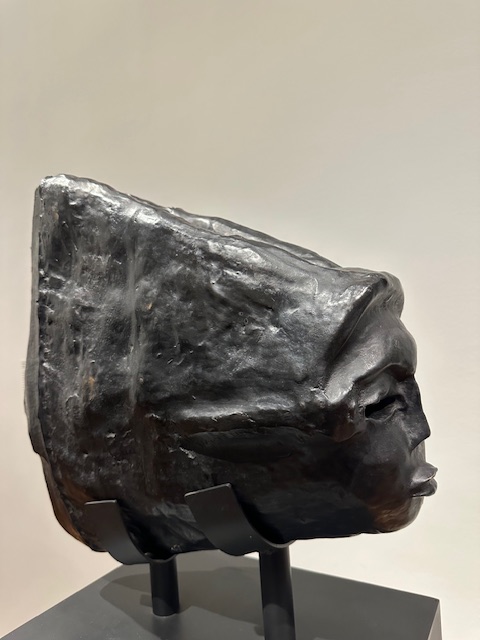
To Craft a Double Consciousness or Two-faced, Theaster Gates, 2018, Art Institute of Chicago

Black History month has a predominant focus on men who championed racial equality — with some exceptions.

On Rosa Parks’ birthday (2-4-25), Congresswoman Joyce Beatty (Ohio) spoke passionately about Parks’ enduring legacy in U.S. voting-rights progress. The Rosa Parks Commemorative Coin Act was initiated to honor the lifelong peaceful equal-rights activist.

In 1996 Parks was honored with the Presidential Medal of Freedom and the Congressional Gold Medal in 1999. A department store seamstress, Parks received a nearly 100% affirmation vote with only Representative Ron Paul (Texas) in dissent for her Gold Medal. Parks observed the voting from her Detroit home where she had moved due to the firing from her seamstress job and her family enduring threats.

Upon her death in 2005, Parks was honored to lie in state in the U.S. Capitol Rotunda. In 2013 the Postal Service recognized Parks’ “soft” power with a Forever Stamp on her 100th birthday and Congress approved Parks’ statue in Statuary Hall for her importance in “forming a more perfect union” and “establishing Justice.” Her seated granite statue, dressed similarly to that momentous day on the Montgomery, Alabama bus, was the first full-length statue of an African American individual in the Hall. Her statue joined busts of Martin Luther King, Jr. (1986 placement) and Sojourner Truth (2009 placement).

Rosa Parks was a member of the NAACP and was elected secretary. She had knowledge of many injustices in mandated racial segregation in public places. When she was ordered to give up her bus seat to a white passenger, she merely sat still. Arrested, she was pronounced guilty of “disorderly conduct and violating a local ordinance.”

As Joyce Beatty took the Congressional podium, she elaborated on the iconic memory of Parks refusing to give up her bus seat: “Rosa Parks was more than one moment… as America nears its 250th birthday, we must honor not only our founding fathers but also the mothers of our democracy.”

Let’s honor more mothers of democracy as “first” Black women to crack ceilings: Barbara Jordan – Black Southern woman elected to Congress, Rebecca Lee Crumpler – Black woman graduate in U.S. medical school, Ida Lewis – editor-in-chief of Essence magazine, Ruth Batson – Black woman on Democratic National Committee, Ketanji Brown Jackson – Black woman on Supreme Court, and Kamala Harris among others.

A first National Youth Poet Laureate, youth role model Amanda Gorman took another Washington, DC podium. Invited by Jill Biden to address the nation at President Biden’s inauguration, Gorman’s words from “The Hill We Climb” are especially poignant at this time in U.S. history/herstory:

“…We lay down our arms
so we can reach out our arms
to one another
We seek harm to none and harmony for all
Let the globe, if nothing else, say this is true:
That even as we grieved, we grew
That even as we hurt, we hoped
That even as we tired, we tried”

Pearls of Peace (PoP) Quiz

371. What story do you tell for “a more perfect union?”

372. How are you growing from grief?                     

A Bully-pulpit vs. Bullying

President Theodore Roosevelt coined the term bully-pulpit. His puzzling meaning included the fact that he knew he had a powerful leadership pulpit for advocating his agenda to a wide audience. Roosevelt wielded enthusiasm and selling power as he accomplished justice. Understanding both business and labor viewpoints, he intervened in the Pennsylvania coal strike of 1902. Promoting conservation, he expanded national parks/national forests and used executive orders to protect natural resources. His Emergency Banking Act held economic pieces together to prevent a run on banks. He held the line on monopolies. He helped establish the Food and Drug Administration to regulate food safety. His pulpit extended across the globe to make a more stable world. He fostered the building of the Panama Canal. He won the Nobel Peace Prize for his mediation skills in ending the Russo-Japanese War.

Today we have two candidates running for the U.S. Presidency who wield their bully-pulpit promises in opposite directions. Supporters sometimes are actual bullies. Name-calling in this election cycle will go down in U.S. history as winning a Most Vile Prize. A 47-year-old man said the following about his T-shirt: “I understand it’s derogatory…we can joke. We can wear crude shirts. Everybody here is having a good time.” A female vendor who sells vile T-shirts also equivocated: “I think it’s tacky but that’s what my customers want to buy, so that’s what I have.” Free speech was not intended to create laughter for some at the expense of trauma for others. How can bullying elevate a justice pulpit?

It is time for a justice reset.

A day away from Election Day, pollsters continuously arrange states’ puzzle pieces in favor of one candidate over the other. News outlets continuously question whether this group or that group will even show up to cast their sacred vote in the world’s most watched democracy.

It is time for a participance reset.

According to WBEZ’s Dan Tucker, Executive Producer of Reset, Australia handles their national elections in a far different manner from the U.S. method. Voting is mandatory in Australia. Their results seem to lead to more moderate political discussions, less voter disenfranchisement and overall, more voter trust. One only wins if one earns majority support. Wait, isn’t that what winning means? Isn’t that justice? A child understood the importance of justice in characterizing the interlocking pieces of the U.S. government.

With Australia’s voting system, no gerrymandering or voter suppression occur. To read more about the collaborative effort among WBEZ, the Chicago Sun-Times, and the University of Chicago’s Center for Effective Government, check out Democracy Solutions Project  (https://chicago.suntimes.com/democracy).

Another American Theodore, poet Theodore Roethke, penned these words: “In a dark time, the eye begins to see….” Let’s open our eyes to justice and seek higher ground in future elections. Let’s agree on one thing: “…pledge our allegiance…with liberty and justice for all.”

Pearls of Peace (PoP) Quiz 

339. Where do you see justice at the forefront in the U.S. today?

340. What ideas encourage a participatory democracy?        

Justice January

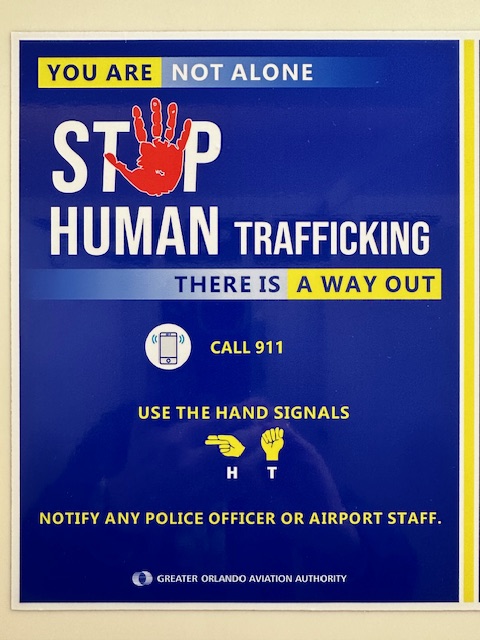
On Martin Luther King, Jr. Day, we address the dire consequences of injustice. January is Human Trafficking Prevention Month. While impossible to believe, reportedly there are 50 million modern slaves due to human trafficking today. It is estimated that 20% of trafficking victims are children. A group called Love Justice International is making a difference. With their installation of transit monitors at railway stations, bus stations, and border crossings, Love Justice looks for red flags of trafficking. The group’s efforts have intervened with 50,000 individuals before they were physically and/or psychologically exploited for their bodies or their labor. Human trafficking is a hidden and hideous crime. A language barrier and/or fear for one’s life prevents victims from asking for help.

I found signs (in English and Spanish) for victims to seek help in ladies’ bathroom stalls in airports. In Chicago there were many details about various kinds of trafficking. While many think of sex trafficking (street prostitution, massage parlor prostitution, internet pornography or “escort services”), the bathroom list of other trafficking activities is long: private home housekeepers or nannies, servile marriages, farm work, factory work (meat-packing plants), construction work, begging rings, and hotel or restaurant work. The bathroom sign also detailed having passports or identification taken away and being threatened with deportation if one refuses the work.   

The Federal Motor Carrier Safely Administration (of the Department of Transportation) requests that drivers keep their eyes open at transit sites, highway rest stops or gas stations. There are Indicator Cards to aid one in detecting human trafficking. While not all indicators would be present in every situation, these indicators could help detect a suspected trafficker and calling 9-1-1 could save a person from victimhood:

  • A vehicle dropping off/picking up individual(s) at other vehicles/trucks;
  • Flashing headlights at people in the parking lot;
  • Talk about a “commercial company” or “sale” on citizens band (CB) radio;
  • A suspicious vehicle parked in an unusual location;
  • A person told not to speak or appearing coached on what to say;
  • A person exhibiting signs of physical or emotional distress or abuse.

Human trafficking is prohibited in the 13th Amendment to the U.S. Constitution, yet justice often eludes victims. Many criminal situations are underreported, as recent migration, substance use, mental health issues, runaways or homelessness frequently accompany victimhood. And then there is the monetary factor — according to the National Human Trafficking Hotline, this is a multi-billion dollar “industry.”

While it seems that U.S. culture might rise above such sordid slavery of individuals, we have to acknowledge where we are at the present moment. I took the time to read the bathroom charts and hope that others will educate themselves about this important issue as well. Let’s follow our Constitution. Yes, Dr. King, we dream “…that one day this nation will rise up and live out the true meaning of its creed….”

Pearls of Peace (PoP) Quiz

255. How might you prevent the abuse of children in your community?

256. What steps can you take to recognize labor trafficking?