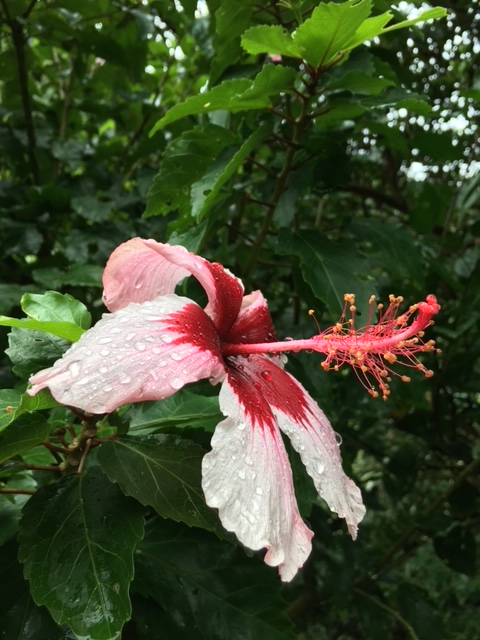
Harvest time is a reminder that another growing season is winding down and winter is waiting in the winds. Autumn presents a wistful time for avid gardeners. As I savor the second crop of my ever-bearing red raspberry pearls and hunt zucchini hiding under giant leaves, I realize that these pickings are precious due to their limited timeframe.
My aging garden is a reminder of our human life cycle. John O’Donohue, Irish theologian and philosopher, acknowledged both the fears and gifts of aging. Few speak as passionately about the gifts of aging as O’Donohue. Ironically, he wrote about autumn as a favorite season; he died suddenly and unexpectedly at age 52 before reaching the winter of his life.
O’Donohue’s old-soul understanding of aging inspires many: “…when it is autumn in your life, the things that happened in the past…almost unknown to you, now yield their fruit…you are able to gather lost moments and experiences, bring them together, and hold them as one…[you] see aging not as the demise of your body but as the harvest of your soul…aging can be a time of great strength, poise, and confidence.”
Much of American culture dwells on the spring and summer of one’s life as our times of strength and confidence. Productivity and optimal progress are most esteemed in the U.S. more-is-better attitude. Losses are sidestepped and sometimes denied because of “move-on” thinking. However, writer Joyce Carol Oates maintains that our losses make us more human. Near the end of her memoir, she consoles herself in her widow-status with these thoughts: “I kept myself alive…being older is this kinship of losing people. I have gained a sense of proportion…many things do not matter to me anymore…almost everything is trivial. People complain about the weather.”
Yes, people constantly complain about trivial weather conditions, although the devastating hurricane in Florida, frightening wildfires in California, and massive flooding in Pakistan (affecting 33 million) link people to interdependent losses. We might ask ourselves if we are in the autumn season of our planet. According to NASA, climate change (especially drought) has been the culprit for the rise and fall of past civilizations. Current NASA research documents the rapid changes in Earth’s ice sheets, along with rising global sea levels since 1992. NASA is one of 13 federal government agencies that make up the U.S. Global Change Research Program.
Climate change can no longer be denied.
Solutions to climate change include every world citizen: making biofuels from organic waste, increasing wind and solar power, protecting forests and green spaces, switching to sustainable transportation, encouraging more vegetarian meals, recycling, reducing energy usage, and cutting back on consumption and waste (as in using less plastic).
As we are gardeners of our planet’s bounty, let’s harvest some confidence that we can pull together for the benefit of our interdependent global climate.
Pearls of Peace (PoP) Quiz:
123. What solutions can you think of for reducing climate change?
124. How can you harvest confidence for taking action steps toward a green recovery?