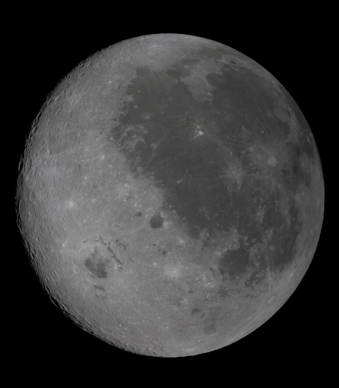
My children will remember when they ganged up on me, rushed me to the front porch of our home, and proclaimed that both of them saw a “Blue Moon,” although it could be a moonless night. This was due to my telling them when they were in elementary school that we only went to eat at a certain fast-food restaurant (the one that gave “Happy Meals”) when there was a bonafide Blue Moon. A Blue Moon month is one where there are 2 full moons within that month. It does not occur every year. What, you ask? Well, there are a few seasonal Blue Moons, happening when 4 full moons occur within one season (instead of the usual 3 full moons per season).
I am not a fan of junk food and did not want my children to get hooked on it. I made dinners from scratch, preferring nutritious food for my family. I made going out for fast food a once-a-Blue-Moon event. Initially, this worked. Then they grew older. They saw other kids at school bringing the toys from those Happy Meals to school lunchtimes. Because they were so clever in their conniving, I usually gave in and we trooped off for burgers and fries a bit more frequently. A nutritionist is on my side, claiming that this restaurant chain’s menu “lacks nutrient-dense fruits and vegetables, and most items contain high amounts of sodium and fat.”
May, 2026, was a true-Blue Moon month! The lunar cycle of the Moon orbiting Earth is 29 ½ days, shorter than most months. But last evening, May 31st, was the second full moon this May, having experienced the first full moon, the Flower Moon, on May 1st.
Astronaut Christine Koch was privileged to fly the 10-day voyage to the dark side of the Moon. One day as she whizzed closer to our mysterious Moon, she called out through her space capsule window: “Hello Earthshine!” Earthshine is that eerie glow that illuminates the unlit part of the Moon; it shows up best when a New Moon is just a sliver in the night sky. Actually, sunlight is responsible for this hide-and-seek view on a clear night. Sun’s rays reflect off Earth (especially oceans, ice, and clouds), traveling onto the Moon which reflects back to human eyes. As sunlight illuminates lunar rocks, they reflect from 3-12% of the sunlight.
This intricate dance of bouncing light is remarkable. Our astronauts are remarkable. Koch advises, “…the seemingly impossible becomes possible if you just believe in it and are willing to work hard and come together to achieve it.” Yes, let’s reflect our best human attributes and come together, as families, neighbors, and citizens of one remarkable solar system.
FYI, according to the Royal Museums Greenwich, the next Blue Moon will be May 20, 2027, when a seasonal Blue Moon opportunity takes place. Don’t miss it!
Pearls of Peace (PoP) Quiz
502. What defines a happy meal preference for you?
503. When do you admire our special Moon?

