Can Springtime Jumpstart Social Prescribing?

Winter aconite bulbs in buttercup family (Ranunculaceae)

There is something magical about the warming of days and the return of blooming bulbs unfurling upward, while trees are budding outward, after their winter hibernation. Spring (or vernal) equinox occurred March 20th. Vernal equinox comes from Latin vernal (new or fresh), aequus (equal) and nox (night). Spring equinox delivers daylight in equal amounts of approximately 12 daylight hours and 12 darkness hours as the sun is above the equator at midday.

March equinox in the Northern Hemisphere is the warming trend signaling that summer is not far away as this section of Earth begins showing more hours of sunlight than darkness. Look north for the Big Dipper to be at a high point. In the Southern Hemisphere, March equinox is the polarized opposite; as this region begins tilting away from the sun, the beginning of autumn occurs. According to EarthSky, the fastest sunsets and sunrises of the year occur on the equinoxes. Another Nature tidbit — auroras’ sky dances frequently happen around autumn and spring equinoxes when geomagnetic storms on the sun cause rippling disruptions in Earth’s magnetic field. This awesome feature of Mother Nature reportedly is one of the earliest patterns ever recorded by scientists. https://earthsky.org/sun/aurora-season-auroras-equinox-connection/

I was in Washington state before spring equinox and received an aurora alert on my cell phone! Being an avid sky observer, I set my phone alarm to get up at the prescribed possibility time, but a clear sky did not unfurl any aurora beams of beauty. However, just this possibility of seeing a blooming sky made me smile.

There is something healthy-feeling about warmer temperatures, as more people gather outside and enjoy Nature’s bounty. Doctors are learning to administer social prescriptions. Physicians Alan Siegel and Carla Perissinotto offer this description: “Social prescribing means connecting of people to activities, groups, and support that improve their health and well-being. These often include a range of social services, the arts, nature, volunteerism, movement, companionship and community-building.” Social prescribing is active in 32 countries. I wonder if social prescriptions are refilled more frequently in Nature’s pharmacy in springtime.

Massachusetts has a statewide program in social prescribing. For example, a hypertension research study (Brigham and Women’s Hospital in Boston) utilizes social prescriptions through an art-prescribing company, Art Pharmacy. Based in Atlanta, Art Pharmacy partners with programs in California, Connecticut, Georgia, Massachusetts and New York. Founded in 2022, one goal of Art Pharmacy is to address the loneliness and mental health crises of U.S. citizens. Traditional physical and mental health care can have serious gaps in reaching many individuals’ needs. Social Prescribing USA, a national advocacy organization, has 8 states with pilot projects.

Springtime means the beginning of gardening season for me. All of us need sunshine, both literally and figuratively. Spring delivers more literal sunshine, but the figurative sunshine of well-being is elusive for many.

Pearls of Peace (PoP) Quiz

379. What does springtime mean to you?

380. How might you write your own prescription for social well-being this spring? 

Pearls of Pride

The definition of “pride” today is “a feeling that you respect yourself and deserve to be respected by other people.” This has a different connotation from an older definition which meant “inordinate self-esteem.” Likewise, our definitions of personhood are evolving.

The first Pride march in New York City took place 6-28-1970, one year after Stonewall Inn, a Greenwich Village gay bar, was raided by NYPD. Violent demonstrations followed. Stonewall became a rallying call, creating a turning point for gay rights. Pride Month was recognized nationally by President Clinton in 1999 and later endorsed by President Obama. Month-long activities highlight the courage and contributions of lesbian, gay, bisexual, transgender, queer, intersex, and asexual (LGBTQIA+) individuals.

Everyone’s story is unique. Here is one story.

Gender Magic (2023) is the book that Mx. Rae McDaniel wished they might have had as a guide when they were young. Growing up with missionary parents was challenging for this adopted child. The following words convey McDaniel’s extreme discomfort: “The journey to my nonbinary identity was like discovering I’d been walking around in shoes a half size too small. Until I was almost 30, I didn’t notice how uncomfortable and constricted I felt in my assigned gender as a woman, but after decades limping around with blisters, my cramped toes screaming for relief, something had to give.”

According to the National Library of Medicine, it is impossible to know the population size of transgender individuals in the U.S. The Census Bureau has a don’t-ask-don’t tell approach to gender- identity differences. A study searched the Cumulative Index to Nursing and Allied Health literature and estimated 1 million adults nationally are transgendered individuals.

Further study results are frightening. According to a 2008 national survey, transgender individuals were 4 times more likely to live in poverty with twice the rate of unemployment and homelessness: 28% postponed medical care due to discrimination. More traumatic, 41% attempted suicide.    

Research (June, 2022) by the Pew Research Center reports that 1.6% of U.S. adults are transgender or nonbinary; their current gender identity and assigned-at-birth sex differ. Younger adults (under age 30) are more likely to report being trans or nonbinary: 2.0% under 30 are a trans man or trans woman, while 3% identity as nonbinary which means they are neither man nor woman (or are not strictly one or the other). The American Psychological Association explains: “Transgender people, like cisgender people, may be sexually oriented toward men, women, both sexes, or neither sex.”

Those of us who do not question our gender and/or sexual identity are not as accepting of differences as we might be.  Physician and poet Jeremy Nobel (Project UnLonely: Healing our Crisis of Disconnection) has pertinent advice: let’s accept each other as “who we are and welcome hearing their story.”   

Pearls of Peace (PoP) Quiz

299. What is your experience in fostering inclusiveness for those who identify differently from you?                       

300. How might you foster cultural connotations that are inclusive of all people?    

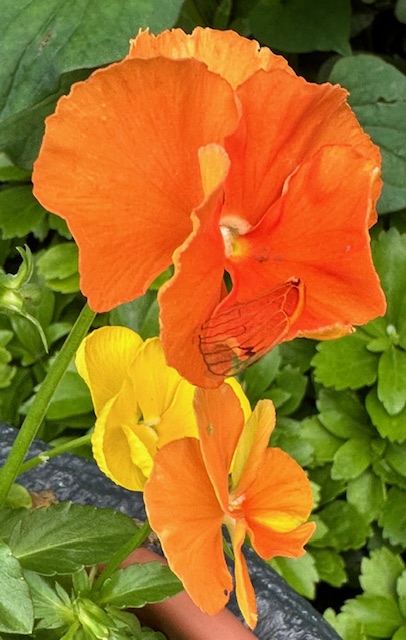
Wear Orange: Hunt for Peace

Hostility is a trainload of energy that can go off-track. Wear Orange Weekend (June 7-9) commemorated victims and families of gun violence, which can derail entire communities. One estimate is that 120 individuals are shot and killed every day in America (with twice as many suffering wounds from gunfire).

The U.S. movement of Wear Orange began in 2013 after the tragic killing of 15-year-old Hadiya Pendleton, a student at King College Prep High School. She was shot in the back while standing with friends on a Chicago playground only one week after marching in President Obama’s inaugural parade. The 18-year-old gunman was sentenced to 84 years in prison, admitting that Hadiya was not the intended “target.”

Hadiya’s friends began honoring her life by wearing orange, the vibrant color worn by hunters to alert other hunters that they share space in the woods. It seems unbelievable but guns lead as the cause of death among American children and teens.

Prominent psychologist Abraham Maslow was asked a question in a 1968 magazine interview for Psychology Today: “If a …young psychologist came to you today and said, ‘What’s the most important thing I can do in this time of crisis?’ what advice would you give?”  Maslow replied: “I’d say: Get to work on aggression and hostility. And we need it now…time is running out. A key to understanding the evil which can destroy our society lies in this understanding.” 50+ years later we still are not addressing aggression and hostility with enough urgency.

While June 7th, Hadiya’s birth date, was the 10th National Gun Violence Awareness Day, June 8th was named National Best Friends Day by the U.S. Congress in 1935. Enthusiasm for the day has waned, but we need affirming friendships more than ever. I wonder if those who take another’s life have any best friends.

According to National Today’s survey of 1000 adults (https://nationaltoday.com/national-best-friends-day/), 19% named their dog as their best friend and 9% named their cat. When asked if they had a best friend, 15% answered no. Happily, many reported that they do not have only one best friend!

Primary-care physician and poet Jeremy Nobel authored Project UnLonely: Healing our Crisis of Disconnection (2023). His words might apply to individuals who shoot people: “When we are too lonely for too long, the way we make sense of the world changes, leaving us increasingly at risk for even greater loneliness. We fail to thrive and flourish, we get sick, we spread the affliction to others, and we die before our time.”

What signals violence ahead? There are many tracks that can lead to gun violence, but the most powerful predictor of future violence is a history of violent behavior according to the American Psychological Association. We must “get to work” on prevention.  Let’s address the needs of young children and their parents. Let’s hunt for peace.    

Pearls of Peace (PoP) Quiz

297. Is your best friend an animal?

298. Do you know anyone who seems disconnected and needs friendship?  

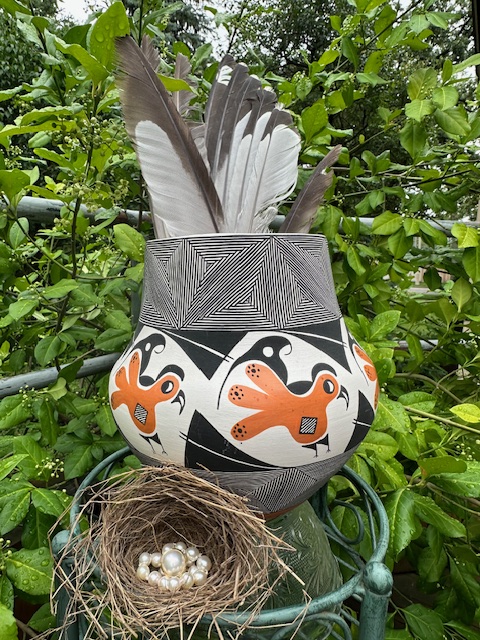
Seasonal Pearls

What color are your pearls? Hint: my interest is in your figurative pearls.

Perhaps Sister Joan Sauro’s words will explain: “There is a pearl in every season. Find it. Then give all you have to claim it” (Whole Earth Meditation: Ecology for the Spirit).

May is a busy month for addressing important populations within the U.S. In addition to May’s Asian American, Native American, Native Hawaiian, and Pacific Islanders Heritage Month (see “Hula Pearls,” 5-6-24) and America Mental Health Awareness Month (see “Synergy for Mental Health,” 5-13-24), May also is Older Americans Month. Some individuals relate to all 3 of these populations.

Numbers of older adults coping with depression range from 7.7% (adults 50+) to an estimated 31% in some groups (ages 65+). Older adults’ symptoms of depression may not be recognized by their physicians. Compounding caretaking, older adults may view mental health help as a stigma, especially in non-English speaking individuals.

A population bumper crop of older adults is ripening: it is estimated that 4.1 million Americans will reach age 65 every year from 2024-2027. Reportedly, more than 11,200 Americans turn 65 every day (The Alliance for Lifetime Income). Regardless of exact numbers, depression, anxiety and loneliness plague too many older adults.

An exciting program to address this looming population, created 20 years ago at the University of Washington in Seattle, Program to Encourage Active, Rewarding Lives (PEARLS) coaches older adults to be proactive about their wellbeing. Depression is defined in everyday examples by coaches for participants (identified in community organizations); problem-solving skills are taught to enable self-sufficiency for more active lives. The free program takes place in homes or preferred community settings. Online PEARLS began during the pandemic. One-hour sessions for 6-8 weeks (over 4-5 months) start with each person’s daily routines of “where they are.” Coaches have supervision with mental health practitioners. PEARLS coaching has reached adults across 26 states, including our Memorial Day veterans, people of all ages with disabilities, and especially those 65+.

American education is not forward-thinking regarding older adults. My doctoral program in counseling psychology had courses on childhood, adolescent development, and psychology of young adults, but no specific coursework on midlife (since identified as ages 35-64) or gerontology.  Relatively few colleges and universities offer a gerontology major, despite a growing need. Of the 5 institutions graduating the most students in gerontology, 89.9% are females. We need more compassion and creativity in our thinking about seasoned citizens.

Recently I was asked to talk about creativity enhancing aging on a podcast, “Older Women and Friends” (interviewed by host Jane Leder). Check it out:  https://www.buzzsprout.com/2054889/15102414  

Seasonal growth is important at every age, but retirement age is a reminder that our true wealth consists of time, how positively we spend it, and bodymind health. Let’s meet aging with colorful pearls of creativity!

Pearls of Peace (PoP) Quiz

293. What season of your life has been your most creative time?

294. What about now?          

Digital Zoomers & Boomers

Gen Z’ers (Zoomers) – born between 1997 and 2012 (or currently the ages of 12-27) – have needs that current culture has overlooked. Zoomers are suggested to be the “best educated” generation. In the U.S. 57 % of Zoomers have enrolled in a 2-year or 4-year college (compared to 52% of Millennials and 43% of Gen X). Education has a goal of teaching critical thinking skills, but there is a lag in teaching social skills as Zoomers also are identified as the loneliest generation. Who teaches kindness and sincerity?

Chinese sage Confucious (551-479 BCE) focused on personal and governmental morality with kindness and sincerity as inspirations. He is attributed with this pithy observation: “Education breeds confidence. Confidence breeds hope. Hope breeds peace.” We certainly need to figure out how to wage peace on the planet. Loneliness is not an arrow headed in a direction toward the target of peace. Statistics kept on mass shooters show that individuals are younger than in previous years; the median age of U.S. mass shooters from 1980-1989 was 39 but the median age since 2020 is 22 years old.

Shooters at K-12 schools and colleges have been current or former students. Many were victims of cruel teasing and bullying. What is lacking in our educational systems for this “best educated” generation?

Social psychologist Jonathan Haidt teaches ethical leadership at New York University’s Stern School of Business. When interviewed by Krista Tippett, Haidt offered this educational recommendation: “Let’s cancel 2 years of math for all of our high school students…and put in statistics, basic economics…and introductory psychology.”  In a 2022 essay in The Atlantic, he addressed the monumental role of social media upon young minds.                                  

I am always amazed to see dependent teens holding some digital device in their hands instead of playing the old-fashioned way (i.e., using one’s hands for a myriad of independent possibilities). A recent U.S. Congressional hearing that grilled the major CEO’s of social media will not curb the time Zoomers spend on their gadgets. Zoomers are guinea pigs as the first generation to be weaned on social media and the internet.

Baby boomers — born between 1946 and 1964 (or currently the ages of 60-78) — are hitting retirement age in record numbers, although 1 in 5 individuals 65+ choose to continue working according to a Pew Research Center study. However, 2024 is slated as a record-breaking year for U.S. retirement as an average of 11,000 Americans a day will celebrate their 65th birthday.

How many of the newly retired or semi-retired will join Zoomers in spending most of their time in the digital universe? What other possibilities might exist for this highly talented generation? What opportunities are there for getting involved in some intergenerational activities that interrupt loneliness for both Zoomers and retired Boomers?

 Pearls of Peace (PoP) Quiz

261. How much of your day do you hand over to a digital existence?  

262. What might you do to reach out to Zoomers?

Pearls of Engagement

Why do “rules of engagement” or ROE have a military definition? The “rules” in ROE refer to guidelines for the ways in which the use of military force is deemed “acceptable.” Often, these rules breakdown in combat with terrifying consequences.

The word engagement simply means “an arrangement to do something or go somewhere at a fixed time.” A popular use of “engagement” refers to a loving agreement to marry another, not wipe them out. However, relationships sometimes are at war. We need rules for engagement.

Psychologist John Gottman’s research on couples can predict a divorce or breakup-in-the-making if the “Four Horsemen” are present – criticism, defensiveness, contempt, and stonewalling. The #1 piece of advice from the Gottman Institute for sustaining a romantic relationship applies to other relationships too — turn toward (connect with) another’s bids successfully to pay attention; care about even small stuff that another person finds important in the moment. Make bids a practice. If needed, it is OK to prompt someone verbally: “I’m making a bid for attention now.”

We are creatures of belongingness or social connections, but loneliness is on the rise in the U.S. According to the Surgeon General, Dr. Dr. Vivek Murthy, loneliness tops other major health issues in the U.S. In a New York Times guest essay, Murthy reports alarming circumstances with a breakdown of engagement with others: Loneliness is more than just a bad feeling. When people are socially disconnected, their risk of anxiety and depression increases. So does their risk of heart disease (29%), dementia (50%), and stroke (32%). The increased risk of premature death associated with social disconnection is comparable to smoking daily — and may be even greater than the risk associated with obesity.”       

Playwright Tennessee Williams challenged loneliness (Camino Real): “When so many are lonely as seem to be lonely, it would be inexcusably selfish to be lonely alone.”

Murthy challenged Americans to a “5-for-5 Connection Challenge” between December 4th-15th.

Step 1 – Commit to connect (by choosing 5 actions and 5 days in a row to connect with people;

Step 2 – Connect each of the 5 days (through choosing an action each day such as expressing gratitude, offering support, or asking for help);

Step 3 – Reflect and share (by first asking yourself, “How did connecting make me feel?” Let others know about your experience and invite them to join the challenge). How did connecting make you feel?  

Here are my reflections after I took up the Surgeon General’s exercise. I enjoy connecting with others, so this “challenge” was not difficult on the surface. I found that offering support is ingrained in my training and experience; it is a natural practice. I do offer gratitude frequently, but I plan to increase this one. Asking for help is not my general practice (except in technology snafus). I found pearls of engagement in Murthy’s challenge. Let’s extend his 5-day challenge for engagement.  

Pearls of Peace (PoP) Quiz

247. Where might you need practice in offering gratitude or support?

248. When do you connect with others by asking for help?