Mothering Mental Health

What does Mother’s Day mean to you? There is a continuum of responses, as each person has unique and perhaps thorny memories of their upbringing, sometimes without a mother.

Let’s consider a mother of 6 children who lost her mother when she was 5 years old (her mother died during childbirth when a sister was born). This resilient mother is Julia Ward Howe (1819-1910). In addition to motherhood, Howe was a published author and poet, playwright, newspaper publisher, activist in abolitionism and woman’s suffrage, but perhaps best remembered for her Battle Hymn of the Republic as lyrics to the tune, John Brown’s Body. As early as age 20, Howe anonymously published in literary magazines.

Howe’s mother also was a poet in her shortened life. Her father was a Wall Street stockbroker and banker. Due to a mothering aunt and a privileged educational life with private tutors, Howe became a scholar, eventually reading and speaking 7 languages. Raised in her father’s Episcopalian religion, Howe read extensively and came to reject a Calvinistic view. She became a Unitarian; her faith became a strong motivator in her reform causes. Howe was friends with other Unitarian scholars and writers — Ralph Waldo Emerson, Margaret Fuller, Henry Wadsworth Longfellow, Lucy Stone, and Theodore Parker among others.

Howe’s husband, 18 years older, reportedly wanted a stay-at-home wife, but Howe lectured widely without benefit of stay-at-home Zoom. When her husband confessed to multiple affairs on his deathbed, Howe took the high road and wrote a flattering biography of him. Never assume that “famous” or “upper class” people escape trauma. Each person’s mental health path, regardless of significant losses, has the possibility of restoring a healing journey.

May is Mental Health Awareness month with a theme of “More Good Days, Together.” It is likely that Howe’s time spent nurturing deep friendships was part of her sustaining wellness. With Lucy Stone, Julia Ward Howe established the American Suffrage Association. There are many ways to mother or father in one’s life. Howe mothered a peace movement when she traveled to Europe for the promotion of an International Woman’s Peace Congress.

Howe’s 1870 Mother’s Day Proclamation is a testament to her passion and persistence in peace-building. Over 150 years later, Howe’s poetry has meaning for today; she frames a mother’s love for her offspring and calls into question the “justice” notion that wars can solve problems. See her full Proclamation: https://allpoetry.com/Mother’s-Day-Proclamation

“…our sons shall not be taken from us to unlearn / All that we have been able to teach them of clarity, mercy and patience. / We, the women of one country, / Will be too tender of those of another country / To allow our sons to be trained to injure theirs. / From the voice of a devasted Earth a voice goes up with / Our own. It says: ‘Disarm! Disarm!’ / The sword of murder is not the balance of justice….”

Pearls of Peace (PoP) Quiz

496. What are your earliest memories of your mother?

497. How do you view motherhood today?   

Peace One Plant at a Time

May is a wonderful month! If you are living in the Northern Hemisphere, you might welcome a reset from cold temperatures, a warming up in body comfort. Let’s also warm up peace in our hearts. I am a gardener at heart. I find much peace in gardening. Literally, gardening is grounding. I love the whiff of earthy soil turning over when I dig a hole to plant a new perennial in my garden.

A sweet inhale comes from the many scented blossoms that begin their seasonal run every spring. Angela Haupt (health and wellness editor at TIME) writes about holding a flower’s inhale for just 30 seconds to realize measurable body changes! Not only does your mood smile, but your heart rate slows and your nervous system switches on a calming state.

Cognitive psychologist Pamela Dalton is a researcher of taste and smell at Monell Chemical Senses Center in Philadelphia. She explains the science of smell. Our olfaction is so dominant that it evolves before the brain’s cortex, our thinking tool. A sense of smell helps define what we feel and may even be responsible for our survival — as in the case of smelling smoke before a life-threatening fire erupts. Although difficult to believe, the human nose can detect about 1 trillion different scents!

When you inhale a pleasant scent, you do breathe more deeply in the present moment. That deeper breath affects your entire body, including the releasing of muscle tension. Different from touch, hearing, or vision which have to pass through the brain’s thalamus before there is conscious awareness, smell travels directly to your amygdala and the hippocampus. The hippocampus holds your memories, so scent can trigger past emotions you experienced in some memory. Imagine a smell of a special food from childhood. Just a whiff of chocolate contains hundreds of different odor molecules.

Dalton suggests that such scented experiences form very early. Some compounds found in breast milk are linked with chemical properties in vanilla and may be responsible for why vanilla seems universally pleasant to nearly everyone across cultures.

I visited a lilac farm recently and experienced many inhalations of lilacs. While every person responds to scent in unique ways, this is a pleasing scent for me. Some think of lilacs with nostalgia. Seeing graceful lilac blooms swaying in the breeze brought back memories of my childhood home with a white lilac tree.

Lilacs represent peaceful vibes of tranquility with a sense (and scent) of renewal. The delicate blossoms are an early food source of nectar for bees and butterflies. Lilacs of various colors are associated with various representations.

Purple lilacs: Emotions of love and passion; White lilacs: Purity, humility, and innocence; Magenta/pink lilacs: Strong friendships and affection; Blue lilacs: Serenity and happiness; Violent lilacs: Reflection and wisdom.

Let’s embrace the symbolism of peace-enhancing lilacs.

Pearls of Peace (PoP) Quiz

494. What pleasant scents linger for you from your childhood?

495. What plant or flower gives you bodymind serenity

Reading Is Not Dead (Yet)

Can reading books make a comeback?

U.S. daily book reading for pleasure is steadily declining (40% drop from 2003-2023). A National Endowment for the Arts research lab at University of Florida teamed with University College London researchers to analyze data from 236,000+ Americans who completed the American Time Use Study.

The dearth of pleasure reading does not reflect all groups; people with higher educational levels and women are more likely readers. Unfortunately, reader-less homes where reading for pleasure could support mental health, creativity and lifelong reading are those in lower income or educational realization and rural (versus metropolitan) areas. One might argue that these folks often have two jobs to make ends meet and reading time is a luxury that is not sustainable.

March is National Reading Month. The intent is to encourage daily reading habits to promote literacy as well as nurture reading habits in both children and adults. A focus set by Read Across America Week (March 2–6), was “Champion Kindness,” a goal much needed today. Helping children read diverse books can foster empathy along with developing a love for broad-ranging literature.

One reason March is a special reading month is due to honoring of Dr. Seuss’s birthday on March 2nd. Much-loved Dr. Suess books, with their quirky illustrations and humorous storytelling, remain favorite choices for parents who read books to their children at bedtime. His Grinch character provides food for thought for both parents and kids. Dr. Suess was right when he said, “The more that you read, the more things you will know.”

While many blame our digital-relying habits for a reading downfall, British author and technology guru Kevin Ashton maintains that technology is not to blame. He reminds, “What’s on their phones is words…go look at [a]…TikTok video…There are captions that help it make more sense when they’re communicating with one another. They’re sending text messages. Children today are writing more words than you or I did when we were teenagers.”

Yes, “words” are present in technology, but I think the technology vs. reading-books issue needs more discussion among educators and mental health providers. When there is a winning lawsuit against Meta and Google, blaming social media for the anxiety and depression of a woman who claims addiction to social media as a youngster, the impact of digital wording matters. What safeguards are present for tender minds in developing healthy perceptions about their belonging in a fast-paced society? Who moderates digital mediums for kids?

Ashton had thoughts about storytelling for decades before writing his book, The Story of Stories: The Million-Year History of a Uniquely Human Art. He suggests that it is emotional storytelling that readers seek. Yes, emotions are complex parts of us and stories help us gain perspectives about emotional territory. Along with diverse book-reading, I believe we need more in-person communication in sharing emotions in homes and schools.

Pearls of Peace (PoP) Quiz

484. What is the last book you read?

485. Were there any emotional insights from reading that book?  

Everyone Needs SEL

Francesco Carta fotografo/Getty Images

March 2nd is SEL (Social Emotional Learning) Day 2026. This annual celebration highlights the many positive benefits of SEL immersion in all aspects of life. SEL Day is an international event that takes place during the first week of March each year with 88 countries onboard. The U.S. Senate introduced SEL Week in 2023 with a bipartisan resolution by Senators Susan Collins and Dick Durbin. The 2026 theme posts as “Skills for Community, Skills for Career.”

Social and emotional learning (SEL) is a proactive set of skills for children (and adults) to focus on mental health and well-being. The skills incorporate developing self-awareness, coping with emotions, setting and achieving positive goals, understanding and practicing empathy for others, building relationship competence, and making responsible decisions. An increasing need is for families, educators, business leaders, and whole communities to work together to promote SEL among students, our future leaders. A boost in academic learning is only one of the winners with such a systemic effort. SEL encompasses restorative justice, workforce readiness, and cultivating a lifelong growth mindset.

Russian psychologist Lev Vygotsky (1896-1934) set the stage for understanding one’s historical-cultural influence in their learning. He stressed the importance of one’s social environment – the attitudes and interactions – that each child is exposed to from their earliest years. His zone of proximal development espoused guiding children through a task rather than expecting them to work in isolation. He was a proponent of social negotiation as an essential step in a student’s mastery of concepts. Rather than traditional memorization methods, Vygotsky advocated a model of teacher-student questioning, clarifying, and predicting in a collaborative process.

The theory of scaffolding was applied to psychological arenas by cognitive psychologist Jerome Bruner in the late 1950’s. He used the construction term to outline young children’s oral language acquisition. Bruner’s principles also spotlighted social interactional support for students in learning new concepts; he believed that the temporary scaffolding could be removed, similar to construction scaffolding, when the support is no longer needed.

Building upon Vygotsky’s and Bruner’s thinking, school scaffolding in social and emotional learning (SEL) incorporates modeling, prompting and coaching by school staff. Emotional and social skills are introduced in a stepwise progression with the goal of gradually removing support as students exhibit competence and independence. This approach also applies to academics and athletics. 

It is a good idea to focus on scaffolding of children’s development of SEL. How might such scaffolding apply to adults who missed out on SEL in their schooling? This seems like our biggest challenge. In President Barack Obama’s words, “Learning to stand in somebody else’s shoes, to see through their eyes, that’s how peace begins. And it’s up to you to make that happen. Empathy is a quality of character that can change the world.”

SEL peer modeling, prompting and coaching for adults needs to be part of National SEL Week.

Pearls of Peace (PoP) Quiz

476. When do you use empathy?

477. What will you do to incorporate SEL for yourself this week?   

Lost and Found Pearls

Joy and grief are a whirling wheel [attributed to Hindu philosophy].

The wheels of loss keep whirling, crisscrossing the globe with trails of grief. According to the Geneva Academy of International Humanitarian Law and Human Rights, 110 armed conflicts are being watched; some spill blood into the evening news, yet many escape coverage despite having lasted for decades. Why are there so many unchecked human-rights violations?

The answer is not just having more laws and lawyers trained in international law. International law seemingly cannot keep up with so many atrocities, especially concerning unattended children who cannot tell someone about being abducted and/or trafficked.

The United Nations reports a 25% rise in grave violations against children in the third consecutive year with escalating reported incidents. The report of the UN Secretary-General on Children and Armed Conflict describes a “blatant disregard for international law and the rights and special protections of children by all parties to conflict.” Children under 18 are to be prohibited from recruitment and use as soldiers, but protection edicts are not followed.

The Convention of the Rights of the Child celebrated its 35th anniversary in 2024, yet the crisis of human rights violations keeps whirling. We cannot be complacent and believe that other countries have more abuse of rights than the U.S. Just this past weekend another U.S. school shooting took place. This time the precious student lives lost or injured were college students at Brown University.

You might ask, when does the wheel turn to joy?

It seems that we will have to rely upon the very youth who have been victims of violations to get us out of our collective abyss. A survivor of the 2019 Margory Stoneman Douglas High School shooting in Parkland, FL, Cameron Kasky (now 25), is an ardent activist for gun control. Kasky commands attention and gives hope. He recently announced his bid to run for the Congressional seat of retiring Jerry Nadler.

After the Brown University shooting, Kasky delivered a passionate TV interview. He does not believe that the Parkland, FL perpetrator should be held solely responsible for the horror created. Systemic problems in America need to be addressed according to Kasky. It is joyful to see youthful power step forward with conviction and leadership.

I found posters inside the doors of women’s toilet stalls in the Orlando airport a few years ago: “Stop Human Trafficking – There is a Way Out.” Initially I shuddered to think that this was a necessary intervention. But acknowledging my second thought, I realized that each girl who finds this pearl of help and learns nonverbal hand signals for H (human) and T (trafficking) might save herself. Our youth will lead the way to human rights.

Poet and essayist Maya Angelou reminds us, “You may not control all the events that happen to you, but you can decide not to be reduced by them.” 

Pearls of Peace (PoP) Quiz

454. How might you participate in the promotion of human rights?

455. What is your first step?                   

Emodiversity Complexity

Computer Complexity

It turns out that negative emotions are useful. Whether you initially agree or not, stay tuned for a different slant on pesky emotions. Jordi Quoidbach has a Ph.D. in Psychology from University of Liège, Belgium, and spent several years as a Postdoctoral Fellow at Harvard; he studies happiness and decision-making. Quoidbach’s research into emodiversity (a piggyback idea from biodiversity) suggests, “…people who experience a diverse range of emotions…tend to be healthier, mentally and physically.” With increased emodiversity, his research found decreased depression, number of doctor visits, and days hospitalized per year in participants. 

Having emodiversity means acknowledging a variety of emotions in your day — allowing for frustration, disgust, jealousy, gratitude, tranquility, and elation. Quoidbach explains: “…it is not just having a diverse range of positive emotion, but we also find that having a diverse range of negative emotion is better than having a narrower range of negative emotion.”

My understanding of so-called “negative” emotions is that they are protectors, often shielding an individual from some unacknowledged small-t trauma situation (or a big-T trauma such as a natural disaster). When one can accept that there is a reason why a “negative” emotion pops into consciousness, there is a possibility of coping with one’s history. It is not useful to ban emotions when they can serve as maps that lead to problem solving. Often the mapping of a “negative” emotion takes one on a follow-the-memory consciousness back to an earlier year when some event triggered alarm. Such memories still sting from youngster years.

Quoidbach’s research relates to correlation, not causality. However, his steps to increase emodiversity might serve as stepping stones for a deeper dive down memory lane’s complexity:

  1. Create an Emotions Matrix
    • Audit your emotions for a week. Jot down each emotion you recognize in quadrants: 1. Pleasant, high-energy emotions (joy or excitement are examples); 2. Pleasant, low-energy emotions (perhaps serenity or relief); 3. Unpleasant, high-energy emotions ( such as anger or disgust); 4. Unpleasant, low-energy emotions (boredom or sadness are examples).
    • Ask, “Why am I not more diverse? Am I afraid of experiencing specific feelings? Maybe [that’s] because I’m afraid that some stuff will come out?”

       2. Put Yourself in Situations That Evoke Certain Emotions

    • Establish the areas in which you may want to expand your emotional life. Recognize how often you evoke those feelings.
    • Recognize if you never feel angry; it may suggest that some inner conversations could prove useful.
    • Also, if you are constantly chatty and cheerful, consider experiences that allow for you to be still and calm.

    3. Expand Your Emotional Vocabulary

    • Make an effort to name your emotions. Then expand your emotional vocabulary. It could prove useful to use words from ancestral native languages.
    • Quoidbach relates, “When you learn new words for emotions, you start paying attention to situations differently… you expand the range of emotions you experience.”

    Pearls of Peace (PoP) Quiz

    452. When are you most aware of your emotions?

    453. Are there times when you feel shame for an emotion?

    Community Engagement

    Poet Marge Piercy can pierce everyday thinking with her outer/inner connections:

    “Under a sky the color of pea soup / she is looking at her work growing away there / actively, thickly like grapevines / …Keep tangling and interweaving and taking more in / a thicket and bramble wilderness to the outside but to us / interconnected with rabbit runs and burrows and lairs….”

    A garden is an interconnected community. Animal and human workers everywhere co-exist because of interconnected communities. If this is the way of our world, why are politicians not acting like an interconnected community?

    I am heartened to learn about many interconnected nonprofit organizations in the U.S. One compassionate community organization was a one-man operation in Olympia, WA until people talked about “Souper Sunday” with their friends on social media. Online exposure catapulted a national sharing of Chris Hyde’s simple idea; using left-over vegetables from his garden, he invited folks over for homemade soup. “People were really divided and isolated,” he said of his 2023 brainstorm idea. “At first only a few people came out. But every week it grew. I soon had 20, 40, 80 people come.”

    A neighbor commented on the power of Hyde’s actions: “I’m not naturally outgoing, and forming a sense of community has never come easily to me. When I moved here…I didn’t know a soul. But Chris’s group became my first real feeling…as my place, my home.” The volunteer soup-makers might deliver soup to neighbors with mobility challenges or those who have mental health issues. Their engagement not only reaches those with food insecurity but offers the nurturance of shared connections for both cooks and guests. The fledgling nonprofit expanded locally from 5-12 neighborhood chapters of Souper Sunday.

    A nonprofit I have supported for decades is Parenthesis, now part of a larger nonprofit, New Moms, in Chicago. Parenthesis began with two compassionate women, Sunny Hall and Cathy Blandford, starting morning drop-in programming; parents obtained low-cost or no-cost childcare while participating in Parent Parlor workshops and/or finding quiet for some work hours. I delivered workshops, gave pro-bono supervision to social work staff, and served on an advisory board, along with many other volunteers. Now, New Moms not only enriches a previous shoestring budget, but provides housing for young single mothers with precious babes. Every child receiving the right dose of a secure attachment, a peaceful and safe home life, and adequate education lifts ALL families’ futures. Violence prevention begins in the cradle. It helps when nations create a peaceful zeitgeist.

    I was privileged to hear ever-wise Buddhist monk Thich Nhat Hanh speak in Chicago in 2003: “…we need a brother or sister to assist us in difficult moments…one nation should have the opportunity to tell all the other nations about her own sufferings, difficulties and deep aspirations…[and have] every brother and sister listen….”

    Can a planet survive without such interconnected engagement?

       Pearls of Peace (PoP) Quiz

    444. What community engagement do you endorse?

    445. How might you extend interconnected engagement globally?  

    Purpose Pearls

    At age 80 Betty Kellenberger becomes the oldest woman to ever hike the entire 2000-mile Appalachian Trail. While Kellenberger grew up in Michigan, she always had a fascination with seeing the Georgia-to-Maine landscape along the Appalachian Trail. Her imaginings materialized when she retired and had a 6-month timeframe to devote to her dream.

    Like fulfilling many dreams, the reality of inevitable along-the-way struggles is daunting. Kellenberger faced bruising, dehydration, falling, a concussion, Lyme disease, and hurricane damage to trails in the South. She had to change her route heading north. Then cold weather forced a pause until spring. She also experienced inner pauses, both on the trail and upon completion: “You hike alone, and so you have your thoughts…You have so many emotions because you’re excited about finishing,” she recalled. “I was really looking forward to saying, ‘I am done.’ But you also know you’re going to miss this big-time. You’re not going to have what you have out on that trail. That peace, the serenity.”

    Kellenberger’s decades-long teaching career was teaching English and social studies to seventh graders, along with night classes for adults. Having achieved her Appalachian Trail dream, she ponders what comes next. This transition time is where life’s dreams require rewiring. There are many choices of how to spend one’s time in retirement and how to create a sense of purpose.

    Some, like 100-year-old Jiro Ono, famed chef and restaurant owner of Sukiyabashi Jiro in Tokyo, are never-retire advocates. While Ono has passed the baton to his son as head chef, he maintains that the secret to longevity is to keep working! And yet, he must rewire to accommodate his Centenarian body’s needs as he realizes that his hands “…don’t work so well…I can no longer come to the restaurant every day…but even at 100, I try to work if possible. I believe the best medicine is to work.”

    Ono’s health habits include no alcohol, regular walks, and to no one’s surprise, eating well. He continues serving and eating sushi as the first sushi chef to earn 3 Michelin stars. He is the oldest head chef of a three-star restaurant. What possibly could be his next purpose? Yes, he has one! Ono wants to outlive Japan’s oldest man who died at age 113.  

    Both Kellenberger and Ono are seasoned citizens who believe in living with purpose. Hopefully, purpose in one’s life starts at an early age, but an overarching purpose in one’s life can change. Life transitions often are a time of upheaval; they may signal either decline and/or renewal to dream big after a muddling-through stage. No matter what your current age or circumstances may be, start affirming purposes that have meaning for you. Please know that you can rewire at any age!

    The following questions come from my book, Transforming Retirement: Rewire and Grow Your Legacy.

    Pearls of Peace (PoP) Quiz

    442. What are you doing with your precious time today?

    443. What kind of rewiring might you tinker with today?

    Age-inclusion Please

    Ageism Awareness Day is October 9. The American Society on Aging (ASA) Ageism & Culture Advisory Council has a  Fact Sheet for those who want more details on ageism: https://asaging.org/wp-content/uploads/2025/09/Ageism-Awareness-Day-Fact-Sheet-2025.pdf

    Ageism is common and yet overlooked as one of the most socially accepted forms of prejudice. A poll reported that 82% of adults in ages 50-80 experience ageism words or actions daily. And to make matters worse, we often are ageist about ourselves! Other highlights from the ASA report include these issues:

    • Ageism covers people of many ages, both as recipients of prejudice and offenders of prejudice.
    • By age 3 children pick up age stereotypes.
    • Ageism refers to stereotypes (how we think), prejudice (how we feel) and discrimination (how we act) toward others — or ourselves — based on age.
    • Cultural ageism slips into our movies, literature, songs, news reporting, and especially our jokes.
    • One research study found that a mere 1.5% of the characters on TV in the U.S. are older adults. If present, they tend to have minor roles and/or are portrayed in stereotypic ageist behavior.
    • Ageism is even more prevalent when it intersects with racism, sexism and ableism.
    • Those who experience multiple forms of ageism are reported to have more chronic health conditions and depression.
    • Ageism has economic implications; AARP estimates that $850 billion in lost gains to the CDP results from involuntary retirement, underemployment, and unemployment in older adults.
    • Older adults support the U.S. economy; ages 50+ support over 88 million jobs (through jobs they hold or create).
    • More than half of small business owners are 50+ years old.
    • Work contributions of older adults are overlooked: caregivers ages 65+ are often unpaid caregivers for their family, friends or neighbors.
    • In 2022 data, 1.1 million grandparents ages 60+ were providing most of the basic care of grandchildren living with them.
    • Older adults have longer periods of unemployment, face discrimination during the hiring process, and receive fewer professional development possibilities.
    • 64% of older workers report age discrimination in their place of work.
    • In one study 1 out of 5 adults over 50 experienced discriminations in their healthcare settings.
    • There are few geriatricians treating the older adult population; the average salary for a geriatrician is half of the salary for an anesthesiologist, cardiologist, or radiologist.
    • Medication-related problems are estimated to be one of the top 5 causes of death in older adults.

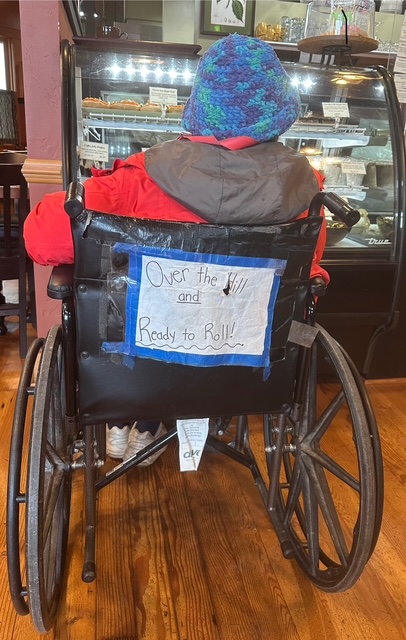
    I have experienced ageism and while I know about the unconscious bias that exists in the U.S., it is still unsettling as I feel useful, not over-the-hill. I like author and poet Gertrude Stein’s approach: “We are always the same age inside.” Her statement can be taken in many ways, but there is a timeless quality to believing in a core self with an ability to have consciousness to each present moment. There are positive possibilities when we embrace age-inclusion.

    Pearls of Peace (PoP) Quiz

    434. Have you experienced ageism lately?

    435. What do you say when you hear ageism bias tossed into conversations?

    Anger Remedies

    As a long-time student of problem-solving and conflict resolution, I am troubled by the news cycle of raw conflicts in our country. Animosity too often turns to not-so-veiled threats or violent behavior against an imagined “other.” Political individuals report a slew of death threats and in some unbelievable instances, they or their family members have been violently attacked. Anger is palpable from town hall meetings to houses of worship.   

    Margaret Cullen, a marriage and family therapist as well as a mindfulness teacher, identifies what is happening when anger’s slippery slope devolves into cruelty and/or violence. She gives a first-person accounting: “When I reflect honestly, I notice that my most volatile reactions are tied to things I hate in myself—places I’ve missed the mark or failed to live up to my own ideals. Outrage becomes a shield, a projection, a way of disowning what is hard to face internally…easier to demonize the other than to wrestle with my own complicity.”  Such truth-telling seems like a place to begin a much-needed remedy to anger.

    Cullen’s upcoming book, Quiet Strength: Find Peace, Feel Alive, and Love Boundlessly Through the Power of Equanimity, might be required reading for politicians. As Cullen outlines her approach, an ethical value system is key: “Simply put: Unethical conduct breeds agitation; ethical conduct fosters peace. And agitation is fertile ground for outrage and projection to take root. Throw in some social media and global instability, and you are well on your way to zealotry. Peace is fertile ground for perspective and clarity to grow. Toss in some honest self-reflection and an intention for greater integrity, and you can harness the energy of outrage toward creative solutions and effective engagement.”

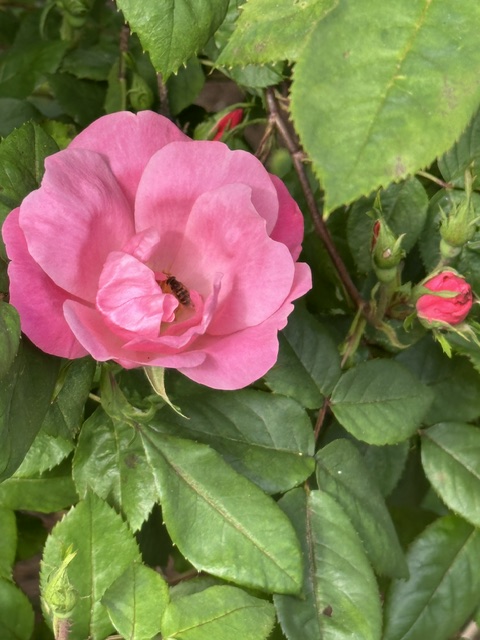
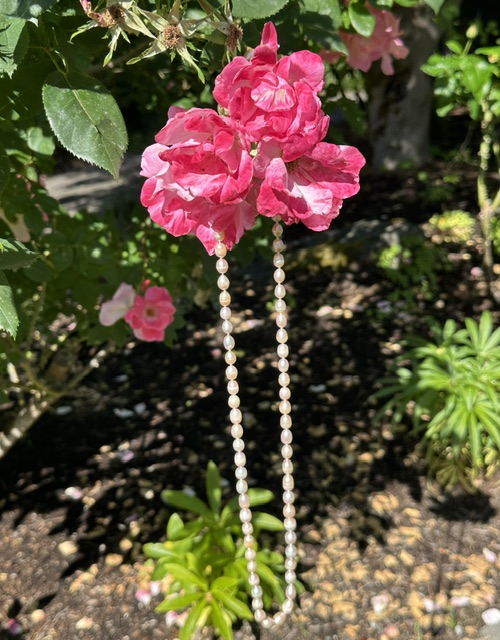
    Yes, self-reflection, insight, and an awareness of one’s value system are always a good idea, whether the topic is anger or anything else. However, we do not see things clearly much of the time. We experience anger or some other strong emotion and imagine that it is “justified.” We do not recognize that our anger rides shotgun in the front seat of our personality pickup truck as a protector from fear, insecurity, and other tender parts of ourselves. I reflected upon this lack of self-clarity when I looked through a clouded-over glass window in a door in my new home. The murky window blocked my view of roses growing outside this doorway. Once the double-pane failed glass was replaced, roses could be appreciated with clear sightlines.   

    I appreciate the metaphor in a Scottish tune, Looking at a Rainbow Through a Dirty Window (by Scottish Uilleann piper and flute player Calum Stewart, arranged for harp by Rachel Hair). Listening to peaceful music, especially with others, is a remedy for what ails. https://www.youtube.com/watch?v=Pyp3p3gRQcQ

    Are you looking for rainbows and peaceful, creative solutions these days? I am.

    Pearls of Peace (PoP) Quiz

    431. When do you catch yourself projecting your own outrage onto an “other” person?

    431. How might we best enhance ethical conduct in groups of people?