Social Media: The Good, the Bad

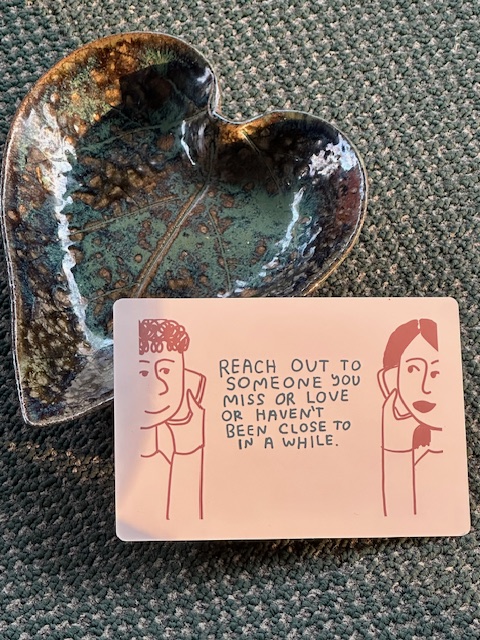
“Go to where you are kindest,” writes Jaron Lanier, computer scientist, composer of chamber and orchestral music, visual artist and author. Adolescents might not appreciate Lanier’s book, Ten Arguments for Deleting Your Social Media Accounts Right Now. Teens spend an average of 9 hours per day online, excluding their schoolwork, according to the American Academy of Child & Adolescent Psychiatry. How much of that time is “kindness” a theme?

Among his many writings, Lanier states in his book, Dawn of the New Everything: Encounters with Reality and Virtual Reality, “TV and video games draw people into a zombielike trance.” And yet, he cites the incredible range for good in Virtual Reality (VR) — as in treating veterans’ PTSD or aiding physicians in performing delicate surgery.  

In 2005 Foreign Policy honored Lanier as one of the 100 most Public Intellectuals. In 2018 Wired named Lanier one of the top 25 most influential people over the last 25 years of technological history. However, his personal history was challenging by any standard. His mother was a concentration camp survivor. When Lanier was 9 years old, she was killed in a car accident. For extended periods Lanier lived in tents with his father before this brilliant youth helped design a geodesic dome home, a project encompassing 7 years. At age 13 he began college, studying mathematics that led to computer programming.

Other challenged adolescents find it difficult to imagine such productivity. Instead of savoring and mastering school, they barely handle the VR barrage. Some kill themselves or others. On three initiating dates in the academic calendar — the latest on April 11, 2025 — the non-profit “Beyond Differences” sponsors a student-led social justice project to change the culture of teen angst in schools. Middle school and high school students are targeted to respond to one another at school and online with decency. This year’s theme is “Unmute Your Kindness.” https://www.beyonddifferences.org/national-programs/

The social-emotional learning (SEL) goals of this pay-it-forward effort are twofold: stopping online social isolation, and empowering students to find a sense of community that engages them in taking future positive actions. The message to students is simple and yet profound:

  • Know Your Classmates.
  • No One Eats Alone.
  • Be Kind Online.


As an offshoot of the Sandy Hook Promise Foundation, teachers can download free resources from “Beyond Differences” which feature a training workshop and curriculum. Parents can ask their home school to gain access to the lessons and student-led leadership guide.

Now, can we please get adults to plug into “Unmute Your Kindness?”

Kindness and goodness seem to be in short supply today. My mantra is, “Make something good happen every day.” All of us might benefit from kindness post-it notes to ourselves. Consider Maya Angelou’s poetic summons: “Try to be a rainbow in someone’s cloud.”

Pearls of Peace (PoP) Quiz

385. How often do you observe people treating others with kindness?

386. What is your version of a kindness post-it note?                 
A Cynicism Climate vs. Warm Fuzzy Terrain

Whatever happened to warm fuzzies, defined as feelings of happiness, hope and well-being?

Stanford University professor of psychology, Jamil Zaki, directs the Social Neuroscience Lab. Zaki and his colleagues find that the rate of U.S. citizens feeling unhappy and mistrusting of others is at a high point.  His book, Hope for Cynics: The Surprising Science of Human Goodness, disagrees with a common belief that cynics are more perceptive than optimists. Research results show that cynics perform worse in cognitive tests. Cynicism is a destructive force. It can impact one’s well-being. While cynicism may appear to be protective, as in keeping people from taking advantage of you, it is linked to loneliness and losing out on potential collaboration. According to the Pew Research Center, a 2024 study surveyed 6,200 adults in English and Spanish about their well-being and social connections; they found that 1 in 6 Americans feel lonely or isolated most of the time.

Cynicism is easy. Anyone can do it. Change is hard. That takes us.” Cody Keegan, speechwriter for President Obama, wrote his own speech for a New York University commencement address; this was his advice to graduates.

Jamil Zaki advocates “hope mixed with fury” to inspire genuine change. He suggests that one needs to fact-check their cynicism through increasing a sense of curiosity and first questioning their own beliefs. When one engages in conversations with strangers, or those known to hold opposing political viewpoints, there is an opportunity for two-way growth. 

Having an open mind is a hope-fueled possibility. Hope promotes personal happiness. Zaki fosters a positive spin on collective hope: “Hope doesn’t mean accepting that things are actually great when they’re not — it means acknowledging that things are awful, but that many, many people want them to improve.”

Psychologist Andrea F. Polard, founder of Zen Psychology and author of A Unified of Happiness: An East-Meets-West Approach to Fully Loving Your Life, is another peddler of hope. Her recommendations for taming your inner cynic are the following:

  1. Look deeper, feel deeper

Embrace your own cynicism by looking more deeply into your anger. Anger often hides our disappointment. Sometimes we project our disappointment onto the whole of society. Be brave. Confront the pain that your cynicism may hide.

  1. Find inner peace. 

Relate to others by identifying your own attachments. Admit your own biases and shortcomings. Make peace with your own human condition. [Remember, it takes us, all of us.]

  1. Try to work with imperfections constructively. 

A person does not change because someone despises them. Participate in dialogues. Be assertive against injustice and hypocrisy but lead with examples of alternative behaviors.

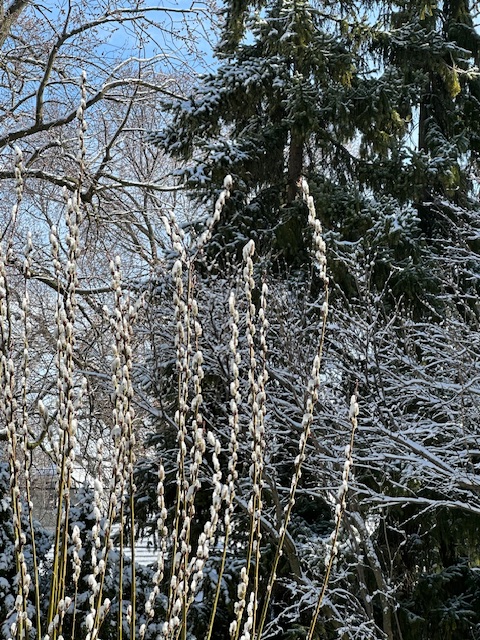
Be as strong as a pussy willow branch. In spite of a wild spring snowstorm that threatened a tornado, catkins flourished on strong branches that could bend in the wind, hail, and snow.

Pearls of Peace (PoP) Quiz

381. How often do you catch yourself in a cynical part of your personality?

382. What might you do to increase your hopefulness?                 

Can Springtime Jumpstart Social Prescribing?

Winter aconite bulbs in buttercup family (Ranunculaceae)

There is something magical about the warming of days and the return of blooming bulbs unfurling upward, while trees are budding outward, after their winter hibernation. Spring (or vernal) equinox occurred March 20th. Vernal equinox comes from Latin vernal (new or fresh), aequus (equal) and nox (night). Spring equinox delivers daylight in equal amounts of approximately 12 daylight hours and 12 darkness hours as the sun is above the equator at midday.

March equinox in the Northern Hemisphere is the warming trend signaling that summer is not far away as this section of Earth begins showing more hours of sunlight than darkness. Look north for the Big Dipper to be at a high point. In the Southern Hemisphere, March equinox is the polarized opposite; as this region begins tilting away from the sun, the beginning of autumn occurs. According to EarthSky, the fastest sunsets and sunrises of the year occur on the equinoxes. Another Nature tidbit — auroras’ sky dances frequently happen around autumn and spring equinoxes when geomagnetic storms on the sun cause rippling disruptions in Earth’s magnetic field. This awesome feature of Mother Nature reportedly is one of the earliest patterns ever recorded by scientists. https://earthsky.org/sun/aurora-season-auroras-equinox-connection/

I was in Washington state before spring equinox and received an aurora alert on my cell phone! Being an avid sky observer, I set my phone alarm to get up at the prescribed possibility time, but a clear sky did not unfurl any aurora beams of beauty. However, just this possibility of seeing a blooming sky made me smile.

There is something healthy-feeling about warmer temperatures, as more people gather outside and enjoy Nature’s bounty. Doctors are learning to administer social prescriptions. Physicians Alan Siegel and Carla Perissinotto offer this description: “Social prescribing means connecting of people to activities, groups, and support that improve their health and well-being. These often include a range of social services, the arts, nature, volunteerism, movement, companionship and community-building.” Social prescribing is active in 32 countries. I wonder if social prescriptions are refilled more frequently in Nature’s pharmacy in springtime.

Massachusetts has a statewide program in social prescribing. For example, a hypertension research study (Brigham and Women’s Hospital in Boston) utilizes social prescriptions through an art-prescribing company, Art Pharmacy. Based in Atlanta, Art Pharmacy partners with programs in California, Connecticut, Georgia, Massachusetts and New York. Founded in 2022, one goal of Art Pharmacy is to address the loneliness and mental health crises of U.S. citizens. Traditional physical and mental health care can have serious gaps in reaching many individuals’ needs. Social Prescribing USA, a national advocacy organization, has 8 states with pilot projects.

Springtime means the beginning of gardening season for me. All of us need sunshine, both literally and figuratively. Spring delivers more literal sunshine, but the figurative sunshine of well-being is elusive for many.

Pearls of Peace (PoP) Quiz

379. What does springtime mean to you?

380. How might you write your own prescription for social well-being this spring?