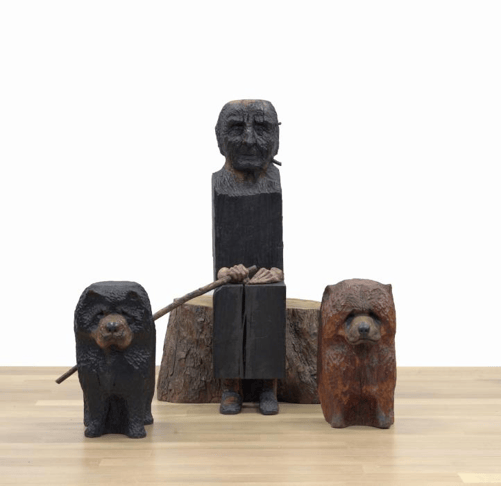
“I am the Venezuelan, born in France, living in Italy – that has an English car with North American plates and Swiss insurance – and they want to ask me what nationality I am.” — Marisol, born María Sol Escobar (1930 – 2016), held citizenship in Venezuela, France, and the U.S.
National Hispanic Heritage Month 2026 is from September 15th to October 15th when we celebrate Latinx history, traditions, and the cultural diversity of Americans whose heritage originated in Spain and 19 countries and territories: Mexico, Guatemala, Honduras, El Salvador, Nicaragua, Costa Rica, Panama, Colombia, Venezuela, Ecuador, Peru, Bolivia, Paraguay, Chile, Argentina, Uruguay, Cuba, Puerto Rico, and the Dominican Republic. Chosen by the National Council of Hispanic Employment Program Managers, the 2026 theme — “Unidos, Somos Más” (Together, We Are More) — emphasizes the pervasive cultural and economic impact of Hispanic and Latino communities. As the largest racial or ethnic minority in America, over 70 million ethnically Hispanic/Latino residents make up 1/5 of the U.S. total population according to census data.
Initially Hispanic Heritage Week, Mexican American U.S. Rep. Edward R. Roybal (Los Angeles) sponsored legislation and President Lyndon B. Johnson signed it into law in 1968. President Ronald Reagan expanded the week to a full month in 1988, giving more time for educational events and community celebrations.
September 15th pays tribute to the anniversary of “El Grito de Dolores” (The Cry of Dolores), a call to battle in 1810 in Mexico’s war for independence from Spain. El Salvador and Guatemala also celebrate their independence in September. Columbus Day/Indigenous Peoples Day, or Día de la Raza, occurs just before October 15th.
From 1500’s onward, Latinx Americans have impacted U.S. history. A documentary, Latino Americans: The 500-year Legacy That Shaped a Nation, offers interviews with 100+individuals. We forget that “the border” has experienced shifting demarcations between Mexico and U.S. over the years. Mexican people became “foreigners” in their own land from 1565-1880. Eventually, Cubans and Puerto Ricans crossed borderlands, followed by Salvadorans, Nicaraguans, and Guatemalans who often were escaping civil wars, death squads, gang terror and/or family issues.
Marisol came to America due to family issues. Her mother committed suicide when Marisol was 11. Marisol made a drastic decision after her mother’s death: she chose not to speak except to answer questions in school classes. She remained predominantly mute until her early twenties. In Marisol’s religious adolescence, she walked on her knees until they bled and tied ropes tightly around her waist. Her father sent her to a boarding school in Long Island, New York, and then to high school in L.A. where the traumatized teen was expelled for “not fitting in.” Was she considered a “foreigner?”
American-born Georgia O’Keefe was of Irish and Hungarian descent. Was she a “foreigner?” Today, many American-born Latinx folks are once again viewed as “foreigner” in the U.S. and are endangered.
Pearls of Peace (PoP) Quiz
534. How many ethnic identities do you possess?
535. Did family issues ever cause your family to cross borders?

