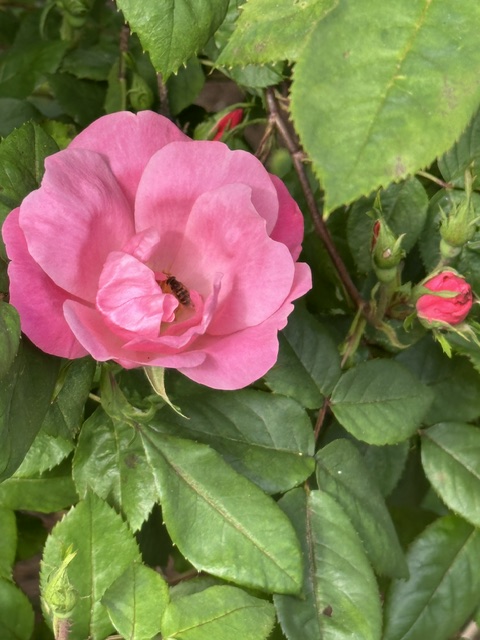
What does Mother’s Day mean to you? There is a continuum of responses, as each person has unique and perhaps thorny memories of their upbringing, sometimes without a mother.
Let’s consider a mother of 6 children who lost her mother when she was 5 years old (her mother died during childbirth when a sister was born). This resilient mother is Julia Ward Howe (1819-1910). In addition to motherhood, Howe was a published author and poet, playwright, newspaper publisher, activist in abolitionism and woman’s suffrage, but perhaps best remembered for her Battle Hymn of the Republic as lyrics to the tune, John Brown’s Body. As early as age 20, Howe anonymously published in literary magazines.
Howe’s mother also was a poet in her shortened life. Her father was a Wall Street stockbroker and banker. Due to a mothering aunt and a privileged educational life with private tutors, Howe became a scholar, eventually reading and speaking 7 languages. Raised in her father’s Episcopalian religion, Howe read extensively and came to reject a Calvinistic view. She became a Unitarian; her faith became a strong motivator in her reform causes. Howe was friends with other Unitarian scholars and writers — Ralph Waldo Emerson, Margaret Fuller, Henry Wadsworth Longfellow, Lucy Stone, and Theodore Parker among others.
Howe’s husband, 18 years older, reportedly wanted a stay-at-home wife, but Howe lectured widely without benefit of stay-at-home Zoom. When her husband confessed to multiple affairs on his deathbed, Howe took the high road and wrote a flattering biography of him. Never assume that “famous” or “upper class” people escape trauma. Each person’s mental health path, regardless of significant losses, has the possibility of restoring a healing journey.
May is Mental Health Awareness month with a theme of “More Good Days, Together.” It is likely that Howe’s time spent nurturing deep friendships was part of her sustaining wellness. With Lucy Stone, Julia Ward Howe established the American Suffrage Association. There are many ways to mother or father in one’s life. Howe mothered a peace movement when she traveled to Europe for the promotion of an International Woman’s Peace Congress.
Howe’s 1870 Mother’s Day Proclamation is a testament to her passion and persistence in peace-building. Over 150 years later, Howe’s poetry has meaning for today; she frames a mother’s love for her offspring and calls into question the “justice” notion that wars can solve problems. See her full Proclamation: https://allpoetry.com/Mother’s-Day-Proclamation
“…our sons shall not be taken from us to unlearn / All that we have been able to teach them of clarity, mercy and patience. / We, the women of one country, / Will be too tender of those of another country / To allow our sons to be trained to injure theirs. / From the voice of a devasted Earth a voice goes up with / Our own. It says: ‘Disarm! Disarm!’ / The sword of murder is not the balance of justice….”
Pearls of Peace (PoP) Quiz
496. What are your earliest memories of your mother?
497. How do you view motherhood today?
 Pearls of Peace: A Family Psychologist’s Circle-of-Life Blog