Writing for Savoring

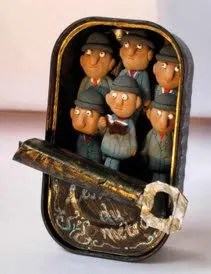
Karen Lamb, British author, illustrator & animator

I don’t know about you, but writing wasn’t my favorite subject in my first 12 years of education. My favorite was reading, later called Literature. I spent many happy hours selecting books from bookshelves of the local public library. I savored books. I still read all the time. And I found out how to savor writing. As a young adult I wrote a dissertation and journal articles. Currently I write books, a weekly blog, and I opened to the compact writing of poetry.

The National Day on Writing is celebrated October 20. The annual event (since 2009) was birthed by the National Council of Teachers in English. One goal of the teachers is to highlight the incredible variety of writing – including old fashioned pen-to-paper journal writing alongside emails, texts, and other social media blurbs. A recent emphasis asks students to share #WhyIWrite.

The New York Times has a column, “The Good List,” by Melissa Kirsch. She wrote about a retired elementary school teacher, David Millstone, who shared with her his genius writing habit he created for his students. At the end of each school day, his class was asked to give a name for that day. Millstone wrote his students’ responses on the board. But here is the twist that added to class collective creativity: the students learned democracy by voting on which “name” best captured each day. Sometimes one response grabbed everyone in some way. On the last day of school Millstone gave each student a written copy of all the voted names from their school year, along with their report card. Amassing 175 names for each school day in one year took on a life of its own. Millstone still remembers one day from 40 years ago: “The Day Gretchen Found a Crumb on Her Desk.”

In case you do not have a classroom filled with creatives, here is a substitute: Millstone and his wife began giving “names” to each day of their shared vacations. They compared notes. His wife kept a photo album (remember those?) and included their captions with trip photos.

I am a fan of pictographs carved on rocks. Sometimes referred to as “rock art,” I prefer to see these crude drawings as writing tablets to tell the world, “I was here.” Perhaps that is the reason why all writers write. If something occurs to you in a particular way, why not share it with others? Some will resonate with your writing. Others will dismiss your words. But in the end, you have left your mark: “I was here and these were my thoughts today.”

Write on this National Day on Writing. Perhaps tell a complete story in only 6 words…perhaps create 3-line Haiku poems…perhaps write and send a letter to a special person in your life. As author Karen Lamb suggests, “A year from now you will wish you had started today.”

Pearls of Peace (PoP) Quiz

542. What is your early memory of writing in school?

543. How do you use writing today?               

“Fast” Talkers Live Longer

The Berlin Aging Study (BASE) is a multidisciplinary (sociology, psychology, psychiatry, and internal medicine) study of seasoned citizens (my name for older adults) between ages of 70-105. Initially, detailed information was gathered for 258 men and 258 women who lived in Berlin. The longitudinal research originated under the direction of the late German psychologist Paul B. Baltes and German sociologist Karl Ulrich Mayer. Along with his American psychologist wife, Margret Baltes, Paul Baltes viewed lifespan development in terms of “plasticity” in cognitive abilities, a context of adaptation, and multidisciplinary factors such as one’s biology, family, schooling, religious affiliation, and profession. The Baltes couple promoted successful aging through optimizing one’s cognitive functions and the ability to adapt to change, including loss. Research supported their belief that cognitive abilities can continue to develop in late adulthood with participation in stimulating activities. A current longitudinal study (BASE II) of 1600 seasoned citizens (ages 60-80) is underway at the Max Planck Institute for Human Development in Germany.

BASE research results are fascinating. General intelligence did not predict who might live longest. Instead, verbal fluency was key in long-living folks. The participants with low (versus high) verbal fluency had a median survival time that was 9 years shorter! Verbal fluency requires broad abilities, including fast information retrieval and a crystallized knowledge base. One only hopes that a fast-talking individual possesses a truthful knowledge base.

Here are a few pointers for increasing your verbal fluency. Heather Hurlock, Founder and Editor of Super Age (an online source of health and wellbeing), names the first three well-established ones.

  • Read out loud. This suggestion also is endorsed by a 30-minute-daily program, StrongerMemory, for those in mild cognitive decline. Do not wait for cognitive deficits to appear to make a reading-out-loud practice for yourself! You will build on articulation and rhythm skills when you read to yourself or others. Both skills link to verbal fluency.
  • Hand-write often. While cursive is being dropped from many elementary schools, I believe that is a mistake. There is evidence that suggests learning cursive handwriting is helpful in one’s overall learning and retention. Handwriting (but not typing) is related to letter processing which translates to successful reading in youngsters. Also, handwriting is part of the StrongerMemory workbook exercises. https://goodwinliving.org/strongermemory-the-fight-against-cognitive-decline/
  • Think (and take deep breaths) before you speak. Take mindful pauses to provide your brain with a chance to retrieve some linking thoughts. Not only will this increase your confidence level, but it may enlist a better (or more humorous) verbal outcome.
  • Give speeches or read a poem (as in open-mic venues). You have talents to share and your brain will reward you for using a variety of sensory inputs.
  • Talk regularly; ask people questions. You may surprise yourself with what you can learn about others in a few sentences.

Have fun talking!

Pearls of Peace (PoP) Quiz

413. When is the last time you wrote a letter by hand?

414. How might you practice your verbal fluency in a new way?