“Fast” Talkers Live Longer

The Berlin Aging Study (BASE) is a multidisciplinary (sociology, psychology, psychiatry, and internal medicine) study of seasoned citizens (my name for older adults) between ages of 70-105. Initially, detailed information was gathered for 258 men and 258 women who lived in Berlin. The longitudinal research originated under the direction of the late German psychologist Paul B. Baltes and German sociologist Karl Ulrich Mayer. Along with his American psychologist wife, Margret Baltes, Paul Baltes viewed lifespan development in terms of “plasticity” in cognitive abilities, a context of adaptation, and multidisciplinary factors such as one’s biology, family, schooling, religious affiliation, and profession. The Baltes couple promoted successful aging through optimizing one’s cognitive functions and the ability to adapt to change, including loss. Research supported their belief that cognitive abilities can continue to develop in late adulthood with participation in stimulating activities. A current longitudinal study (BASE II) of 1600 seasoned citizens (ages 60-80) is underway at the Max Planck Institute for Human Development in Germany.

BASE research results are fascinating. General intelligence did not predict who might live longest. Instead, verbal fluency was key in long-living folks. The participants with low (versus high) verbal fluency had a median survival time that was 9 years shorter! Verbal fluency requires broad abilities, including fast information retrieval and a crystallized knowledge base. One only hopes that a fast-talking individual possesses a truthful knowledge base.

Here are a few pointers for increasing your verbal fluency. Heather Hurlock, Founder and Editor of Super Age (an online source of health and wellbeing), names the first three well-established ones.

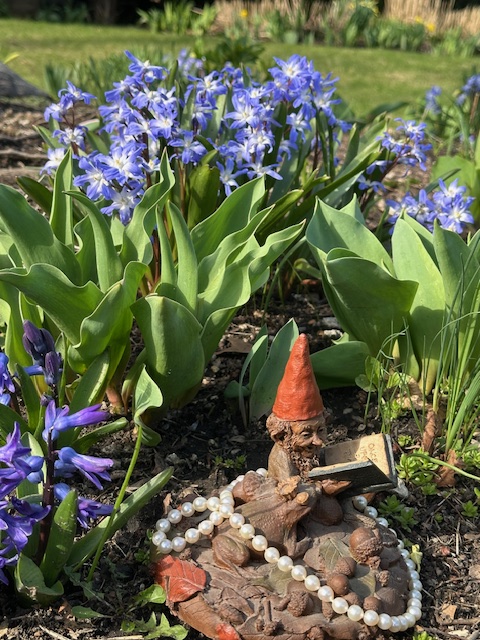
  • Read out loud. This suggestion also is endorsed by a 30-minute-daily program, StrongerMemory, for those in mild cognitive decline. Do not wait for cognitive deficits to appear to make a reading-out-loud practice for yourself! You will build on articulation and rhythm skills when you read to yourself or others. Both skills link to verbal fluency.
  • Hand-write often. While cursive is being dropped from many elementary schools, I believe that is a mistake. There is evidence that suggests learning cursive handwriting is helpful in one’s overall learning and retention. Handwriting (but not typing) is related to letter processing which translates to successful reading in youngsters. Also, handwriting is part of the StrongerMemory workbook exercises. https://goodwinliving.org/strongermemory-the-fight-against-cognitive-decline/
  • Think (and take deep breaths) before you speak. Take mindful pauses to provide your brain with a chance to retrieve some linking thoughts. Not only will this increase your confidence level, but it may enlist a better (or more humorous) verbal outcome.
  • Give speeches or read a poem (as in open-mic venues). You have talents to share and your brain will reward you for using a variety of sensory inputs.
  • Talk regularly; ask people questions. You may surprise yourself with what you can learn about others in a few sentences.

Have fun talking!

Pearls of Peace (PoP) Quiz

413. When is the last time you wrote a letter by hand?

414. How might you practice your verbal fluency in a new way?        

Library Perils and Pearls

“Anyone who writes is a seeker. You look at a blank page and you’re seeking. The role is assigned to us and never removed. I think this is an unbelievable blessing,” proposed Louise Glück, U.S. poet and Nobel laureate. Alongside writers, let’s include readers as seekers. Readers seek ideas and knowledge to whet their curiosity appetite.

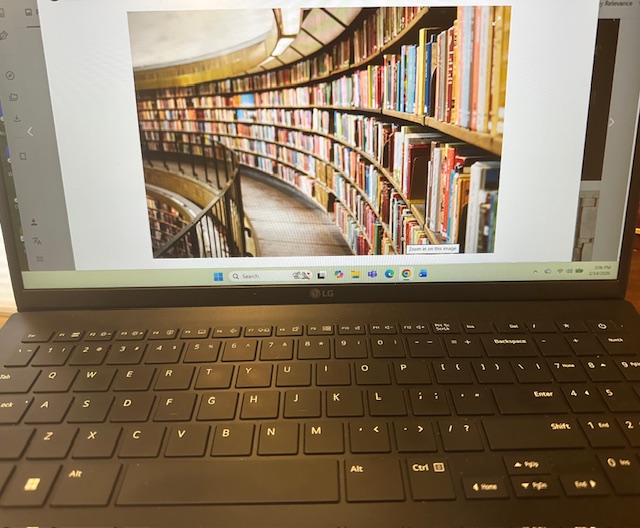
1950’s research found that Americans were spending less money on books; instead, they purchased radios (remember those?), TV’s, and musical instruments! Concerned that citizens were reading less, the American Library Association (ALA) and the American Book Publishers formed a nonprofit to bolster reading. National Library Week was born in 1958 to re-invigorate readers. The first theme was “Wake Up and Read;” this year’s theme is “Drawn to the Library.” Notice, the word “reading” is absent.

In this 67th year of the event, April 6-12, 2025, National Library Week offers far greater services than 1950’s libraries. Besides books, contemporary libraries supply patrons with internet training/usage, career workshops, museum passes, video games and toys! National Library Week includes a focus on the increasing ways libraries create community by bringing people together.

Yes to community bonding, but who reads books? The Bureau of Labor Statistics Time Use study found that the time Americans devote to reading has dropped over the past 20 years. A Gallop survey in 2022 found that Americans simply are reading fewer books per year than previously. Social media has dethroned books. Bookshelves are lonely. AI tools are eclipsing reading and writing. Research with college students using AI-generated summaries reveals convenience and time-saving as plusses, but “text engagement” suffers; AI was “less effective in promoting deeper understanding.” 

Research at Duke University presented participants with reading and writing tasks, followed by reading comprehension questions. Complete reliance on AI for writing tasks led to a 25.1% reduction in accuracy. When using AI in the reading task, there was a 12% decline in participants’ reading comprehension. https://papers.ssrn.com/sol3/papers.cfm?abstract_id=4567696

Censorship dictates what U.S. readers might read. A government directive to the Naval Academy Library demanded the removal of nearly 400 books this past week. The “State of America’s Libraries Report” offers a canary-in-the-coal-mine view of what faces the U.S. in general. ALA President Emily Drabinsky outlines both the challenges and the resilience of libraries: “The unprecedented wave of organized censorship intensifies, particularly in our public libraries. Adverse legislation that would undermine librarian agency and authority is getting a hearing in legislatures across the country. Climate change continues to impact libraries, damaging buildings in some areas and turning libraries into recovery centers in others. Budget cuts and staffing challenges undermine our ability to fulfill our missions. In these extraordinary times, libraries take action.”

As an avid reader/writer, I am glad that libraries offer diverse experiences, but sad that reading is slipping through diverse educational cracks. What does this say about what Americans are seeking? Is reading going underground?

Pearls of Peace (PoP) Quiz

383. What meaning does reading hold for you?

384. How often do you visit your public library?