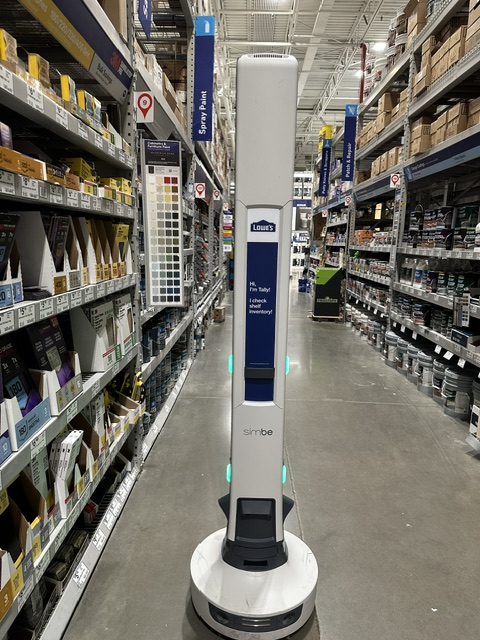
June is Alzheimer’s and Brain Awareness Month. Do you need help checking your brain’s inventory? I recently met “Tally” making cooing noises while she gracefully glided down the paint aisle at Lowe’s; she was checking shelf inventory. My curiosity ever present, I inquired if Tally might replace a worker. The answer was yes.
How long will it be before the Tally’s of the world (or out of this world) are AI responsible caretakers for all the individuals who need careful checking just to make it through a day? Alzheimer’s disease (AD) is spreading unchecked. According to the World Health Organization, the world-wide number of people expected to have an AD diagnosis is 82 million by 2030. Alzheimer’s Association reports 7.4 million Americans have AD currently; U.S. AD deaths doubled since 2000.
While AD symptoms can vary, personality and behavior changes often include apathy, disorientation, memory loss, and cognitive impairment. Brain confusion and/or physical decline can make it impossible for living independently. The caretaker role for a loved one with AD is a major time commitment. As a person journeys through the 7 stages of AD, increasing close attention is required.
Early memory loss may indicate Mild Cognitive Impairment (MCI) which may not be a sign of later dementia, as there are various causes for MCI. An individual can be aware of their MCI which often includes exhaustion in addition to mild memory loss. Moderately severe cognitive decline involves a drop-off of abilities to handle finances and other tasks of daily living. Agitation and aggression may show up when previously these emotions were not frequent. Perhaps having a blinking Tally, murmuring close by, would be a blessing.
Most people are not educated in dealing with AD and/or challenging personalities. Unfortunately, there is a shortage of gerontologists; geriatric medicine is one of the least popular specialties among new physicians.
Proactive educational help is developing. The Milken Institute School of Public Health at George Washington University (GW in D.C.) has established an “Expanding the Pipeline to Graduate Research in Alzheimer’s Disease and Related Dementias (EPGRAD) Program” as a fully funded 8-week summer education and research training program for undergraduates. The goal is to encourage students in the majors of medicine, science, technology, engineering, and mathematics to consider careers in AD and related dementias. New GW projects include a “Black Male Dementia Caregiver Burden Study” and a “Brain Health and Microbiome Study.”
What might you do to improve your own brain health? One health tip stands out for psychiatrist Drew Ramsey, MD (author of both Healing the Modern Brain and Eat Complete), who finds that many individuals in his practice are undernourished when considering brain health and mental health: eat a handful of leafy greens in one of your daily meals.
Multiple rabbits in my yard munch on greens all day. They are unlikely to need Tally.
Pearls of Peace (PoP) Quiz
504. How might you educate yourself about your brain health? 505. Have you considered how your own diet contributes to brain health?


Hello Jan, I always enjoy your blog and find I always learn things as well. My news is that I have a new address. I have sold my house and now I am living in a rented condo at the corner of Lake Street and Harlem Avenue. It didn’t seem wise to commit to ownership without trying this lifestyle out, so I am renting. It’s working out very well–so many things are within walking distance–I seldom use a car. I believe you have become a grandma now. If so, you are entering a wonderful stage of life with more love involved than you can possibly imagine. Take care, Jan, and keep sending your encouraging messages. Susan
LikeLike