Dry January Pearls

The Finns and Brits are ahead of the U.S. in limiting alcohol. Taking a month of the year to abstain from alcohol goes back to 1942 in Finland, but in 2012 Great Britain named “Dry January” as a public health initiative from Alcohol Change UK, a charity. According to one survey from University of Sussex, 71% of those who took part in Dry January reported sleeping better; 67% stated they had more energy, 58% lost weight, and 54% noticed skin improvements. Women may benefit most as their bodies take longer to break down alcohol, so they suffer greater risks in health and safety issues.

In spite of Dry January sounding simple — no alcohol from January 1-31 – most courageous people making this New Year’s resolution do not stay dry. The first Friday in the month appeared as the first common weak-link day last year. However, for those who keep their resolution, there are big rewards: improvement in a diabetes risk of nearly 30% and in Britain 49% reported losing weight (6-15 pounds) without drinking for a month. Additional health benefits include reduced blood pressure, a change in a marker of liver inflammation, and perhaps the most important finding in one British survey was that nearly 3 in 4 sustained lower drinking levels of drinking after Dry January.

Some prefer “Damp January.” They might follow the 1-2-3 drinking rule: 1) No more than 1 standard drink per hour; 2) No more than 2 standard drinks per occasion; 3) NEVER exceed 3 standard drinks per occasion. A “standard” drink is 12 ounces of beer, 5 ounces of wine, or 1.5 ounces of rum or vodka. While drinkers may notice some irritability when they stop drinking on New Year’s Day and go “cold turkey,” the benefits outweigh any temporary side effects. Alcohol can decrease stress hormone levels leading to a calmer vibe, but when an individual stops their drinking episode, stress hormones return and even spike higher.

Cardiologist and neurosurgeon Dr. Sanjay Gupta states, “There is no amount of alcohol that is good for your health.”

In the U.S. 15-19% of adults resolved to engage in Dry January in recent years with Gen Z participants expressing most enthusiasm. This is good news, as 60 million adults reported binge drinking during the past month of holiday time (5 or more drinks for men, 4 or more for females within about 2 hours.) Reportedly, 1 in 4 binge drinkers have this weekly habit.

You might consider the part(s) of your personality that either resolved to make it a Dry January or now plan for a Clean February. Name that part of your personality that makes an intention. Center into calmness with elongated breath cycles. Be kind to any part(s) breaking your intention. Ask questions. There always is a worth-listening-to story when we change our minds.

 Pearls of Peace (PoP) Quiz

259. When have you followed through successfully with an intention?   

260. When you ditch an intention, what do you do next?   

Resolutions Check-in

Q: Why did the crane cross the road? A: The grass looked greener on the other side. How often do you think there must be a better there than the details of your current life? What would you do with Elon Musk’s money?

It has been 21 days since New Year’s Day and it is time to check-in on your resolution(s). While some mistakenly say you can set a new habit in 21 days, do not believe them. Most studies have found that it takes at least three times longer. If you struggle to make any headway on your desired resolution(s), perhaps you ditch your to-do list and try time blocking or timeboxing.

Successful CEO’s like Bill gates and Elon Musk use time blocking. Musk might win the prize for the most time-managed individual, as he pre-plans his day with no unscheduled time slots!  And as unbelievable as it may seem, Musk’s time blocks are 5-minute segments. Supposedly, he knows how much time any task takes. To not experience a “planning fallacy,” one must keep a timed record of certain tasks, perhaps using a time-tracking app.   

While time blocking may work for Musk and others, it seems robotic. Where is there room for an unexpected phone call from a family member or friend? Where is there a sense of flow or creativity where time-watching is detrimental?  

An argument supporting this regimented goal-setting is Parkinson’s Law: any work tends to expand to fill up the time allotted for it (C. Northcote Parkinson). When time is restricted, a task takes less of your time. Also, the Pareto Principle applies: the 80/20 Rule suggests that around 20% of your efforts will produce 80% of the results (Vilfredo Pareto).

Another time management technique is timeboxing. Time blocking is about planning when you will work on something, while timeboxing has an emphasis on limiting how long you spend on a given task. You set an upper limit on how much time you will do a certain task (exercise for 30 minutes, for example) without having a set time. Timeboxing encourages one’s progress by setting timely and manageable limits. Anyone can do something for 30 minutes a day…with intention.

Where is any focus for looking at the reasons why a person does not follow through on their intentions? Trust me. This will be a productive use of your time, and the first step may take no longer than 5 minutes. Here is a starter version. There is a part of your personality that sets your resolution. Name that part of your personality. There is another part (or two) that does not follow through. Name the part(s). Are you engaged in a parts war? Notice your breathing. Center into calmness. You can embrace opposite parts when you are CONSCIOUS of these parts in the present moment. Find insider peace.

Pearls of Peace (PoP) Quiz

257. What is your name for the part of you that sets resolutions?

258. How often do other parts interrupt your good intentions?   

Justice January

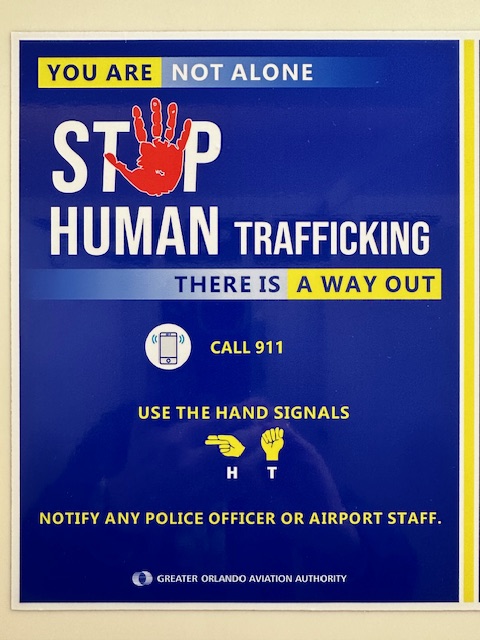
On Martin Luther King, Jr. Day, we address the dire consequences of injustice. January is Human Trafficking Prevention Month. While impossible to believe, reportedly there are 50 million modern slaves due to human trafficking today. It is estimated that 20% of trafficking victims are children. A group called Love Justice International is making a difference. With their installation of transit monitors at railway stations, bus stations, and border crossings, Love Justice looks for red flags of trafficking. The group’s efforts have intervened with 50,000 individuals before they were physically and/or psychologically exploited for their bodies or their labor. Human trafficking is a hidden and hideous crime. A language barrier and/or fear for one’s life prevents victims from asking for help.

I found signs (in English and Spanish) for victims to seek help in ladies’ bathroom stalls in airports. In Chicago there were many details about various kinds of trafficking. While many think of sex trafficking (street prostitution, massage parlor prostitution, internet pornography or “escort services”), the bathroom list of other trafficking activities is long: private home housekeepers or nannies, servile marriages, farm work, factory work (meat-packing plants), construction work, begging rings, and hotel or restaurant work. The bathroom sign also detailed having passports or identification taken away and being threatened with deportation if one refuses the work.   

The Federal Motor Carrier Safely Administration (of the Department of Transportation) requests that drivers keep their eyes open at transit sites, highway rest stops or gas stations. There are Indicator Cards to aid one in detecting human trafficking. While not all indicators would be present in every situation, these indicators could help detect a suspected trafficker and calling 9-1-1 could save a person from victimhood:

  • A vehicle dropping off/picking up individual(s) at other vehicles/trucks;
  • Flashing headlights at people in the parking lot;
  • Talk about a “commercial company” or “sale” on citizens band (CB) radio;
  • A suspicious vehicle parked in an unusual location;
  • A person told not to speak or appearing coached on what to say;
  • A person exhibiting signs of physical or emotional distress or abuse.

Human trafficking is prohibited in the 13th Amendment to the U.S. Constitution, yet justice often eludes victims. Many criminal situations are underreported, as recent migration, substance use, mental health issues, runaways or homelessness frequently accompany victimhood. And then there is the monetary factor — according to the National Human Trafficking Hotline, this is a multi-billion dollar “industry.”

While it seems that U.S. culture might rise above such sordid slavery of individuals, we have to acknowledge where we are at the present moment. I took the time to read the bathroom charts and hope that others will educate themselves about this important issue as well. Let’s follow our Constitution. Yes, Dr. King, we dream “…that one day this nation will rise up and live out the true meaning of its creed….”

Pearls of Peace (PoP) Quiz

255. How might you prevent the abuse of children in your community?

256. What steps can you take to recognize labor trafficking?   

Pearls of Grace in the News

Why do we feed ourselves mostly on a diet of negative news? Studies suggest that the reason is physiological – the brain’s negativity bias is about survival. We simply pay more attention to negative information.

The odd phrase, “If it bleeds, it leads,” runs rampant in today’s news coverage. One study showed that on a “good news day” there was a 66% decrease in readership in an online Russian newspaper! However, news guru Arianna Huffington (founder of Huffington Post and CEO of Thrive Global), claims that readers want more positive news. She describes a journalist’s job as providing the “full picture” of what happens every day. She advocates for news that tells “…how people are…coming together, even in the midst of violence, poverty and loss…[and] all the other stories of innovation, creativity, ingenuity, compassion and grace.”

Perhaps others caught these pieces of positive news items from 2023, but I missed many of them and I watch a fair amount of TV news broadcasting.

  •   Malaria vaccine – The World Health Organization approved a new vaccine for malaria; a pilot program shows that it reduces deaths among children by 13%. Every year nearly half a million children die from malaria.
  •        Medical firsts – Bahrain, U.K. and the U.S. have all approved Casgevy, a therapy for the blood diseases sickle cell and beta thalassaemia. It is a gene-editing treatment which merited the Nobel Prize (2020). The first vaccine for RSV, a respiratory virus serious for children and elders, rolled out (I received this vaccine, thanks to researchers) and was instrumental in finding a new class of antibiotics.
  •        LGBTQ+ rights – Same-sex couples in Taiwan can adopt children now. Same-sex marriage is newly instated or about to become legal in Nepal, Thailand, Hong Kong, the Czech Republic, Estonia, and Poland. Japan’s Supreme Court addressed transgender rights; surgical sterilization is no longer a prerequisite to change one’s gender.
  •        Criminal justice reform – The death penalty was abolished in Ghana (the 124th country to take this action). While the U.S. still maintains the death penalty, it is used with less frequency and there is a trend toward decarceration with no corresponding rise in crime.
  •        Some reduction of weapons of mass destruction – Peru, Bulgaria, Slovakia, and South Africa destroyed their final cluster munition stockpiles, the last countries of 112 that had agreed to do so in 2008. The U.S. is one of 191 countries committed to destroying chemical weapon stockpiles; a final rocket with sarin nerve agent was destroyed in Kentucky.
  •        Global wealth equality is increasing and poverty is decreasing – Global median wealth increased by 3%; the Swiss bank UBS’s reporting predicts that global wealth will grow 38% in the next 5 years due to middle-income countries like India.
  •        Climate advancements – Electric vehicles are more present. Deforestation in the Amazon is on a decline.

Like my bumper sticker says, “Grace happens. Let’s inch closer and notice.

Pearls of Peace (PoP) Quiz

253. How might you increase conversation about positive news?

254. What steps can you take to problem-solve negatives in your community?

A Resolution Roadmap

A recent YouGov poll found that only 16% of Brits had any intentions of making New Year’s Resolutions this year, with women more likely to engage in the practice than men; this is down from 63% in the same poll in 2015. Americans appear more inclined – YouGov polling reports 34% for making New Year’s intentions for 2024.

However, according to researchers, the percentage of Americans who complete their resolutions is only 9% while 23% OF FOLKS GIVE UP ON THEIR RESOLUTIONS AT THE END OF THE FIRST WEEK AND 43% SWERVE OFF COURSE BY THE END OF JANUARY.

Is tradition unappealing to people today? Or is goal-setting too daunting these days? Did setting unrealistic goals overwhelm individuals in past years? Perhaps people wanted rewards for their accomplishments and found no pleasure in waiting for any affirmation after their hard-earned effort.    

Here are some “rules-of-the-road” for making your resolution a reality:

  1. Expect a snafu or two — something unaccounted for may temporarily obstruct your path of completion – keep going.

  2. To make your new habit stick, you may need to keep repeating it for a minimum of 66 days, according to some research. (This is another way of hinting, “Keep going.”)

  3. Break down your resolution into chunks so that you can realize and celebrate small victories along the journey.

  4. Make some plans for accountability. Write your resolution on paper and attach it to a place you will see it often. If exercising or eating healthy choices are your resolutions, perhaps you enlist the help of a friend or coach to support your efforts.

Actually, I endorse setting a resolution anytime of the year. I like the approach of Chilean American writer Isabel Allende. When she was forced to leave her homeland during a military coup that resulted in the assassination of her relative, Salvador Allende, she wanted to keep her family memories alive. She began writing a series of unmailed letters when her 99-year-old grandfather was dying in Chile and she could not visit him. Allende’s letter-writing turned into a 500-page first novel, The House of the Spirits. Allende began her writing January 8th; she waits for that day to begin each new novel.

Allende certainly faced a major snafu in life, but she had grit, defined by psychologist Angela Duckworth as passion plus persistence. She kept writing (for more than 66 days). By writing letters, she broke down her writing into chunks. I wonder if she had an accountability partner, but maybe having 3 out of 4 “rules-of-the-road” works too.

I call making any-day-of-the-year resolutions rewiring! Brains love novelty, so you will find energy by focusing on a desired change. While it takes a growth-and-grit mindset to make some change in your life, you can succeed if you KEEP GOING!

Pearls of Peace (PoP) Quiz

251. What resolution do you want to make happen in 2024?

252. How will you include plans for making your intention come true?  

Christmas Pearls

Christmas Eve 100+ years ago (2014) found German, British, Belgian and French soldiers celebrating the holiday by singing together in the midst of World War I. Territorial battlelines were crossed. Language borders were crossed. Soldier orders were crossed. The newly installed Catholic Pope, Benedict XV, had asked for a Christmas truce, but his earnest request did not receive any blessing from officers.

Reports from soldiers over the years have blurred war memories, but certain survivors remember a fragile peace on a moonlit night: “First the Germans would sing one of their carols and then we would sing one of ours until we started ‘O Come, All Ye Faithful,’ the Germans immediately joined in singing the same hymn to the Latin words Adeste Fideles, and I thought, well, this is really a most extraordinary thing…nations singing the same carol in the middle of a war.” Other versions of that extraordinary night focus on the singing of Silent Night, Holy Night. No one seems to know exactly where the first singers emerged.

I am reminded of words attributed to anthropologist Margaret Mead: “Never doubt that a small group of thoughtful, committed citizens can change the world; indeed, it’s the only thing that ever has.” It can take a long time to change the world, but never doubt that any small change has depth. This 100-year-old Christmas story provides a legacy blessing for our times.

On Christmas Day in 1914 some German soldiers ditched the precarious protection of their trenches and held up signs: “You no shoot, we no shoot.” Some soldiers traded gifts of cigarettes, food, buttons, and hats. The Christmas truce even delivered the ability to bury opposing fallen soldiers who were frozen in place, struck down in territory between trenches. Stories vary, but Adolf Hitler, a Corporal of the 16th Bavarians, reportedly reprimanded German soldiers: “Such a thing should not happen in wartime. Have you no German sense of honor?”

If you look up the word honor, the noun means “adherence to what is right or to a conventional standard of conduct.” As a verb, honor means “to regard or treat (someone) with admiration and respect.” An argument must be made that war defies what is “right” – killing, looting, and other horrors do not treat others with respect. Yet, Hitler found followers to tear down decency.    

Many people on our precious planet commit to peaceful problem solving where we build up one another in times of disaster. It is a possibility that more folks will become thoughtful citizens and change agents in the new year. Might we begin with school children on the playground? Before recess can kids create personal posters with their version of “You don’t shove, I don’t shove?”

A pearl can take from 6 months to 4 years for mature development. Surely, people are capable of maturity. It is our birthright.

Pearls of Peace (PoP) Quiz

249. How do you define what is honorable?

250. What peaceful problem solving will you engage in today?     

Pearls of Engagement

Why do “rules of engagement” or ROE have a military definition? The “rules” in ROE refer to guidelines for the ways in which the use of military force is deemed “acceptable.” Often, these rules breakdown in combat with terrifying consequences.

The word engagement simply means “an arrangement to do something or go somewhere at a fixed time.” A popular use of “engagement” refers to a loving agreement to marry another, not wipe them out. However, relationships sometimes are at war. We need rules for engagement.

Psychologist John Gottman’s research on couples can predict a divorce or breakup-in-the-making if the “Four Horsemen” are present – criticism, defensiveness, contempt, and stonewalling. The #1 piece of advice from the Gottman Institute for sustaining a romantic relationship applies to other relationships too — turn toward (connect with) another’s bids successfully to pay attention; care about even small stuff that another person finds important in the moment. Make bids a practice. If needed, it is OK to prompt someone verbally: “I’m making a bid for attention now.”

We are creatures of belongingness or social connections, but loneliness is on the rise in the U.S. According to the Surgeon General, Dr. Dr. Vivek Murthy, loneliness tops other major health issues in the U.S. In a New York Times guest essay, Murthy reports alarming circumstances with a breakdown of engagement with others: Loneliness is more than just a bad feeling. When people are socially disconnected, their risk of anxiety and depression increases. So does their risk of heart disease (29%), dementia (50%), and stroke (32%). The increased risk of premature death associated with social disconnection is comparable to smoking daily — and may be even greater than the risk associated with obesity.”       

Playwright Tennessee Williams challenged loneliness (Camino Real): “When so many are lonely as seem to be lonely, it would be inexcusably selfish to be lonely alone.”

Murthy challenged Americans to a “5-for-5 Connection Challenge” between December 4th-15th.

Step 1 – Commit to connect (by choosing 5 actions and 5 days in a row to connect with people;

Step 2 – Connect each of the 5 days (through choosing an action each day such as expressing gratitude, offering support, or asking for help);

Step 3 – Reflect and share (by first asking yourself, “How did connecting make me feel?” Let others know about your experience and invite them to join the challenge). How did connecting make you feel?  

Here are my reflections after I took up the Surgeon General’s exercise. I enjoy connecting with others, so this “challenge” was not difficult on the surface. I found that offering support is ingrained in my training and experience; it is a natural practice. I do offer gratitude frequently, but I plan to increase this one. Asking for help is not my general practice (except in technology snafus). I found pearls of engagement in Murthy’s challenge. Let’s extend his 5-day challenge for engagement.  

Pearls of Peace (PoP) Quiz

247. Where might you need practice in offering gratitude or support?

248. When do you connect with others by asking for help?                                

Wisdom Viewpoints

Our viewpoints come from our ability to see from a particular place or range of vision. Unfortunately, many live within unsafe ranges due to war and other traumas. Fortunately, my family is healthy and wealthy in family/friend connections; we continue working on being wise. We don’t mind changing a bit of the ole’ proverb, as Ben Franklin’s Poor Richard’s Almanack repurposed the proverb from a 1639 book authored by Rev. John Clarke. I follow the initial words – “Early to bed and early to rise.” Winter sunrises are a special treat these days.

My urburb (urban suburb) is a special kind of town. Recently it has become a sanctuary for immigrants sent here from Texas. Many of the newcomers are from Venezuela and arrive without winter clothing. It is an amazing story that brings them to the U.S. One might argue with the Texas governor’s approach to immigrants but realistically, one state cannot take in everyone who crosses the Texas border. The church members in Oak Park have poured their compassion into housing, feeding, and clothing immigrants. The long lines of tables holding clothing and blankets at a local Catholic church were incredible this fall. Volunteers sort through bags of donations that just keep arriving. With weather changes, the sorting operation moved into the spacious sanctuary with the pews overflowing with winter supplies on weekdays.

When were your ancestors the immigrants? Wasn’t it just a few generations ago? I have most details about my maternal grandfather, Joseph Edward Whitacre. Our ancestor, Quaker John Whitacre (1678-1737), was born in England and traveled to Philadelphia, PA on the ship Brittania in 1698-1699 according to a ship passenger list. One individual’s view of this 14-week voyage of Quakers seeking religious freedom is really chilling to read – of the 140 passengers, 56 died at sea and at shore another 20 died. There had been an epidemic in the Philadelphia area (presumed to be yellow fever). Within a 10-week period, nearly 200 Quakers died (this was occurring at the time of the arrival of the Britannia which was dubbed “that sick ship from Liverpool”). The Quaker Meeting folks took care of the numerous orphans.

Yellow fever was lethal to many English settlers who continued a steady stream of border crossings following the “Pilgrims” who arrived in 1620, but this disease was especially devastating to Native Americans (see 11-20-23 blog). Have you collected your immigrant stories? They provide a special point of view.

In ancient Egyptian views, the Eye of Horus carried significance as the “good eye,” a symbol of healing, protection from harm, and knowledge. Wisdom is precious and hard to find in much of our planet’s politics today. Let’s aim our “good eye” toward collective wisdom. The original Christmas story told of three wise men, but undoubtedly there were wise women as well. Let’s increase the numbers of both!                                                             

Pearls of Peace (PoP) Quiz

245. What stands out in your immigrant family stories?

246. How do you increase your wisdom on a daily basis?  

Caregiving Stressors

Picasso’s Weeping Woman (1937)

“The Quiet Rage of Caregivers,” by New York Times reporter Catherine Pearson (for the Well section), outlines perennial stressors that caretakers face in their care of someone who is ill physically and/or mentally. Around 53 million Americans are caregivers for a family member or friend with a health issue or disability…nearly a third (31.3%) spend 20 or more hours per week in that role.”  

Consider a woman who has a sister with ALS and parents in their 90’s who live two states away. The sister had been the parental caretaker, but now she needs caretaking herself. Juggling a job with caretaking visits to three ailing family members at a distance takes a toll. “Caregiver Stress Syndrome” is a relatively new label for what once was termed “burnout” or physical, mental, and emotional exhaustion. The blurring of roles (caregiver vs. daughter or sister) can make caregiving an uncharted territory. Conflicting expectations and unrealistic demands can further impact one’s wellbeing.

Who takes care of the caregivers? According to the CDC (Centers for Disease Control and Prevention), over half of caregivers provide their caring for 2 years or more. However, 53% of caregivers report that their own health decline compromises their caretaking ability with 36% reporting insufficient sleep. One in four (25.4%) females are caregivers; one in five (18.9%) males are caregivers. Besides chronic health issues, U.S. caregivers may report symptoms of anxiety and/or depression, as well as secondary financial burdens.

Dedicated caretakers often do not give voice to their own neglected needs and feelings. Underneath “burnout” frazzled emotion lurks sad and grieving parts of their personalities.      

Gerontological nurse Allison Lindauer, associate professor of neurology with Oregon Health & Science University School of Medicine, conducts research and cares for individuals with dementia as well as their caregivers. She does not candy-coat the stress involved in caretaking: “There’s this myth of the loving caregiver.” Dr. Lindauer recognizes that anger and frustration often accompany long-term caregiving; actually, opposite and raw emotions are the norm.

With an aging U.S. population on the rise, more caregivers are needed. The Mayo Clinic offers “Tips to Manage Caregiver Stress:”

  • Ask for and accept help…Make a list of ways in which others can help you.
  • Focus on what you can do…No one is a perfect caregiver. Believe that you’re doing the best you can.
  • Set goals you can reach…Follow a daily routine. Say no to requests that are draining.
  • Get connected…Learn about caregiving resources in your area…such as rides, meal delivery.
  • Join a support group…[it] can be a place to make new friends.
  • Seek social support…Make time each week to visit with someone, even if it’s just a walk or a quick cup of coffee.
  • Take care of your health…Find ways to sleep better…Eat a healthy diet.
  • See a health care professional…Talk about worries or symptoms you have.

Speak up. Share your caregiving story with others.

Pearls of Peace (PoP) Quiz

243. Have you experienced Caregiver Stress Syndrome?

244. What is most helpful for your wellbeing at any time?  

Pearls of Caregiving

November is National Caregivers Month. There are many ways that caregivers make daily life possible for loved ones, clients, patients, or community members. Consider all the caregiving efforts of relatives, friends, church members, doctors, nurses, vaccine researchers, psychologists, social workers, police, and many more helpers during and after the pandemic.

While vaccines cut down on hospital stays and deaths for those getting COVID today, lingering symptoms of COVID still threaten with long-hauler consequences such as chronic pain, brain fog, shortness of breath, anxiety, depression, and fatigue. PTSD (post-traumatic stress disorder) from COVID-related experiences exists for far too many individuals. PTSD symptoms include negative thoughts, anger/irritability, casting blame, flashbacks, insomnia, self-isolation/distancing, and difficulty concentrating.

As Arthur C. Evans Jr., PhD, the American Psychological Association (APA) CEO points out, “We cannot ignore the fact that we have been significantly changed by the loss of more than one million Americans, as well as the shift in our workplaces, school systems and culture at large. To move toward post-traumatic growth, we must first identify and understand the psychological wounds that remain.”

In conjunction with The Harris Poll, APA conducted a 2023 nationwide survey of 3,185 U.S. adults ages 18+. Almost a quarter (24%) self-rated an average stress level of 8-10 on a scale where 1 stands for little to no stress and 10 designates a great deal of stress. This reporting is an increase from pre-pandemic 2019 when the percentage was 19 %. Increases were found across all age groups except for those 65+. Of those who are parents of children under the age of 18, 48% reported that their stress is completely overwhelming; 41% of this group viewed their stress as so serious that they reported they cannot function. Nearly half (47% of the total sample) reported wishing for someone to help them with their stress levels, but 62% do not talk about their stress as they do not want to be a burden to anyone.

These Stress in America 2023 results show that adults ages 35-44 are reporting the most significant increase in chronic health challenges since the pandemic began – 58% compared with 48% in 2019; they also are the age group with the highest increase in a mental health diagnosis (45% reported a mental illness in 2023, while the percentage was 31% in 2019).

The stress survey results could not cover the immigrant families who arrive in the U.S. almost daily with incredible stress portfolios.  We can only guess what the stress levels are for the families around the world who find themselves as innocent bystanders of incapacitating wars.

Mr. Rogers could never imagine how much his famous words apply to a worldwide pandemic followed by raging war stories: “Look for the helpers.” We are looking for more helpers, the caregiving pearls, especially in caring for the children who are victims of unspeakable cruelty in too many places.

Pearls of Peace (PoP) Quiz

241. What are your experiences in being a caregiver?

242. When have you needed caregiving yourself?