Solstice and Meditation Pearls

This year the winter solstice is also World Meditation Day, thanks to the United Nations. Both events hold a reverence for our place in the Universe.

The solstice honors Earth’s axis slanting away from Sun, delivering the shortest day and longest night of the year in the Northern Hemisphere (reversed in the Southern Hemisphere) on December 21st. It is a long-celebrated event around the world. While the earliest solstice celebration is unknown, archeologists Peter Biehl and Francois Bertemes made a fascinating discovery in Germany in 2002. They excavated a 7,000-year-old enclosed circle near the Halle-Wittenberg University, finding that the Goseck Henge has two “gates.” These openings line up with the start of the summer and winter solstices. Might this be the world’s first solar observatory?

Other places are better known as solstice subscribers as they have impressive structures that frame Sun as it rises: Ireland’s Newgrange, England’s Stonehenge (on the same latitude as Goseck and nearly the same longitude), and Mexico’s Chichén Itzá. Each bears witness to how observant early people were about Earth’s rhythm of changing seasons. Celebrating winter solstice may have begun as a gratefulness for completed harvest time, making time for rest and reflection. Feasts often accompany solstice festivals.

Ancient Rome celebrated Saturnalia to honor the sun god Saturn with offerings and gift-giving. By the 1st century BCE this celebration morphed into week-long partying. Many believe that Saturnalia festivals set the stage for modern-day Christmas traditions of feasting, candle-lighting, and exchanging gifts.

Indigenous people in the U.S. also had early celebrations on winter solstice. Hopi Native People celebrated Kachina Season with ritual ceremonies and dancing. Kachina figures have been found on rock art from 1350 CE. There is a reverence for kachinas, symbolic protective spirits. Kachina dolls, symbolizing prayer wishes, are given as gifts to young girls.

World Meditation Day links with solstice traditions in terms of reverence for and celebration of life. This United-Nations-recognized global event received unanimous adoption in the General Assembly on 12-06-24. The 2025 theme embraces all people’s traditions and faiths: “Inner Peace, Global Harmony.” There is an emphasis on an individual’s stillness and mindfulness as ingredients that lead to compassion, mental wellness, and peaceful actions. Mindfulness is the practice of paying attention to what is happening in the moment rather than focusing on fixing the past or fantasizing futures.

As a star-gazing fan, I applaud those who mindfully watched seasonal changes set to solstice times. And I embrace the global emphasis of World Meditation Day. As a daily meditator, I’d like to see meditation taught in our schools. Rather than waiting for behavior problems to crop up on the playground and in school hallways, why not be proactive and teach mindfulness practices to children and adolescents? Meditation, journaling, and focused mindfulness practices can transcend many differences among individuals.  

Pearls of Peace (PoP) Quiz

456. What does winter solstice mean to you?

457. How might you engage in mindfulness practices and create more inner peace for yourself?

Community Engagement

Poet Marge Piercy can pierce everyday thinking with her outer/inner connections:

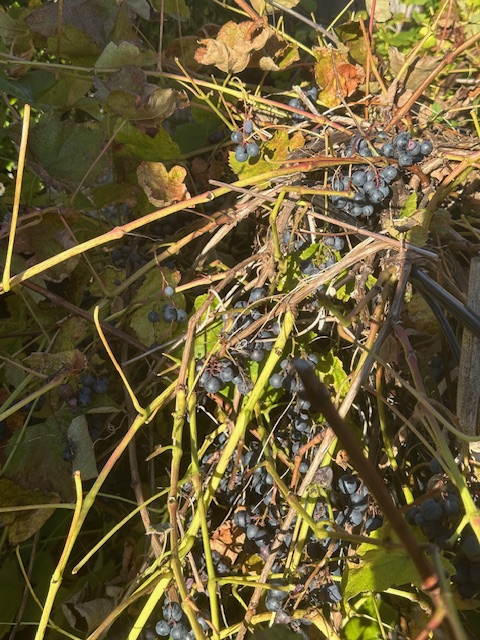
“Under a sky the color of pea soup / she is looking at her work growing away there / actively, thickly like grapevines / …Keep tangling and interweaving and taking more in / a thicket and bramble wilderness to the outside but to us / interconnected with rabbit runs and burrows and lairs….”

A garden is an interconnected community. Animal and human workers everywhere co-exist because of interconnected communities. If this is the way of our world, why are politicians not acting like an interconnected community?

I am heartened to learn about many interconnected nonprofit organizations in the U.S. One compassionate community organization was a one-man operation in Olympia, WA until people talked about “Souper Sunday” with their friends on social media. Online exposure catapulted a national sharing of Chris Hyde’s simple idea; using left-over vegetables from his garden, he invited folks over for homemade soup. “People were really divided and isolated,” he said of his 2023 brainstorm idea. “At first only a few people came out. But every week it grew. I soon had 20, 40, 80 people come.”

A neighbor commented on the power of Hyde’s actions: “I’m not naturally outgoing, and forming a sense of community has never come easily to me. When I moved here…I didn’t know a soul. But Chris’s group became my first real feeling…as my place, my home.” The volunteer soup-makers might deliver soup to neighbors with mobility challenges or those who have mental health issues. Their engagement not only reaches those with food insecurity but offers the nurturance of shared connections for both cooks and guests. The fledgling nonprofit expanded locally from 5-12 neighborhood chapters of Souper Sunday.

A nonprofit I have supported for decades is Parenthesis, now part of a larger nonprofit, New Moms, in Chicago. Parenthesis began with two compassionate women, Sunny Hall and Cathy Blandford, starting morning drop-in programming; parents obtained low-cost or no-cost childcare while participating in Parent Parlor workshops and/or finding quiet for some work hours. I delivered workshops, gave pro-bono supervision to social work staff, and served on an advisory board, along with many other volunteers. Now, New Moms not only enriches a previous shoestring budget, but provides housing for young single mothers with precious babes. Every child receiving the right dose of a secure attachment, a peaceful and safe home life, and adequate education lifts ALL families’ futures. Violence prevention begins in the cradle. It helps when nations create a peaceful zeitgeist.

I was privileged to hear ever-wise Buddhist monk Thich Nhat Hanh speak in Chicago in 2003: “…we need a brother or sister to assist us in difficult moments…one nation should have the opportunity to tell all the other nations about her own sufferings, difficulties and deep aspirations…[and have] every brother and sister listen….”

Can a planet survive without such interconnected engagement?

   Pearls of Peace (PoP) Quiz

444. What community engagement do you endorse?

445. How might you extend interconnected engagement globally?  

Do Tigers Meditate?

Photo by Frida Lannerström on Unsplash [istock]

Cats, large and small, seem to have personalities just like people. Some cats are mostly wild things, while others have a Mother Theresa calming, quiet presence. But all of you cat lovers know how reflective-appearing your kitty can look (some of the time). Does your cat meditate? Do any animals meditate?

Dutch-American primatologist Frans de Waal and Canadian philosopher Evan Thompson have an interesting perspective in “Primates, Monks and the Mind: The Case of Empathy.” https://www.wisebrain.org/papers/EmpathyPrimates.pdf

Thompson admits that he does not know the developmental possibilities for contemplative mental ability in animals, although he made a compelling case for creatures showing “loving-kindness” in mother-offspring compassion witnessed across many species. His view is that it is impossible to study consciousness without addressing the use of empathy.

De Waal cited social relationships in not only primatology, but also in dogs (wolves) and dolphins. How often do dogs “sense” some sensitive emotion (energy) and come closer to announce, “I’m here for you?” The authors affirmed connectivity between animals. I can vouch for this. In my childhood we had two Weimaraner/Labrador dogs – Ike and Mamie. Guess who was President? When Mamie died, Ike never was quite the same animal. He languished. He grieved. Perhaps Ike and Mamie meditated together? They often appeared peaceful together. As brother and sister pups, they always hung out together. Their wolf ancestors hung out in packs so they could hunt big prey for mutual gain.

De Waal made the case that animals rarely kill another in their own species. Biologists argue that trying to kill is simply too dangerous for animals; de Waal proposed that it is mutual dependency that can hold aggression to some limits in animal world. He suggested, “You cannot wipe out groups in which your relatives live because from an evolutionary perspective that’s counterproductive.” Animals do fight with their own kind; in the case of primates, they make up afterward.

Whether we call it meditation or use another description, mammals appear to have times for quiet “reflection.”  Meditation in Primates Studies suggest that chimpanzees and orangutans do engage in meditative-like behaviors. They sit quietly for extended periods of time, open-eyed, and appear to show a relaxed awareness. Whether this is similar to meditation in humans is unresolved. Perhaps future research can determine how animal meditative-like behaviors compare to meditative brain states in humans.

One definition of meditation is the behavior of focusing on one thing, perhaps the breath, to the exclusion of everything else. Researchers find that some dogs and cats appear to show meditative-like behavior more than others. They find a cozy corner and stare into space. Do humans feel more relaxed when they see their kitty relax? Pets do teach humans many things. Perhaps they are mentors of meditation.

The practice for in-the-moment consciousness with empathy seems to escape too many humans. Yes, dear reader, it takes practice.

      Pearls of Peace (PoP) Quiz

391. How often do you practice a meditative-like state?

392. What benefits do you notice when you consciously meditate?    

Big-picture Peace

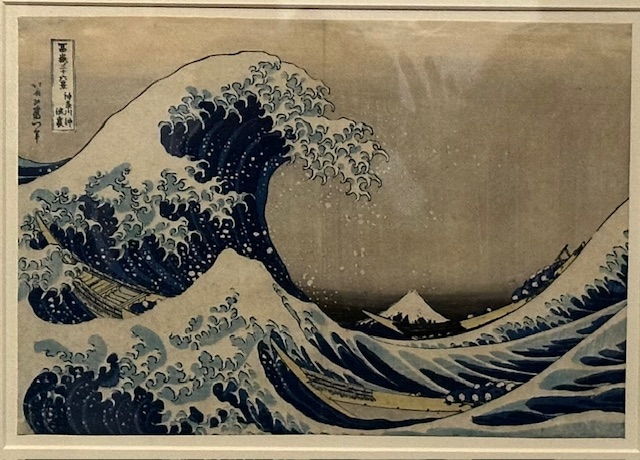
Under the Wave off Kanagawa, Katsushika Hokusai (1769-1849)

The United Nations International Day of Peace, annually set for September 21st, has a request: a 24-hour ceasefire of all hostilities on the planet. This year’s theme, “Cultivating a Culture of Peace,” calls for teaching the values of dialogue (see blog, “Mend Differences through Dialogue,” 8-19-24) and mutual respect to the 1.2 billion youth worldwide. Have we given up on adults knowing how to use dialogue and mutual respect in resolving conflicts?

It seems that adult problem-solving efforts to create peace on earth are like the tiny boats facing the looming giant wave in Katsushika Hokusai’s color woodblock print, Under the Wave off  Kanagawa. I must admit that the first time I saw this captivating image in Chicago’s Art Institute years ago, I was so focused on the wave action that initially I did not see the boats! Due to being on paper, the print is only on view for 3-4 months every 5 years. This original gem has re-surfaced from protective storage and again is on display (September 5, 2024–January 6, 2025) in the Art Institute’s Ando Gallery, my favorite room in the entire museum. This time, I knew to look for the boats. What if we are looking for world peace in all the wrong places?

Most museum visitors never see the Tadao Ando Gallery, or Gallery 109, as it sits in an innermost corner of the Art Institute’s Japanese collections. It is a compact space compared to many roomy galleries in other sections of the museum. Also, it is one of the few darkened spaces.

Ando was a self-taught architect. His haunting 16 free-standing wood columns in the womb-like environment compel one to slow down, take deeper breaths, and realize that this is a bodymind immersion into a different sense of time and space. Walking through the “forest” of oak pillars creates an atmosphere of peaceful reverence; the message is to refocus your gaze and get ready to look for what is beyond this “forest” grove.

We have English writer John Heywood to thank for his catchy proverb from 1546: “Can’t see the forest for the trees.” It seems to apply to many situations today, but especially to country leaders who lack the capacity to grasp the disastrous consequences of continuing wars. While dwelling solely on certain details, the big picture is often far from sightlines. Combating inequality, advocating for human rights, and championing climate actions for our planet are factors that lie beyond the immediate details of our international conflicts.

Re-look at Hokusai’s masterpiece. Mount Fuji holds still beyond the crashing wave. Again, we almost miss seeing beyond first details. This mountain is considered a spiritual place. How might we look for big-picture peace and create an interfaith spiritual culture for world dialogues? Isn’t peace first within a baby’s heart?

Pearls of Peace (PoP) Quiz 

327. When have you caught yourself missing some big-picture viewpoint?

328. How often do you refocus your gaze in looking for solutions to your personal sense of peace? 

Birthday Time

We are not first in making up catchphrases about time, but our cultural time fragments tell a lot about who we are when we say…

“Take your time…[It’s] time to…Running out of time… Free time…Time-strapped…Be on time…Time stopped …[It’s] high time…Time machine…Kill time…Time is money…A waste of time…Manage your time…Save time…Spend time…Time is of the essence…What time is it?”

Time flies, as the saying goes. Roman poet Virgil (70-19 BC) is credited with this timely slogan, first given as “Fugit irreparabile tempus” or “It escapes, irretrievable time.”

And yes, time appears to “escape,” even going faster as we age! After finding how frequently time was mentioned in my retirement survey of 125 individuals (ages 55-96), I wrote about this accelerating phenomenon in Transforming Retirement: Rewire and Grow Your Legacy: “Research backs up this perception. The release of dopamine, the body’s main neurotransmitter involved in time processing, has a drop-off beginning after age 20. This leads to the appearance that time passes faster. Also, your perceptions are different from younger years when you had to process many new events. There are possibilities to combat the speeding timeclock. To make time-travel slow down, do something different! When you are in flow-mode, you do not count hours.”

I just celebrated this blog’s 3-year birthday. Where did the time go? I began writing Pearls of Peace weekly when Mom (1922-2022) was about to turn 99-years-old. I chose Monday morning for online delivery. Why Mondays? At the time, I could not tell you why. Later I realized that my activist mother talked about “Moral Mondays,” as she and her peace colleagues would stand on the corner of the Federal Building in her hometown of South Bend, Indiana, every Monday (yes, even in snow) at evening rush hour to protest ongoing U.S. involvement in war. I stood with Mom a few times when I was visiting her for a long weekend.

As the Middle East/U.S. conflicts churned on, the Heartland reactions of those witnessing this small group of anti-war protestors appeared to change over time. Initially, there were some obscenities shouted out car windows, but people became war weary. I later saw individuals roll down car windows to smile and flash a peace V sign to the protestors. Maybe Margaret Mead was right when she said, “Never doubt that a small group of thoughtful, committed citizens can change the world; indeed, it’s the only thing that ever has.” 

Peace seems more elusive today than in earlier post-9-11 days. Wars today are like surround-sound, coming from multiple directions. I make no pretense that weekly writing about pluses and minuses of human nature — to stir a few readers’ thinking about everyday possibilities — might change the world. My Moral Mondays look different from Mom’s, but perhaps we just keep time in our own way.

Thinking of your legacy, Mom, in your Birthday week.

Pearls of Peace (PoP) Quiz 

315. What does the concept of time mean to you?

316. How do you spend time that is meaningful to you?     

Courageous Pearls

In the assassination attempt on Donald Trump, the life of an innocent man ended as he sheltered his family. Two other bystanders also captured bullets. As in several other shooter profiles, the 20-year-old gunman was described as the recipient of bullying in school. Why? Who’s teaching the values of democracy which include “…insuring domestic tranquility”?  

In his book, Healing the Heart of Democracy: The Courage to Create a Politics Worthy of the Human Spirit, writer Parker J. Palmer calls for examining our inner lives to reach the “commonwealth” of compassion and creativity found in the wording in “We the People of the United States, in order to form a more perfect Union….” Palmer instructs how to focus on shared values with the claim that “the human heart is the first home of democracy.” His 5 habits of the heart are a courageous blueprint for these troubled times:

  • An understanding that we are all in this together
  • An appreciation of the value of “otherness”
  • An ability to hold tension in life-giving ways
  • A sense of personal voice and agency
  • A capacity to create community

Named one of the most important books of the early 21st Century by Democracy & Education, Palmer’s 2024 updated edition contains a discussion guide augmented by online video interviews. Let’s teach this in schools.

Another courageous source of hope lies in the community effort to end the cycle of gun violence by the Institute for Nonviolence Chicago. In partnership with Northwestern University and the University of Chicago Crime Lab, the Institute identifies community individuals who are at risk of being shot or becoming a shooter. They foster the healing of broken dreams and chaotic emotions of youth, supporting individuals though their program of “relentless engagement.” Block by block, they espouse the vision of Martin Luther King, Jr. in nonviolent problem-solving. Their 6 principles of nonviolence support Palmer’s ideas with added dimension:

  •  Nonviolence is a way of life for courageous people.
  • The Beloved Community is the goal.
  • Attack forces of evil, not persons doing evil.
  • Accept suffering without retaliation for the sake of the cause to achieve a goal.
  • Avoid internal violence of the Spirit as well as external physical violence.
  • The Universe is on the side of Justice.

The Institute creates a “culture of wellness,” including helping individuals find living-wage jobs in the legal economy. I love how their staff keep receiving training in trauma-informed care and have an offering of yoga practice. It is key to heal the healers as well as train individuals in nonviolence.

Palmer’s words inspire: “When democracy is working as it should, it is a complex and confusing mess where we can think and act as we choose, within the rule of law…and can still manage to come together for the sake of the common good.” The common good is inclusive. Democracy is inclusive.

Pearls of Peace (PoP) Quiz 

307. Which of the Institute-for-Nonviolence-Chicago principles might you work on?

308. How can you foster inclusivity in your hometown?