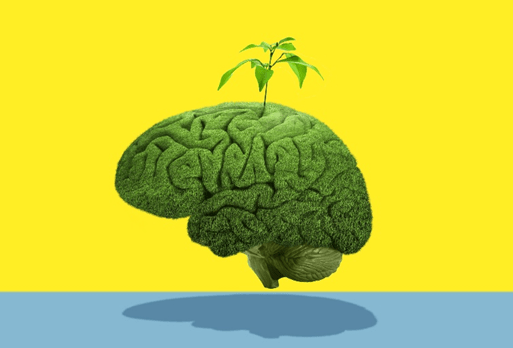
March 2nd is SEL (Social Emotional Learning) Day 2026. This annual celebration highlights the many positive benefits of SEL immersion in all aspects of life. SEL Day is an international event that takes place during the first week of March each year with 88 countries onboard. The U.S. Senate introduced SEL Week in 2023 with a bipartisan resolution by Senators Susan Collins and Dick Durbin. The 2026 theme posts as “Skills for Community, Skills for Career.”
Social and emotional learning (SEL) is a proactive set of skills for children (and adults) to focus on mental health and well-being. The skills incorporate developing self-awareness, coping with emotions, setting and achieving positive goals, understanding and practicing empathy for others, building relationship competence, and making responsible decisions. An increasing need is for families, educators, business leaders, and whole communities to work together to promote SEL among students, our future leaders. A boost in academic learning is only one of the winners with such a systemic effort. SEL encompasses restorative justice, workforce readiness, and cultivating a lifelong growth mindset.
Russian psychologist Lev Vygotsky (1896-1934) set the stage for understanding one’s historical-cultural influence in their learning. He stressed the importance of one’s social environment – the attitudes and interactions – that each child is exposed to from their earliest years. His zone of proximal development espoused guiding children through a task rather than expecting them to work in isolation. He was a proponent of social negotiation as an essential step in a student’s mastery of concepts. Rather than traditional memorization methods, Vygotsky advocated a model of teacher-student questioning, clarifying, and predicting in a collaborative process.
The theory of scaffolding was applied to psychological arenas by cognitive psychologist Jerome Bruner in the late 1950’s. He used the construction term to outline young children’s oral language acquisition. Bruner’s principles also spotlighted social interactional support for students in learning new concepts; he believed that the temporary scaffolding could be removed, similar to construction scaffolding, when the support is no longer needed.
Building upon Vygotsky’s and Bruner’s thinking, school scaffolding in social and emotional learning (SEL) incorporates modeling, prompting and coaching by school staff. Emotional and social skills are introduced in a stepwise progression with the goal of gradually removing support as students exhibit competence and independence. This approach also applies to academics and athletics.
It is a good idea to focus on scaffolding of children’s development of SEL. How might such scaffolding apply to adults who missed out on SEL in their schooling? This seems like our biggest challenge. In President Barack Obama’s words, “Learning to stand in somebody else’s shoes, to see through their eyes, that’s how peace begins. And it’s up to you to make that happen. Empathy is a quality of character that can change the world.”
SEL peer modeling, prompting and coaching for adults needs to be part of National SEL Week.
Pearls of Peace (PoP) Quiz
476. When do you use empathy?
477. What will you do to incorporate SEL for yourself this week?

 Pearls of Peace: A Family Psychologist’s Circle-of-Life Blog