“Music is the great uniter. An incredible force. Something that people who differ on everything and anything else can have in common.” Sarah Dessen, American novelist of young adult fiction
Music is a soother for many ills. Why not apply it to world peace?
Adam Weingarten is the music director of Boston University’s Hillel, offering the first music program of its kind for any chapter of Hillel International. Weingarten’s goal is to bring students together, Jewish and non-Jewish. His take on college life today is a microcosm of what all of us may be experiencing:“It’s harder for people to connect now…to see what we have in common. Having a common memory, having a night where you had a good time with someone else, that can bond you for life—or at least for the four years you’re here.”
As a youth, Weingarten enjoyed singalongs at Jewish summer camp alongside the music of his favorite band, the Beatles. He created his own band, “Sounds of the Attic,” while combining Judaic studies and audio engineering. His philosophy of music is as simple as it is profound: “…little moments actually make the biggest impact…just like a song has a progression, a beginning, middle, and end, and every part of it is equally important, that’s what I want the kids to feel during their college experience—making their story flow like a perfect piece of music.”
Music is as old as_________. Fill in the blank. Likely the first humans chanted and had choir practice. It is believed that oral storytelling was often embellished through song, especially with rowers at sea or ancient dramas embellished by a Greek chorus.
Ancient Egyptian temple priests were thought to use “vocal toning” (that resonated within stone walls) to align humans with deity. Buddhist monastics chanted Om as a meditative practice. Confucius is considered a promoter of the powers of music and tone. Ancient Greek physicians used musical incantations and vibration accompanied by flutes and lyres to heal the sick; music was believed to purge negativity, improve digestion and sleep, and treat joint issues like gout. In Finland the vocal practice of lament was part of healing grief, loss, and other traumas.
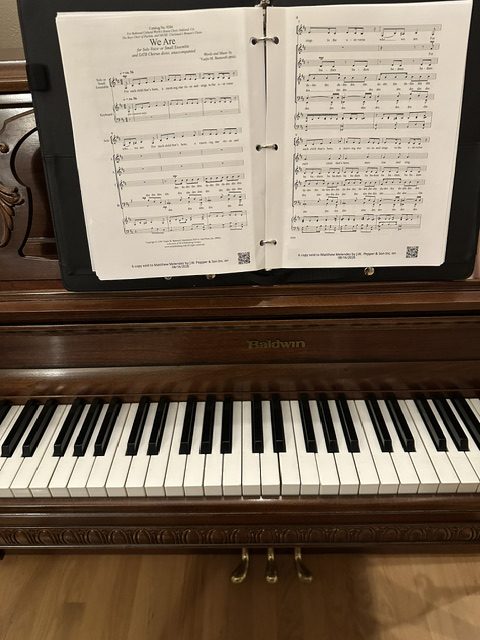
These early intuitives were on the right track. Research in the 1950s-1960s found that patients with religious leanings and an enjoyment of classical music would respond faster in healing from postoperative retinal detachment than those without these characteristics. Science today identifies how music affects the brain’s limbic system and produces changes in neurotransmitters, such as catecholamine, indolamine, dopamine, endorphin, and the latest, neuron growth hormone. During group singing, bonding-hormone oxytocin is released, producing trust and social connection. I experience this, singing with 130+ others in my community’s Peace Choir.
Research bears out Weingarten’s hunches about music’s peaceful power: complete strangers may develop close bonds after singing together for just one hour.
Pearls of Peace (PoP) Quiz
538. When might you consider music as a healer?
539. How often do you sing with other people? If not, why not?

