What Makes a Champion?

Pearls of Peace was a “champion” blog multiple times in its every-Monday 5-year run of 500 words. Recognized by Illinois Press Women’s Association (IWPA) and National Federation of Press Women (NFPW), here are some reviewer comments:

“One of the more compelling and emotional statements I have read with an associated entry…the blog is…inquisitive…and with a firm perspective.” It is an honor to have positive acceptance of my musings on disparate topics. My goal is to offer curious connections that might lead readers to pause for mindful moments.

What does firm perspective mean to me? It encompasses my belief in cultivating a growth-and-grit mindset to live one’s life with meaning. It takes both continual learning and considerable grit – passion plus perseverance – to keep working on some goal for any extended amount of time.

Writing a blog is not the same as being a soccer player, but a firm perspective about one’s craft is also necessary for the passionate and persistent soccer players making their way to World Cup championship rounds. I cheered for many different teams, but mostly I cheered for players’ relentless resolve, their stick-to-itiveness in their performances. Being a champion is not just about winning accolades.

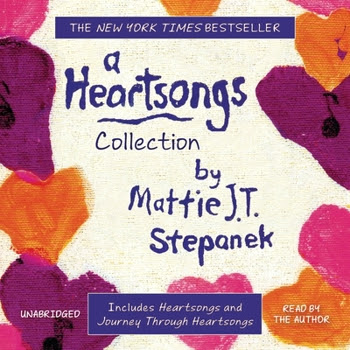
Another champion is a boy named Mattie J.T. Stepanek who died at age 13 from a rare genetic neuromuscular disease that also claimed the lives of all 3 of his older siblings. His mother, Dr. Jeni Stepanek, did not know that she possessed an adult-onset form of this genetic condition. Mattie lived with a firm perspective when it might have been otherwise. He embodied a growth-and-grit mindset in his short lifetime. Beginning to read and write at age 3, Mattie wrote poetry to grieve the death of his brother. He named his poetry Heartsongs and eventually published 7 books of poetry and peace essays. Here is his 9-year-old poem, On Being a Champion:  

A champion is a winner, / A hero…  / Someone who never gives up / Even when the going gets rough…Someone who overcomes challenges / Even when it requires creative solutions / A champion is an optimist.  /A hopeful spirit…  / Someone who plays the game, / Even when the game is called life…  / Especially when the game is called life.  / There can be a champion in each of us, / If we live as a winner, / If we live as a member of the team, / If we live with a hopeful spirit, / For life.

Mattie advocated for improved hospice laws for children. He referred to “global neighbors…in the mosaic of humanity.” His call for “pathways and choices” for personal and global peace were messages for world leaders. Mattie’s birthday on July 17th is honored in his hometown (Rockville, Maryland) as Peace Day.

My blog’s 5th birthday is July 21st. Let’s share Mattie’s hopeful passion for peace among global neighbors.

Pearls of Peace (PoP) Quiz

516. What are you passionate about?

517. Where does your resolve and perseverance take you these days?

Are You a 12? I Am.

Forget about scoring 1-10 on the flawed scale rating women’s physical attractiveness. Actress and model Bo Derek rated 10. Much patriarchal banter leans toward sexism. I prefer the Seattle Seahawks’ (forced) inclusive “12’s.” Everyone rates as 12.

The Super-Bowl-LX-winning Seahawks did not have good attendance in the early days of Seattle’s franchise. A former owner even attempted to relocate to L.A. However, the Seahawks rallied, winning 4 consecutive division titles. Fans noticed.

In 1984 the Seahawks initiated the “12’s” when they retired the #12 jersey to give their fans a symbolic “12th  Man” position on the 11-player team on the field. The Seahawks began a tradition of raising a “12th Man” flag at home games in 2003. In 2014 a local mainstay sponsor, Boeing, painted a 747-cargo plane with the Seahawk icon; the number 12 appeared on the plane’s tail. By 2016 the team transitioned from “12th Man” to “12’s” to refer to fans. Fans noticed.

The “12’s” inclusivity applies to EVERYONE. There are no Red fans/Blue fans, no male fans/female fans, and no racist slurs are acceptable in U.S. football land (count how many Black team members are superstars). Anyone can wear a 12 jersey and “join” team spirit as a 12th person.

Those “12’s” in the stands create a fired-up energy for their team which adds chemistry to football games. Seahawk fans have set the Guinness World Record for loudest noise at a sporting event on several occasions. There is a term for this. It is called collective effervescence.

People experience feelings of connection and unity when they have a communal shared purpose, such as cheering for a favored team or applauding musicians upon their stage return for an encore. French sociologist Émile Durkheim coined the term collective effervescence: “The very fact of congregating is an exceptionally powerful stimulant. Once the individuals are gathered together, a sort of electricity is generated from their closeness and that quickly launches them to an extraordinary height of exaltation.”

If you have read this blog previously, you know that I like to get to the “story” behind the story. It turns out that the Seahawks did not invent the notion of the “12’s.” The origins come from Texas A&M in 1922. Their use of “The 12th Man” had been trademarked in 1996. A compromise was reached between the Seahawks and Texas A&M in 2016 when the Seahawks agreed to cease using this name in their marketing. The Seahawks became inclusive with “The 12’s.”

I know what collective effervescence stirs up — a belonging to something grand. In sports I experienced it with Bulls fans when Michael Jordon was at his peak. Whether the Guiness World Records showed the decibels of delicious joy at that time does not matter. Experiencing a stadium of cheering fans is riveting. Fans remember.

When might we gather together as Americans to cheer our beloved country?

Pearls of Peace (PoP) Quiz

470. When have you experienced collective effervescence?   

471. How often do you feel unity in any group?   

Olympics & Mental Health

Eiffel Tower in Moonlight (Loic Venance/AFP via Getty Images)

Vincent Van Gogh captured the essence of one’s ability potential in a letter that he wrote to his brother: “…principles are good and worth the effort only when they develop into deeds…it’s good to reflect and to try to be conscientious, because that makes a person’s will to work more resolute and turns the various actions into a whole…for the great doesn’t happen through impulse alone and is a succession of little things that are brought together…it’s the same with other things as it is with artistic matters…the great isn’t something accidental; it must be willed.” 

What does it take to make a winning Olympian? Details may vary among different individuals, but I agree that greatness takes willpower which I define as grit. Research psychologist Angela Duckworth defines grit as “the power of passion plus persistence.” Grit is exercising discipline, a basic human need.

However, grit is not the only consideration in a person’s successful outcomes. One’s mental health is the secret sauce of success.

We can thank Simone Biles for educating folks about the importance of one’s mentally healthy approach to her dangerous-but-oh-so-beautiful sport. When she needed to drop out of most of the Olympic competition in Tokyo, many treated her decision harshly; she was expected to “push through,” and deny her doubts. Unfortunately, those who critiqued Biles misunderstood the situation.

Betty Okino, a 1992 Olympic medalist, explained that a gymnast can die if one cannot land on their feet (and end up landing on their head). Gymnasts call their doubts “the twisties,” a mental block where one has difficulty grasping their acute spatial ability to sense and control airborne moves. It feels as if their body and brain have a disconnect.

Biles did push through calf pain in the Paris Olympic qualification round this weekend, aiding her team in climbing to the top of the leaderboard. Biles told Hoda Kotb that she used to think of psychotherapy as a weakness. Now she has learned to speak about trauma.

Biles is not alone in addressing her mental health needs as an elite athlete. The comeback swimmer Caeleb Dressel made a decision to take 8 months off after the Tokyo Olympics to regroup in meeting his mental health needs; he has worked with a therapist weekly for 2 years.

According to Jess Bartley, senior director of psychological services for the U.S. Olympic & Paralympic Committee, 15 psychological service providers worked with 1,200 athletes last year. Athletes grapple with such questions:

  • What is the place that sport has in your life?
  • How is your identity tied up in this?
  • What does it mean to make, or not make, the Olympic Games?

The Paris Olympics has a 24/7 hotline with mental health counselors who speak 70+ languages. This year athletes may seek services until 4 years post-Olympic week. Elite athletes are role models in caretaking one’s bodymind without shame.

Pearls of Peace (PoP) Quiz 

311. How do you define your own identity?

312. When do you need extra willpower or grit in your life?