Ages and Stages

Austrian novelist Marie von Ebner-Eschenbach defined aging: “In youth we learn; in age we understand.” I am rethinking what age means on my birthday.

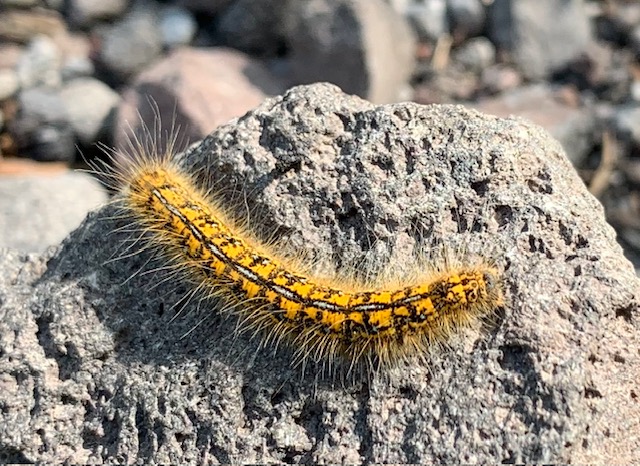
We know 4 aging stages of monarch butterflies: egg, larva (caterpillar), pupa (chrysalis), and adult. This amazing metamorphosis includes caterpillars whizzing through 5 growth spurts, molting skin each time! This reminds me of adolescents making change after change with dizzying speed.

Research from University of Cambridge suggests that adolescence lasts longer than you ever thought. Dr Alexa Mousley and her colleagues found that the brain stays in the adolescent stage until the early 30’s. Key maturation is determined to end around age 32. Studying nearly 4000 individuals’ MRI scans (ages 0-90 years), the researchers concluded that there are 4 pivotal ages for brain turning points or major changes: 9, 32, 66, and 83.

  •  Childhood — Birth to age 9: Brains undergo network consolidation with the most active synapses preserved from a whittling-down process. There is a major boost in cognitive capacity, but also a risk of mental health challenges.
  •  Adolescence – Ages 9 to 32: Brains’ largest directional changes have an efficiency of connections within specific brain regions. There is rapid communication across the whole brain which relates to enhanced cognitive performance. However, this timeframe poses the greatest risk for mental health disorders. Many individuals initiate substance use in this stage. Repeated drug exposure can significantly alter brain development, especially relating to the ways reward and control circuits are wired. A drug habit may become almost automatic, leading to a reduction in prefrontal problem-solving which has many consequences.
  •  Adulthood – Ages 32 to 66: A “plateau in intelligence and personality” (based upon other research) was sustained in this research. Brain functioning appears relatively stable.
  •  Early aging – Ages 66 to 83: A mild and gradual reorganization of brain networks culminates in the mid-60’s, although a variety of health conditions (hypertension or diabetes, for example) may emerge; health issues can place an individual at risk for cognitive decline.
  •  Late aging – Age 83+: Whole brain connectivity reduces and there is more reliance on specific brain regions. However, this participant group was smaller than the other stages studied and merits more study.

The researchers admit their participants were controlled for “healthy” folks. Trauma affects brain ages/stages. An estimated 6 in 10 U.S. adults have experienced trauma (with higher numbers among women than men). Rates for children and adolescents are higher: according to the National Library of Medicine, about 2 out of 3 U.S. individuals experience trauma by age 16. This rate is likely higher among youth in violent war areas around the globe. We need a planetary plan for addressing trauma.  

How do butterflies deal with trauma? According to the Australian Butterfly Sanctuary, butterfly wings are larger than needed for flying. Butterflies can fly with half of their wings missing. My translation for “youth” at any age: keep flying (learning)!

Pearls of Peace (PoP) Quiz

460. What does your age mean to you?

461. What health-proofing practices do you use?  

Age-inclusion Please

Ageism Awareness Day is October 9. The American Society on Aging (ASA) Ageism & Culture Advisory Council has a  Fact Sheet for those who want more details on ageism: https://asaging.org/wp-content/uploads/2025/09/Ageism-Awareness-Day-Fact-Sheet-2025.pdf

Ageism is common and yet overlooked as one of the most socially accepted forms of prejudice. A poll reported that 82% of adults in ages 50-80 experience ageism words or actions daily. And to make matters worse, we often are ageist about ourselves! Other highlights from the ASA report include these issues:

  • Ageism covers people of many ages, both as recipients of prejudice and offenders of prejudice.
  • By age 3 children pick up age stereotypes.
  • Ageism refers to stereotypes (how we think), prejudice (how we feel) and discrimination (how we act) toward others — or ourselves — based on age.
  • Cultural ageism slips into our movies, literature, songs, news reporting, and especially our jokes.
  • One research study found that a mere 1.5% of the characters on TV in the U.S. are older adults. If present, they tend to have minor roles and/or are portrayed in stereotypic ageist behavior.
  • Ageism is even more prevalent when it intersects with racism, sexism and ableism.
  • Those who experience multiple forms of ageism are reported to have more chronic health conditions and depression.
  • Ageism has economic implications; AARP estimates that $850 billion in lost gains to the CDP results from involuntary retirement, underemployment, and unemployment in older adults.
  • Older adults support the U.S. economy; ages 50+ support over 88 million jobs (through jobs they hold or create).
  • More than half of small business owners are 50+ years old.
  • Work contributions of older adults are overlooked: caregivers ages 65+ are often unpaid caregivers for their family, friends or neighbors.
  • In 2022 data, 1.1 million grandparents ages 60+ were providing most of the basic care of grandchildren living with them.
  • Older adults have longer periods of unemployment, face discrimination during the hiring process, and receive fewer professional development possibilities.
  • 64% of older workers report age discrimination in their place of work.
  • In one study 1 out of 5 adults over 50 experienced discriminations in their healthcare settings.
  • There are few geriatricians treating the older adult population; the average salary for a geriatrician is half of the salary for an anesthesiologist, cardiologist, or radiologist.
  • Medication-related problems are estimated to be one of the top 5 causes of death in older adults.

I have experienced ageism and while I know about the unconscious bias that exists in the U.S., it is still unsettling as I feel useful, not over-the-hill. I like author and poet Gertrude Stein’s approach: “We are always the same age inside.” Her statement can be taken in many ways, but there is a timeless quality to believing in a core self with an ability to have consciousness to each present moment. There are positive possibilities when we embrace age-inclusion.

Pearls of Peace (PoP) Quiz

434. Have you experienced ageism lately?

435. What do you say when you hear ageism bias tossed into conversations?

Ageism Discrimination

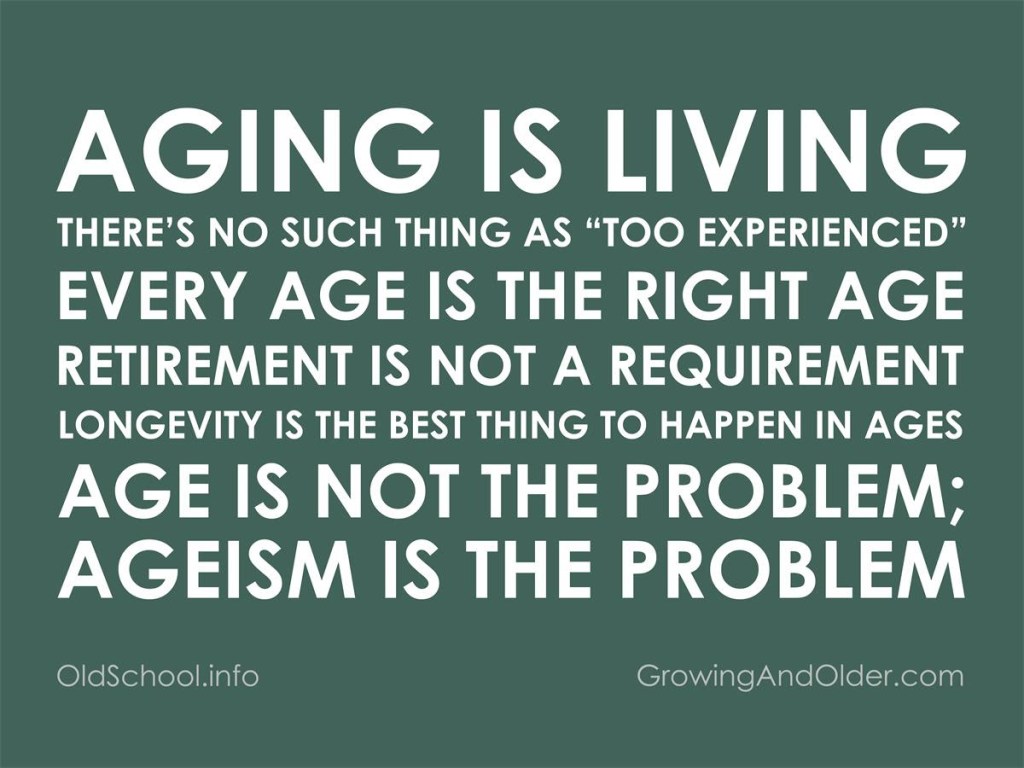
Ageism Awareness Day is on October 9th, but let’s make every day an ageism awareness day as the Baby-Boom generation mushrooms into seasoned citizen territory.

 The World Health Organization posts these alarming findings:  Ageism costs billions annually in the U.S. from age discrimination — the economic cost of age discrimination against older workers was estimated to cost $850 billion in lost GDP in 2018 (from factors such as the inability to find work and earn promotions).                                                                                                               1 in 2 people worldwide are ageist against older people.

It is also possible to be ageist against young people, as in saying, “She’s too green for the job,” likely a sexist attitude and ageist. These discriminatory attitudes often travel together, along with a particularly damaging attitude — racism. “Ageism intersects and exacerbates all the other ‘isms,’ including racism, sexism and ableism,” according to the Ageism Fact Sheet compiled by the American Society on Aging (https://asaging.org/sites/default/files/2024-08/Ageism%20Fact%20Sheet%20-%20Ageism%20Awareness%20Day_0.pdf ).

Here is how journalist Connie Chung, first woman to co-anchor the CBS Evening News, describes the career hoops she jumped through at age 23 in Connie: A Memoir: “…Since I stood only five feet, three and a half inches (don’t forget the half), I compensated by wearing stilettos. I wanted to be as close as I could be, eye to eye with the men. I did not want to look up at them. I wanted to be their equal. I tried to lower my voice to mimic theirs and copied their on-air cadence. I knew they could easily bully me, and I was powerless to fight them, so I joined them. I knew I could never be one of the boys, but surely, I could adopt pages from their playbook. It was easy to imagine myself as just another white guy. I became aggressive, tough, bawdy, and extremely competitive. Yes, I looked like a lotus blossom, but I talked like a sailor with a raw sense of humor.”

There is more ageism discrimination for older adults. 64% of older workers maintain that they face age discrimination; 41% report ageism experiences in their workplace. Often companies have expected ages for “retirement.” For some individuals, leaving a demanding career may be a welcome life development; for others, a mandatory age for retirement seems dismissive of one’s talents.  

• Age diversity is not foremost in planning a company’s workforce, although organizations might gain a competitive advantage from multigenerational employees. Acknowledging age equity increases worker feelings of belonging, along with enhancing productivity.                                                                                                                                                         

 • Healthcare is ageist: In ages 50+, 1 in 5 experiences discrimination in healthcare settings.

Now for the good news, if you are lucky enough to live into your 70’s and beyond: people who possess more positive self-perceptions of aging live 7.5 years longer than those with less positive perceptions, according to Yale University researcher Becca Levy.

Find resources to advocate against ageism (https://asaging.org/ageism-awareness).

Pearls of Peace (PoP) Quiz 

331. How often do you catch yourself being ageist?

332. What might you say to another when you hear an ageist remark?                                       

Seasonal Pearls

What color are your pearls? Hint: my interest is in your figurative pearls.

Perhaps Sister Joan Sauro’s words will explain: “There is a pearl in every season. Find it. Then give all you have to claim it” (Whole Earth Meditation: Ecology for the Spirit).

May is a busy month for addressing important populations within the U.S. In addition to May’s Asian American, Native American, Native Hawaiian, and Pacific Islanders Heritage Month (see “Hula Pearls,” 5-6-24) and America Mental Health Awareness Month (see “Synergy for Mental Health,” 5-13-24), May also is Older Americans Month. Some individuals relate to all 3 of these populations.

Numbers of older adults coping with depression range from 7.7% (adults 50+) to an estimated 31% in some groups (ages 65+). Older adults’ symptoms of depression may not be recognized by their physicians. Compounding caretaking, older adults may view mental health help as a stigma, especially in non-English speaking individuals.

A population bumper crop of older adults is ripening: it is estimated that 4.1 million Americans will reach age 65 every year from 2024-2027. Reportedly, more than 11,200 Americans turn 65 every day (The Alliance for Lifetime Income). Regardless of exact numbers, depression, anxiety and loneliness plague too many older adults.

An exciting program to address this looming population, created 20 years ago at the University of Washington in Seattle, Program to Encourage Active, Rewarding Lives (PEARLS) coaches older adults to be proactive about their wellbeing. Depression is defined in everyday examples by coaches for participants (identified in community organizations); problem-solving skills are taught to enable self-sufficiency for more active lives. The free program takes place in homes or preferred community settings. Online PEARLS began during the pandemic. One-hour sessions for 6-8 weeks (over 4-5 months) start with each person’s daily routines of “where they are.” Coaches have supervision with mental health practitioners. PEARLS coaching has reached adults across 26 states, including our Memorial Day veterans, people of all ages with disabilities, and especially those 65+.

American education is not forward-thinking regarding older adults. My doctoral program in counseling psychology had courses on childhood, adolescent development, and psychology of young adults, but no specific coursework on midlife (since identified as ages 35-64) or gerontology.  Relatively few colleges and universities offer a gerontology major, despite a growing need. Of the 5 institutions graduating the most students in gerontology, 89.9% are females. We need more compassion and creativity in our thinking about seasoned citizens.

Recently I was asked to talk about creativity enhancing aging on a podcast, “Older Women and Friends” (interviewed by host Jane Leder). Check it out:  https://www.buzzsprout.com/2054889/15102414  

Seasonal growth is important at every age, but retirement age is a reminder that our true wealth consists of time, how positively we spend it, and bodymind health. Let’s meet aging with colorful pearls of creativity!

Pearls of Peace (PoP) Quiz

293. What season of your life has been your most creative time?

294. What about now?