Purpose Pearls

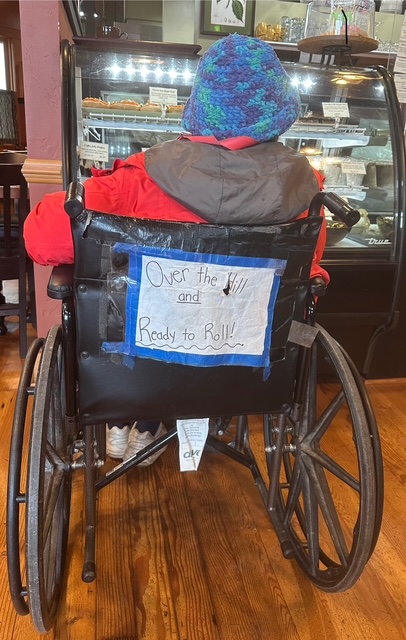
At age 80 Betty Kellenberger becomes the oldest woman to ever hike the entire 2000-mile Appalachian Trail. While Kellenberger grew up in Michigan, she always had a fascination with seeing the Georgia-to-Maine landscape along the Appalachian Trail. Her imaginings materialized when she retired and had a 6-month timeframe to devote to her dream.

Like fulfilling many dreams, the reality of inevitable along-the-way struggles is daunting. Kellenberger faced bruising, dehydration, falling, a concussion, Lyme disease, and hurricane damage to trails in the South. She had to change her route heading north. Then cold weather forced a pause until spring. She also experienced inner pauses, both on the trail and upon completion: “You hike alone, and so you have your thoughts…You have so many emotions because you’re excited about finishing,” she recalled. “I was really looking forward to saying, ‘I am done.’ But you also know you’re going to miss this big-time. You’re not going to have what you have out on that trail. That peace, the serenity.”

Kellenberger’s decades-long teaching career was teaching English and social studies to seventh graders, along with night classes for adults. Having achieved her Appalachian Trail dream, she ponders what comes next. This transition time is where life’s dreams require rewiring. There are many choices of how to spend one’s time in retirement and how to create a sense of purpose.

Some, like 100-year-old Jiro Ono, famed chef and restaurant owner of Sukiyabashi Jiro in Tokyo, are never-retire advocates. While Ono has passed the baton to his son as head chef, he maintains that the secret to longevity is to keep working! And yet, he must rewire to accommodate his Centenarian body’s needs as he realizes that his hands “…don’t work so well…I can no longer come to the restaurant every day…but even at 100, I try to work if possible. I believe the best medicine is to work.”

Ono’s health habits include no alcohol, regular walks, and to no one’s surprise, eating well. He continues serving and eating sushi as the first sushi chef to earn 3 Michelin stars. He is the oldest head chef of a three-star restaurant. What possibly could be his next purpose? Yes, he has one! Ono wants to outlive Japan’s oldest man who died at age 113.  

Both Kellenberger and Ono are seasoned citizens who believe in living with purpose. Hopefully, purpose in one’s life starts at an early age, but an overarching purpose in one’s life can change. Life transitions often are a time of upheaval; they may signal either decline and/or renewal to dream big after a muddling-through stage. No matter what your current age or circumstances may be, start affirming purposes that have meaning for you. Please know that you can rewire at any age!

The following questions come from my book, Transforming Retirement: Rewire and Grow Your Legacy.

Pearls of Peace (PoP) Quiz

442. What are you doing with your precious time today?

443. What kind of rewiring might you tinker with today?

Saying YES to Hope

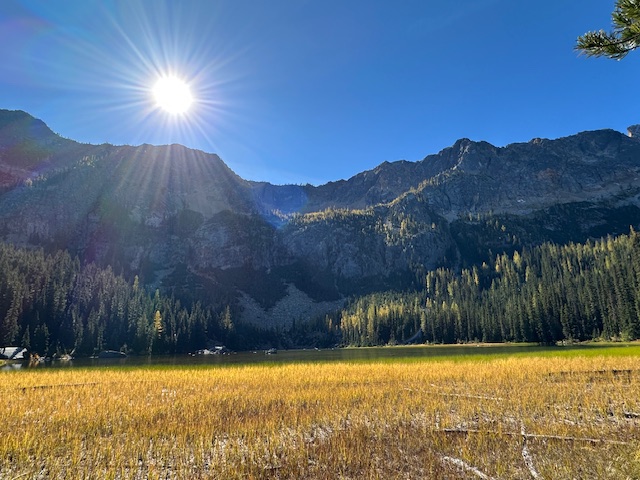
Cutthroat Lake (Named after the local cutthroat trout), North Cascades, WA

English primatologist and anthropologistJane Goodall is an inspirational leader. Her messages for planetary health were still percolating as she entered her 90’s. In celebrating her birthday in 2024, Goodall said in an interview on TODAY,” Slow down, Jane, you’re 90.”  Then she concluded, “I have to speed up because I don’t know how many years left I have.”

Goodall gave her final public interview just 8 days before she died on a U.S. speaking tour 10-01-25 at age 91. Longtime assistant Mary Lewis reported working with Goodall on a document at 10:30 PM just hours before Goodall died while sleeping.

UN Messenger of Peace Goodall found that the question most asked of her was this one: Do you honestly believe there is hope for our world…for the future of our children and grandchildren? Her answer was a stalwart YES — with a call to action: I believe we still have a window of time during which we can start healing the harm we have inflicted on the planet – but that window is closing. If we care about the future of our children and theirs, if we care about the health of the natural world, we must get together and take action…Many people understand the dire state of the planet – but do nothing about it because they feel helpless and hopeless.” 

Goodall sustained a keen sense of hope that can serve as a legacy. She exudes hope in The Book of Hope: A Survival Guide for Trying Times co-authored by Douglas Abrams, with Gail Hudson. Abrams proposed this dialogue-with-Jane book after his Book of Joy with The Dalai Lama and Archbishop Tutu.

Goodall lists 4 reasons for hope despite “a time of fear:”

  1. The amazing Human intellect; 2. The resilience of Nature; 3. The power if young people; and 4. The indomitable Human Spirit.

Roots & Shoots programming initiated by Goodall in 1991 is a prime example of youthful power. While the fledgling environmental project began with 12 high schoolers in Dar es Salaam, Tanzania, today Roots & Shoots hands-on programming exists in 100 countries. The purpose is to train youth to create positive changes for animals, the environment, and their local communities. It is the embodiment of hope.

Saying YES to hope is key to many present-day predicaments. Saying YES means taking power. In the children’s book, A Million YES’s, author D.J Corchin (with illustrator Dan Dougherty) describes the contagion of positive actions: “Word got around quickly. The girl suddenly made more and more friends who all lined up for her incredible YES’s.”

Jane Goodall was a practical and philosophical role model: “You won’t be active unless you hope that your action is going to do some good. So you need hope to get you going, but then by taking action, you generate more hope. It’s a circular thing.”

Say YES to active hope.

Pearls of Peace (PoP) Quiz

436. What gives you hope?

437. How might you say YES more often to make positive environmental changes?

“Fast” Talkers Live Longer

The Berlin Aging Study (BASE) is a multidisciplinary (sociology, psychology, psychiatry, and internal medicine) study of seasoned citizens (my name for older adults) between ages of 70-105. Initially, detailed information was gathered for 258 men and 258 women who lived in Berlin. The longitudinal research originated under the direction of the late German psychologist Paul B. Baltes and German sociologist Karl Ulrich Mayer. Along with his American psychologist wife, Margret Baltes, Paul Baltes viewed lifespan development in terms of “plasticity” in cognitive abilities, a context of adaptation, and multidisciplinary factors such as one’s biology, family, schooling, religious affiliation, and profession. The Baltes couple promoted successful aging through optimizing one’s cognitive functions and the ability to adapt to change, including loss. Research supported their belief that cognitive abilities can continue to develop in late adulthood with participation in stimulating activities. A current longitudinal study (BASE II) of 1600 seasoned citizens (ages 60-80) is underway at the Max Planck Institute for Human Development in Germany.

BASE research results are fascinating. General intelligence did not predict who might live longest. Instead, verbal fluency was key in long-living folks. The participants with low (versus high) verbal fluency had a median survival time that was 9 years shorter! Verbal fluency requires broad abilities, including fast information retrieval and a crystallized knowledge base. One only hopes that a fast-talking individual possesses a truthful knowledge base.

Here are a few pointers for increasing your verbal fluency. Heather Hurlock, Founder and Editor of Super Age (an online source of health and wellbeing), names the first three well-established ones.

  • Read out loud. This suggestion also is endorsed by a 30-minute-daily program, StrongerMemory, for those in mild cognitive decline. Do not wait for cognitive deficits to appear to make a reading-out-loud practice for yourself! You will build on articulation and rhythm skills when you read to yourself or others. Both skills link to verbal fluency.
  • Hand-write often. While cursive is being dropped from many elementary schools, I believe that is a mistake. There is evidence that suggests learning cursive handwriting is helpful in one’s overall learning and retention. Handwriting (but not typing) is related to letter processing which translates to successful reading in youngsters. Also, handwriting is part of the StrongerMemory workbook exercises. https://goodwinliving.org/strongermemory-the-fight-against-cognitive-decline/
  • Think (and take deep breaths) before you speak. Take mindful pauses to provide your brain with a chance to retrieve some linking thoughts. Not only will this increase your confidence level, but it may enlist a better (or more humorous) verbal outcome.
  • Give speeches or read a poem (as in open-mic venues). You have talents to share and your brain will reward you for using a variety of sensory inputs.
  • Talk regularly; ask people questions. You may surprise yourself with what you can learn about others in a few sentences.

Have fun talking!

Pearls of Peace (PoP) Quiz

413. When is the last time you wrote a letter by hand?

414. How might you practice your verbal fluency in a new way?