Curiosity Saved the Cat

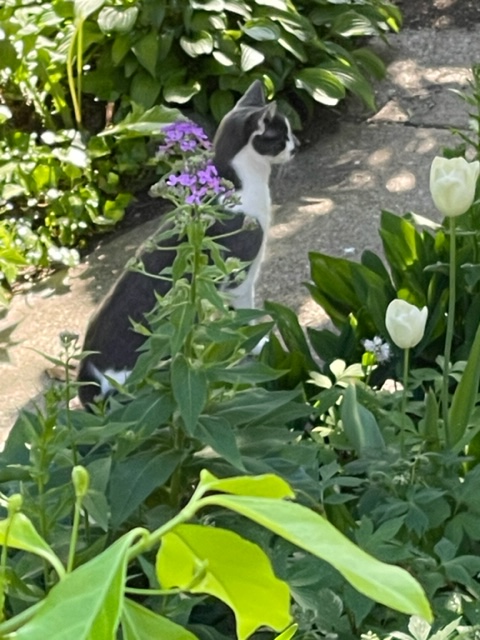
I grew up with cats – not house pets, but the outdoor-mouse-catching kind. They were a source of hours of play and intrigue. I learned curiosity and considerable caretaking from my stray-cat collection. Why anyone believes that “Curiosity killed the cat” does not know felines. Curiosity saved cats. Curiosity is a necessary ingredient for effective problem-solving which requires generating alternative possibilities. Catching a mouse takes alternative strategies, as first attempts may fail. Curiosity is helpful not just for cats, but for stray humans.

Of course I was curious about the phrase, “Curiosity killed the cat.” Originally, phrasing was “Care killed the cat!” Care represented worry, sorrow, or grieving, with the connotation of excessive worrying is detrimental for one’s health. William Shakespeare used this “care” version. However, by late 19th century phrasing, “curiosity” took the place of “care,” referring to nosiness!

Lead researcher Charan Ranganath and his colleagues published a study at University of California (Davis) in Neuron using fMRI scanning of human brains while participants were reading trivia questions. Participants rated how curious they were to know correct answers. Those with intense curiosity about trivia answers had 2 brain areas that “lit up”: the dopamine-releasing midbrain as well as the hippocampus. Dopamine-releasing neurons have many functions – controlling voluntary movements, processing rewards, as well as regulating motivation and cognition. The hippocampus is key to  memory functioning. The super-curious responders were better able to recall unrelated information presented during their curiosity about trivia questions. Better cognition depends on oiling your neurons with curiosity!

The message is clear – rewire your curiosity if you have forgotten how to be curious.

Developmental psychologist Susan Engel at Williams College tracked how many questions children ask per hour. She found that the average 5-year-old asks 107 questions per hour! Why is Grandpa’s hair white? Why is the sky blue?  These are just a sample of the questions from astute 5-year-old curiosity experts. Then the inquisitive beings go to school. By age 6 and in first grade, Engel found that one entire class asked 2-3 questions per hour combined. And by 5th grade that number dropped to .48 questions per hour. Described another way, a room of 11-year-olds asked less than 1 question every 2 hours.

Engel recalled her observation in the back of a science classroom where students were running experiments to test weights with a balance scale. The teacher squashed curiosity when abruptly saying, “Enough of that. I’ll give up time to experiment at recess. There’s no time for experiments now. We’re doing science.” Engel made a scary conclusion: if you lose your curiosity by age 11, you probably don’t get it back. Does schooling kill kids’ curiosity?

If cats are capable of alternative problem-solving, can’t kids recalibrate their curiosity? I have a lot of curiosity and I hope that you, dear reader, do too.

Pearls of Peace (PoP) Quiz

526. When did any adult curb your curiosity?

527. How curious do you see yourself at your present age?    

Pearls of Brain Awareness

Brain scan data, Human Connectome Project: Credit Matthew F. Glasser, David C. Van Essen

Growing up in farmland with paternal grandparents who produced their own beef and pork, I was offered cow brains for dinner in butcher season. While my parents relished this delicacy, I recoiled and could not partake of this unique delicacy. I had no awareness about missing the nutritional benefits of beef brains (vitamins A, B6, B12, C, D, E, K, phosphatidylserine, folate, niacin, magnesium, zinc, and choline, among others), but I still am not a proponent today. I am a proponent of taking care of one’s own 3-pound brain at mealtimes, sleep times, exercise times, and well, any time!

I like the global focus on Brain Awareness Week (the third week of every March), which serves as an annual launch for year-round brainy activities. This is the 30th annual Brain Awareness Week, the “brainchild” (I could not resist) of the Dana Alliance for Brain Initiatives and the European Dana Alliance for the Brain. The Dana Foundation is a nonprofit organization with the lofty goal of promoting brain science internationally to create better futures for everyone.

Dana foundation-sponsored programs such as one in Bamenda, Cameroon, and promoted by physician, Mundih Noelar Njohjam (founder of Cameroon Epilepsy Awareness and Aid Foundation), delivered brain science education to 5000 students. Njohjam provided her grant feedback: It was really interesting to watch [the students] as we explained the wonderful nature of the brain and how neurological diseases occur…especially epilepsy, because in our country epilepsy is often attributed to witchcraft. After listening to us talk, one student openly told us that before we came, he was one of those who usually stigmatized people with epilepsy,” she said. “So many confessed after the presentation that their mindset about epilepsy has really changed.” Truth matters.

Consider some facts offered by the Global Council on Brain Health: https://extension.illinois.edu/blogs/family-files/2025-02-24-celebrate-brain-awareness-week-all-year-long

  • Most of us are capable of learning at ANY age, especially getting involved with cognitively stimulating activities such as meeting new people, growing new hobbies or expanding knowledge.
  • Dementia is NOT normal aging. Typical age-related changes in the brain are different from those caused by disease.
  • Children are not the only ones who can master a foreign language – age does not prevent you from learning a new language.
  • Memory skills can improve with practice. The adage, “Use it or lose it,” is as important to memory skill training as it is to taking care of one’s physical health. 
  • Retaining details is just easier for some people than others, but this is true for all ages.
  • Strategies can ripen your memory. Chunk information into smaller bits for enhanced memorization. Use mnemonic devices. Practice retrieval (spacing out repetition works better than cramming). Make flash cards. Quiz yourself.
  • Neurons are created throughout your lifetime.

Being a life-long learner is invigorating! I am grateful for my many opportunities to keep my workhorse brain on the move.

Pearls of Peace (PoP) Quiz

377. What new learning have you embraced recently?

378. How might you become a better caretaker of your brain?