Lost and Found Pearls

Joy and grief are a whirling wheel [attributed to Hindu philosophy].

The wheels of loss keep whirling, crisscrossing the globe with trails of grief. According to the Geneva Academy of International Humanitarian Law and Human Rights, 110 armed conflicts are being watched; some spill blood into the evening news, yet many escape coverage despite having lasted for decades. Why are there so many unchecked human-rights violations?

The answer is not just having more laws and lawyers trained in international law. International law seemingly cannot keep up with so many atrocities, especially concerning unattended children who cannot tell someone about being abducted and/or trafficked.

The United Nations reports a 25% rise in grave violations against children in the third consecutive year with escalating reported incidents. The report of the UN Secretary-General on Children and Armed Conflict describes a “blatant disregard for international law and the rights and special protections of children by all parties to conflict.” Children under 18 are to be prohibited from recruitment and use as soldiers, but protection edicts are not followed.

The Convention of the Rights of the Child celebrated its 35th anniversary in 2024, yet the crisis of human rights violations keeps whirling. We cannot be complacent and believe that other countries have more abuse of rights than the U.S. Just this past weekend another U.S. school shooting took place. This time the precious student lives lost or injured were college students at Brown University.

You might ask, when does the wheel turn to joy?

It seems that we will have to rely upon the very youth who have been victims of violations to get us out of our collective abyss. A survivor of the 2019 Margory Stoneman Douglas High School shooting in Parkland, FL, Cameron Kasky (now 25), is an ardent activist for gun control. Kasky commands attention and gives hope. He recently announced his bid to run for the Congressional seat of retiring Jerry Nadler.

After the Brown University shooting, Kasky delivered a passionate TV interview. He does not believe that the Parkland, FL perpetrator should be held solely responsible for the horror created. Systemic problems in America need to be addressed according to Kasky. It is joyful to see youthful power step forward with conviction and leadership.

I found posters inside the doors of women’s toilet stalls in the Orlando airport a few years ago: “Stop Human Trafficking – There is a Way Out.” Initially I shuddered to think that this was a necessary intervention. But acknowledging my second thought, I realized that each girl who finds this pearl of help and learns nonverbal hand signals for H (human) and T (trafficking) might save herself. Our youth will lead the way to human rights.

Poet and essayist Maya Angelou reminds us, “You may not control all the events that happen to you, but you can decide not to be reduced by them.” 

Pearls of Peace (PoP) Quiz

454. How might you participate in the promotion of human rights?

455. What is your first step?                   

Emodiversity Complexity

Computer Complexity

It turns out that negative emotions are useful. Whether you initially agree or not, stay tuned for a different slant on pesky emotions. Jordi Quoidbach has a Ph.D. in Psychology from University of Liège, Belgium, and spent several years as a Postdoctoral Fellow at Harvard; he studies happiness and decision-making. Quoidbach’s research into emodiversity (a piggyback idea from biodiversity) suggests, “…people who experience a diverse range of emotions…tend to be healthier, mentally and physically.” With increased emodiversity, his research found decreased depression, number of doctor visits, and days hospitalized per year in participants. 

Having emodiversity means acknowledging a variety of emotions in your day — allowing for frustration, disgust, jealousy, gratitude, tranquility, and elation. Quoidbach explains: “…it is not just having a diverse range of positive emotion, but we also find that having a diverse range of negative emotion is better than having a narrower range of negative emotion.”

My understanding of so-called “negative” emotions is that they are protectors, often shielding an individual from some unacknowledged small-t trauma situation (or a big-T trauma such as a natural disaster). When one can accept that there is a reason why a “negative” emotion pops into consciousness, there is a possibility of coping with one’s history. It is not useful to ban emotions when they can serve as maps that lead to problem solving. Often the mapping of a “negative” emotion takes one on a follow-the-memory consciousness back to an earlier year when some event triggered alarm. Such memories still sting from youngster years.

Quoidbach’s research relates to correlation, not causality. However, his steps to increase emodiversity might serve as stepping stones for a deeper dive down memory lane’s complexity:

  1. Create an Emotions Matrix
    • Audit your emotions for a week. Jot down each emotion you recognize in quadrants: 1. Pleasant, high-energy emotions (joy or excitement are examples); 2. Pleasant, low-energy emotions (perhaps serenity or relief); 3. Unpleasant, high-energy emotions ( such as anger or disgust); 4. Unpleasant, low-energy emotions (boredom or sadness are examples).
    • Ask, “Why am I not more diverse? Am I afraid of experiencing specific feelings? Maybe [that’s] because I’m afraid that some stuff will come out?”

       2. Put Yourself in Situations That Evoke Certain Emotions

    • Establish the areas in which you may want to expand your emotional life. Recognize how often you evoke those feelings.
    • Recognize if you never feel angry; it may suggest that some inner conversations could prove useful.
    • Also, if you are constantly chatty and cheerful, consider experiences that allow for you to be still and calm.

    3. Expand Your Emotional Vocabulary

    • Make an effort to name your emotions. Then expand your emotional vocabulary. It could prove useful to use words from ancestral native languages.
    • Quoidbach relates, “When you learn new words for emotions, you start paying attention to situations differently… you expand the range of emotions you experience.”

    Pearls of Peace (PoP) Quiz

    452. When are you most aware of your emotions?

    453. Are there times when you feel shame for an emotion?

    Community Engagement

    Poet Marge Piercy can pierce everyday thinking with her outer/inner connections:

    “Under a sky the color of pea soup / she is looking at her work growing away there / actively, thickly like grapevines / …Keep tangling and interweaving and taking more in / a thicket and bramble wilderness to the outside but to us / interconnected with rabbit runs and burrows and lairs….”

    A garden is an interconnected community. Animal and human workers everywhere co-exist because of interconnected communities. If this is the way of our world, why are politicians not acting like an interconnected community?

    I am heartened to learn about many interconnected nonprofit organizations in the U.S. One compassionate community organization was a one-man operation in Olympia, WA until people talked about “Souper Sunday” with their friends on social media. Online exposure catapulted a national sharing of Chris Hyde’s simple idea; using left-over vegetables from his garden, he invited folks over for homemade soup. “People were really divided and isolated,” he said of his 2023 brainstorm idea. “At first only a few people came out. But every week it grew. I soon had 20, 40, 80 people come.”

    A neighbor commented on the power of Hyde’s actions: “I’m not naturally outgoing, and forming a sense of community has never come easily to me. When I moved here…I didn’t know a soul. But Chris’s group became my first real feeling…as my place, my home.” The volunteer soup-makers might deliver soup to neighbors with mobility challenges or those who have mental health issues. Their engagement not only reaches those with food insecurity but offers the nurturance of shared connections for both cooks and guests. The fledgling nonprofit expanded locally from 5-12 neighborhood chapters of Souper Sunday.

    A nonprofit I have supported for decades is Parenthesis, now part of a larger nonprofit, New Moms, in Chicago. Parenthesis began with two compassionate women, Sunny Hall and Cathy Blandford, starting morning drop-in programming; parents obtained low-cost or no-cost childcare while participating in Parent Parlor workshops and/or finding quiet for some work hours. I delivered workshops, gave pro-bono supervision to social work staff, and served on an advisory board, along with many other volunteers. Now, New Moms not only enriches a previous shoestring budget, but provides housing for young single mothers with precious babes. Every child receiving the right dose of a secure attachment, a peaceful and safe home life, and adequate education lifts ALL families’ futures. Violence prevention begins in the cradle. It helps when nations create a peaceful zeitgeist.

    I was privileged to hear ever-wise Buddhist monk Thich Nhat Hanh speak in Chicago in 2003: “…we need a brother or sister to assist us in difficult moments…one nation should have the opportunity to tell all the other nations about her own sufferings, difficulties and deep aspirations…[and have] every brother and sister listen….”

    Can a planet survive without such interconnected engagement?

       Pearls of Peace (PoP) Quiz

    444. What community engagement do you endorse?

    445. How might you extend interconnected engagement globally?  

    Purpose Pearls

    At age 80 Betty Kellenberger becomes the oldest woman to ever hike the entire 2000-mile Appalachian Trail. While Kellenberger grew up in Michigan, she always had a fascination with seeing the Georgia-to-Maine landscape along the Appalachian Trail. Her imaginings materialized when she retired and had a 6-month timeframe to devote to her dream.

    Like fulfilling many dreams, the reality of inevitable along-the-way struggles is daunting. Kellenberger faced bruising, dehydration, falling, a concussion, Lyme disease, and hurricane damage to trails in the South. She had to change her route heading north. Then cold weather forced a pause until spring. She also experienced inner pauses, both on the trail and upon completion: “You hike alone, and so you have your thoughts…You have so many emotions because you’re excited about finishing,” she recalled. “I was really looking forward to saying, ‘I am done.’ But you also know you’re going to miss this big-time. You’re not going to have what you have out on that trail. That peace, the serenity.”

    Kellenberger’s decades-long teaching career was teaching English and social studies to seventh graders, along with night classes for adults. Having achieved her Appalachian Trail dream, she ponders what comes next. This transition time is where life’s dreams require rewiring. There are many choices of how to spend one’s time in retirement and how to create a sense of purpose.

    Some, like 100-year-old Jiro Ono, famed chef and restaurant owner of Sukiyabashi Jiro in Tokyo, are never-retire advocates. While Ono has passed the baton to his son as head chef, he maintains that the secret to longevity is to keep working! And yet, he must rewire to accommodate his Centenarian body’s needs as he realizes that his hands “…don’t work so well…I can no longer come to the restaurant every day…but even at 100, I try to work if possible. I believe the best medicine is to work.”

    Ono’s health habits include no alcohol, regular walks, and to no one’s surprise, eating well. He continues serving and eating sushi as the first sushi chef to earn 3 Michelin stars. He is the oldest head chef of a three-star restaurant. What possibly could be his next purpose? Yes, he has one! Ono wants to outlive Japan’s oldest man who died at age 113.  

    Both Kellenberger and Ono are seasoned citizens who believe in living with purpose. Hopefully, purpose in one’s life starts at an early age, but an overarching purpose in one’s life can change. Life transitions often are a time of upheaval; they may signal either decline and/or renewal to dream big after a muddling-through stage. No matter what your current age or circumstances may be, start affirming purposes that have meaning for you. Please know that you can rewire at any age!

    The following questions come from my book, Transforming Retirement: Rewire and Grow Your Legacy.

    Pearls of Peace (PoP) Quiz

    442. What are you doing with your precious time today?

    443. What kind of rewiring might you tinker with today?

    Age-inclusion Please

    Ageism Awareness Day is October 9. The American Society on Aging (ASA) Ageism & Culture Advisory Council has a  Fact Sheet for those who want more details on ageism: https://asaging.org/wp-content/uploads/2025/09/Ageism-Awareness-Day-Fact-Sheet-2025.pdf

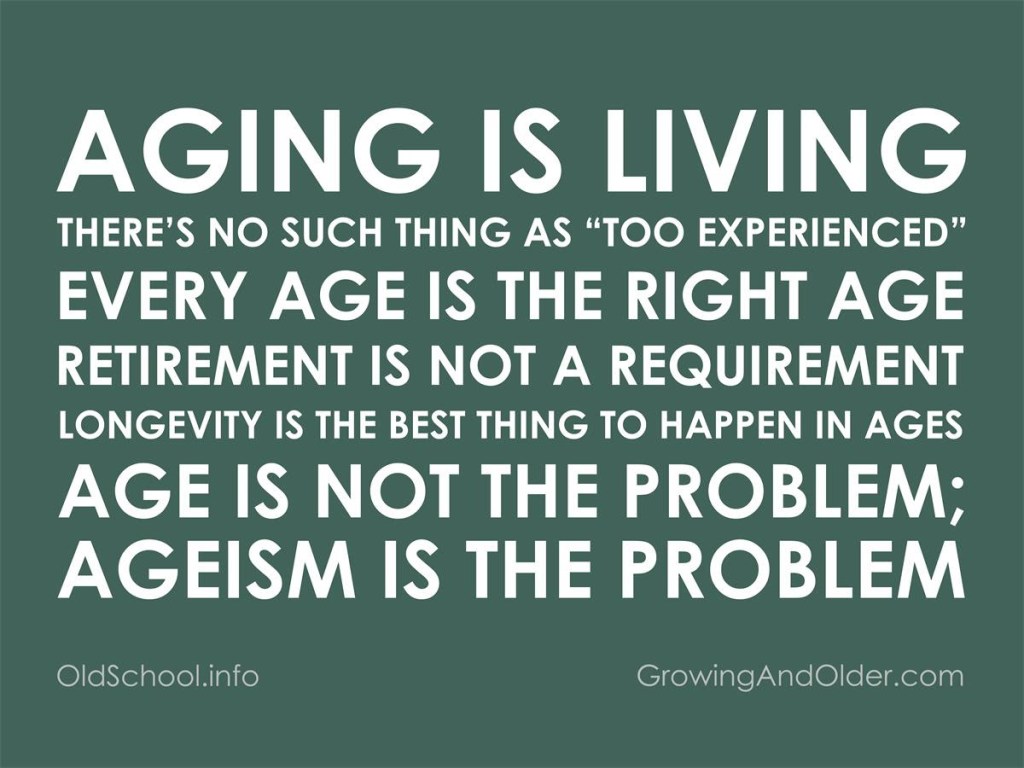
    Ageism is common and yet overlooked as one of the most socially accepted forms of prejudice. A poll reported that 82% of adults in ages 50-80 experience ageism words or actions daily. And to make matters worse, we often are ageist about ourselves! Other highlights from the ASA report include these issues:

    • Ageism covers people of many ages, both as recipients of prejudice and offenders of prejudice.
    • By age 3 children pick up age stereotypes.
    • Ageism refers to stereotypes (how we think), prejudice (how we feel) and discrimination (how we act) toward others — or ourselves — based on age.
    • Cultural ageism slips into our movies, literature, songs, news reporting, and especially our jokes.
    • One research study found that a mere 1.5% of the characters on TV in the U.S. are older adults. If present, they tend to have minor roles and/or are portrayed in stereotypic ageist behavior.
    • Ageism is even more prevalent when it intersects with racism, sexism and ableism.
    • Those who experience multiple forms of ageism are reported to have more chronic health conditions and depression.
    • Ageism has economic implications; AARP estimates that $850 billion in lost gains to the CDP results from involuntary retirement, underemployment, and unemployment in older adults.
    • Older adults support the U.S. economy; ages 50+ support over 88 million jobs (through jobs they hold or create).
    • More than half of small business owners are 50+ years old.
    • Work contributions of older adults are overlooked: caregivers ages 65+ are often unpaid caregivers for their family, friends or neighbors.
    • In 2022 data, 1.1 million grandparents ages 60+ were providing most of the basic care of grandchildren living with them.
    • Older adults have longer periods of unemployment, face discrimination during the hiring process, and receive fewer professional development possibilities.
    • 64% of older workers report age discrimination in their place of work.
    • In one study 1 out of 5 adults over 50 experienced discriminations in their healthcare settings.
    • There are few geriatricians treating the older adult population; the average salary for a geriatrician is half of the salary for an anesthesiologist, cardiologist, or radiologist.
    • Medication-related problems are estimated to be one of the top 5 causes of death in older adults.

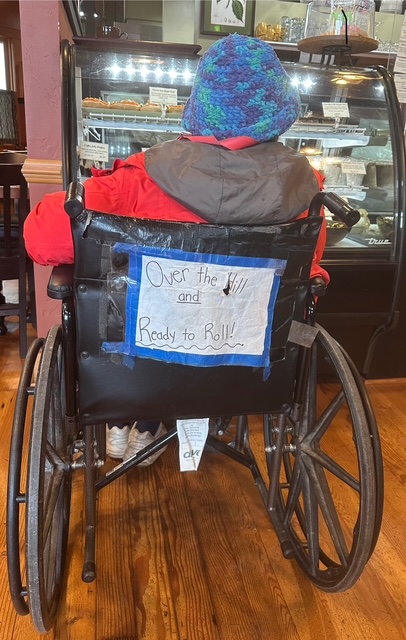
    I have experienced ageism and while I know about the unconscious bias that exists in the U.S., it is still unsettling as I feel useful, not over-the-hill. I like author and poet Gertrude Stein’s approach: “We are always the same age inside.” Her statement can be taken in many ways, but there is a timeless quality to believing in a core self with an ability to have consciousness to each present moment. There are positive possibilities when we embrace age-inclusion.

    Pearls of Peace (PoP) Quiz

    434. Have you experienced ageism lately?

    435. What do you say when you hear ageism bias tossed into conversations?

    Anger Remedies

    As a long-time student of problem-solving and conflict resolution, I am troubled by the news cycle of raw conflicts in our country. Animosity too often turns to not-so-veiled threats or violent behavior against an imagined “other.” Political individuals report a slew of death threats and in some unbelievable instances, they or their family members have been violently attacked. Anger is palpable from town hall meetings to houses of worship.   

    Margaret Cullen, a marriage and family therapist as well as a mindfulness teacher, identifies what is happening when anger’s slippery slope devolves into cruelty and/or violence. She gives a first-person accounting: “When I reflect honestly, I notice that my most volatile reactions are tied to things I hate in myself—places I’ve missed the mark or failed to live up to my own ideals. Outrage becomes a shield, a projection, a way of disowning what is hard to face internally…easier to demonize the other than to wrestle with my own complicity.”  Such truth-telling seems like a place to begin a much-needed remedy to anger.

    Cullen’s upcoming book, Quiet Strength: Find Peace, Feel Alive, and Love Boundlessly Through the Power of Equanimity, might be required reading for politicians. As Cullen outlines her approach, an ethical value system is key: “Simply put: Unethical conduct breeds agitation; ethical conduct fosters peace. And agitation is fertile ground for outrage and projection to take root. Throw in some social media and global instability, and you are well on your way to zealotry. Peace is fertile ground for perspective and clarity to grow. Toss in some honest self-reflection and an intention for greater integrity, and you can harness the energy of outrage toward creative solutions and effective engagement.”

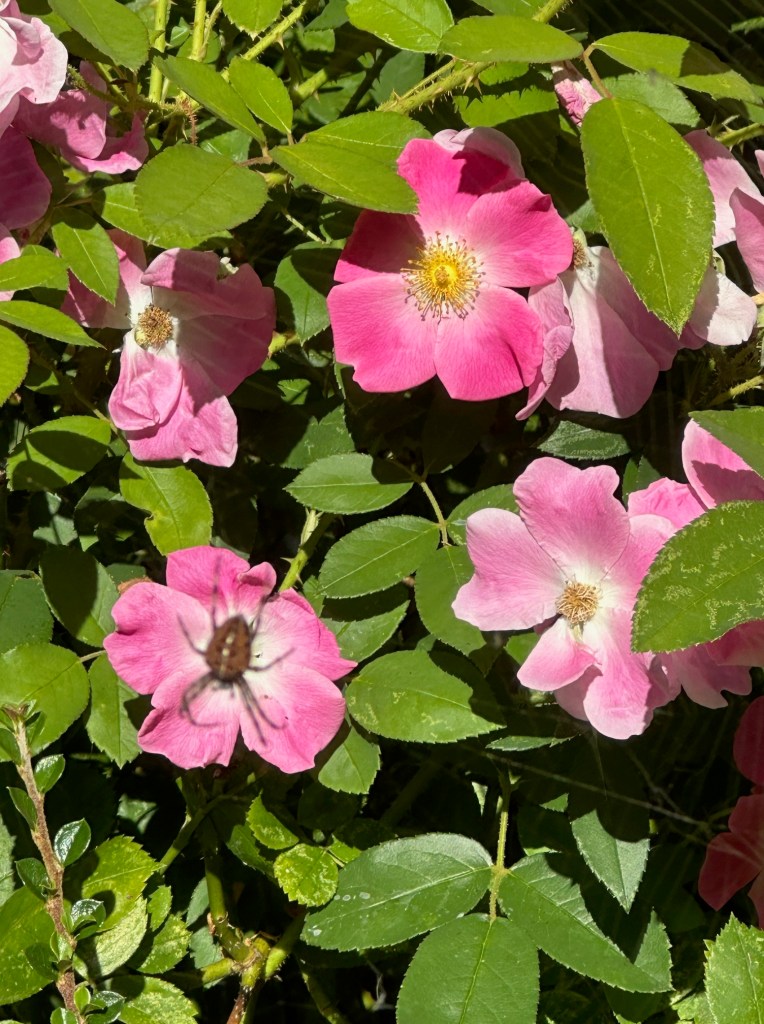
    Yes, self-reflection, insight, and an awareness of one’s value system are always a good idea, whether the topic is anger or anything else. However, we do not see things clearly much of the time. We experience anger or some other strong emotion and imagine that it is “justified.” We do not recognize that our anger rides shotgun in the front seat of our personality pickup truck as a protector from fear, insecurity, and other tender parts of ourselves. I reflected upon this lack of self-clarity when I looked through a clouded-over glass window in a door in my new home. The murky window blocked my view of roses growing outside this doorway. Once the double-pane failed glass was replaced, roses could be appreciated with clear sightlines.   

    I appreciate the metaphor in a Scottish tune, Looking at a Rainbow Through a Dirty Window (by Scottish Uilleann piper and flute player Calum Stewart, arranged for harp by Rachel Hair). Listening to peaceful music, especially with others, is a remedy for what ails. https://www.youtube.com/watch?v=Pyp3p3gRQcQ

    Are you looking for rainbows and peaceful, creative solutions these days? I am.

    Pearls of Peace (PoP) Quiz

    431. When do you catch yourself projecting your own outrage onto an “other” person?

    431. How might we best enhance ethical conduct in groups of people?                   

    Women and Well-being

    Following last week’s blog, Men and Well-being, it seems appropriate to address women’s well-being. First, here is a 4-point working definition of well-being that is supported by neuroscience research from the Center for Healthy Minds, University of Wisconsin-Madison:

    • Awareness: A heightened, flexible attentiveness to one’s environment and internal cues such as bodily sensations, thoughts and feelings.
    • Connection: A feeling of care and kinship toward other people that promotes supportive relationships through acknowledging and understanding another’s unique perspective.
    • Insight: A self-knowledge concerning how one’s emotions, thoughts and beliefs shape their experiences and sense of self.
    • Purpose: A keen understanding about one’s core values and deeper motivation to be capable of applying them in daily life.

    Perhaps you know some women who embody these concepts. I know many women who are proficient in these ways of well-being. My theory about why this is so prevalent among women is that women are the ones who give birth to the future generation. Whether they have this opportunity or not, they often are responsible for educating precious children. These givers of life, liberty and the pursuit of happiness need their own well-being honed to be capable of being positive role models in guiding youth.

    It is a huge benefit that women have a good amount of the hormone and neurotransmitter, oxytocin, sometimes referred to as the “love hormone.” Men have less of this hormone gem, although they do possess oxytocin. Couples in the early stages of a romantic attachment have significantly higher levels of oxytocin than singles! Oxytocin is an arousal helper. Levels of the hormone spike both during and after sex. Hugs, physical touch and meaningful eye contact all release oxytocin.

    Oxytocin is not just related to reproduction; it is involved in many of the positive emotions that we experience. Research suggests that men with higher-than-average oxytocin levels show greater empathy, trust, and attachment in their ongoing relationships. Oxytocin helps parents form lifelong bonds with their children. Oxytocin also is effective as a natural stress-reliever, as it can lower blood pressure and improve circulation. It has anti-inflammatory possibilities.

    Overall, oxytocin is a hormone that helps one feel balanced. When oxytocin levels are low, there are noticeable effects in an individual that are troublesome – a low ability in relating to others, a reduced empathy range, and/or greater-than-average feelings of loneliness and anxiety.  Practices like meditation, deep breathing, and yoga can help release oxytocin.

    There is a great need for all of us to awaken to our birthright of well-being. This is our time, this present time, to bond with one another. Our planet depends upon it. Our country depends upon it. Our communities depend upon it. Our families depend upon it. As ballerina and member of the Osage Nation, Maria Tallchief reminded, “Very often you are in the right place, at the right time, but you don’t know it.”

    Pearls of Peace (PoP) Quiz

    429. When are you aware of experiencing well-being?

    430. What purpose might you fulfill today?        

    Haboob Time

    A week ago a tremendous dust storm or haboob dropped a haze-filled blanket over Phoenix. My son was driving at the time. He pulled off a highway for 10-15 minutes. Some choose not to stop driving, the recommended practice, receiving an accident from their choice. Flights were grounded. Homes and businesses lost power. Haboobs are a threat in dry climates, especially in the Southwest. Without warning or a possibility of containment, a haboob whips dust into a mass several thousand feet high in an intense wind that rages for a brief time. As incredible as it sounds, the haboob forcefield of dust can extend up to 100 miles wide. Sudan has an average of 24 such terrorizing dust storms annually. Haboobs also occur in the Sahara Desert across Northern Africa and in Central Australia.

    This weekend many are weathering different kinds of storms. In Washington state, two firefighters were apprehended by U.S. Border Patrol while on the job fighting a ferocious wildfire in a remote part of the state. Their reported reason for arrest was “illegal entry and reentry” into the U.S. This wildfire is only 13% contained. These apprehensions of supposed violent behavior are 0% contained.

    Meanwhile, in the other Washington (DC), National Guard troops have been ordered to patrol the city to stem violence. Local restaurants and hotels have fewer reservations. Tour guide companies lost revenue. One company reports that typically August is high season for Washington tourists with 80 tours booked; their current number is 40. Canadian bookings have disappeared. Whether crime has been contained depends upon one’s source of statistics. The slogan of the Arizona Department of Transportation regarding haboob time is, “Pull aside, stay alive.” Can we apply this to the National Guard? Hopefully, their duty does not cost them personal street violence that they are expected to contain.

    On this Labor Day, celebrations may be as somber as haboob skies. There are many folks without labor to return to on Tuesday morning. Some retired, with many choosing early retirement. Some government workers lost their career post when a termination haboob swept through their office. Without notice, a worker could receive the news at 5:00 PM and not have time to say goodbye to co-workers while being escorted out their work door. Depending upon the worker’s age, some will have difficulty finding new employment. Who helps displaced government workers reenter the labor pool? Who calculates lost revenue in ability to pay federal/local taxes? More importantly, what psychological effects trickle down to their families?

    Labor Day is traditionally a time for families to celebrate American workers and to gather for picnics to celebrate the last hurrah of summer as the nation’s children start another school year. America begins this school season with another senseless school shooting. Who provides school security for children and teachers? I have more questions than answers.  

    Pearls of Peace (PoP) Quiz

    425. What meaning does paid employment have for you?

    426. Have you ever experienced a job termination? If so, what happened?

    How Slow-Living Are You?

    Stephanie O’Dea is author of Slow Living: Cultivating a Life of Purpose in a Hustle-Driven World. She is a “slow-living coach.” This made me laugh out loud. She must not be in the midst of a major move which entails constant decision-making hustle around packing/unpacking a myriad of stuff: Will this fit in my new home? If not, what do I do with it? Then, upon arrival, this will not fit! What do I do with it? However, I do know I am making move-hustle progress because my dreams no longer are about packing; last night I dreamt about vacation, an escape from the unpacking process.

    O’Dea started her slow-living journey with “A Year of Slow Cooking.” She believes that cooking is a chore, not something that she wants to do, so she loves her crockpot. I gave away my crockpot. I enjoy cooking fresh food “from scratch,” but I might need some slow-living ideas when I finish unpacking boxes.

    I found out that I could “join 10,000+ Students of Life” by subscribing to the “Sloww (not a typo!) Sunday newsletter.” Instead, I chose to hustle up on this phenomenon briefly online before jumping into another book for my overcrowded bookshelves. Here are some highlights of Slow Living and the Slow Movement:

    • Organizational psychologist Geir Berthelsen created a think tank in 1999, The World Institute of Slowness, advocating that “…the best thinking comes from a walk in the slow lane…slowness is the forgotten dimension to time. Unlike chronological time, it is non-linear, time here and now, time that works for you, extraordinary time. So why be fast when you can be slow? Slowness is also about balance, so if you must hurry, then hurry slowly.” Is hurry slowly an oxymoron?
    • Nearly two decades later, Canadian journalist Carl Honoré wrote a book titled In Praise of Slowness: Challenging the Cult of Speed.
    • Beyond slow living and slow food, today there is a slew (or stew) of slowness – slow money, slow parenting, slow education, slow reading, slow medicine, slow gardening, and slow religion. In 30 countries there are 236 cities that call themselves slow cities! Who knew?
    • According to Slow Living 201 (I skipped the 101 version), there are 15 adjectives for slow living: paced, unbusy, balanced, intentional, connected, deep, purposeful, holistic, soulful, long-view, low-stress, eased, time-rich, conscious, and mindful. https://www.sloww.co/slow-living-201/

    I completely agree that mindfulness is a practice well worth putting into your daily routine. I participate every morning in an online mindfulness group with 20 minutes of silent mindful reflection. I practice mindfulness at other times of the day too, especially when gardening or cooking. I find these slow-breath actions grounding — literally grounding when working with soil in my yard. But honestly, I use some hustle in other parts of my life. Do I need to read O’Dea’s Slow Living book?

    Pearls of Peace (PoP) Quiz

    411. Do you engage in slow living some part of your day?

    412. What aspect of slow living might be beneficial for you?  

    Possessed Versus Letting Go

    Vicky Silverthorn is a professional organizer. She can clean up any mess in your home or study. Let’s backtrack. Why did we hang onto items that now clutter our space in the first place? Are we possessed by possessions?

    According to a study cited in the Journal of Consumer Psychology, researchers find that folks link certain items to their self-worth. When they no longer have said items, they grieve for lost possessions in terms of their tie to them as part of their self-identity. There are extreme “hoarders” (2.6% of the population, according to the American Psychiatric Association) and more common “packrats” who suffer from a difficulty categorizing “an array of items with minimal value into groups.” 

    My personal packrat-itis has roots. Both of my parents fit the description. They had an excuse. The nation’s depression was a major event in their early years. As the oldest of 10 children, my mother recalled not having much food to eat; she recalled having “coffee soup” (coffee over a piece of bread) as a meal. She sometimes was asked to take a skillet containing leftover gravy (over bread) down the alley to a family with less to eat than her own family. How could there be leftovers from a dozen people at their table? Such experiences were vivid for my mother many years later. She was a saver of tin foil and plastic bags for reuse, as well as much larger items that became clutter build-up. Dad had saver parents who knew they might “need” an item “someday.”  

    Silverthorne advises that “Clutter can affect our mood, productivity, ability to think clearly, and overall mental processing. It can contribute to stress, impact our well-being, and really alter our focus…for a free-flowing house and a free-flowing mind, reducing clutter really helps.”

    Words of wisdom may not be enough to make the letting-go process possible. In moving from a larger home to a smaller one, I encountered clutter closets that I could escape from for years with merely closing the doors. The day of reckoning came with moving: I had to face the fact that there were simply too many items to take with me…and many of them did have minimal value…to other people.  

    Each “minimal value” item was attached to some memory. It was memories and the relationships attached to those memories that I did not want to let go. With practice, I am learning to give up keeping “everything,” although my learning curve is a bumpy ride. I do not find Silverthorne’s advice to ask, “What’s the worst thing that could happen?” very useful. More appropriate to my situation, I recall the person who gifted me an item, thank them silently, and then send the item into give-away land. Admittedly, this takes time. It is not as easy as it may sound.

    Pearls of Peace (PoP) Quiz

    409. How do you handle keeping versus giving-away decisions in your home?

    410. What is your method for letting go of items of “minimal value”?