Reading Is Not Dead (Yet)

Can reading books make a comeback?

U.S. daily book reading for pleasure is steadily declining (40% drop from 2003-2023). A National Endowment for the Arts research lab at University of Florida teamed with University College London researchers to analyze data from 236,000+ Americans who completed the American Time Use Study.

The dearth of pleasure reading does not reflect all groups; people with higher educational levels and women are more likely readers. Unfortunately, reader-less homes where reading for pleasure could support mental health, creativity and lifelong reading are those in lower income or educational realization and rural (versus metropolitan) areas. One might argue that these folks often have two jobs to make ends meet and reading time is a luxury that is not sustainable.

March is National Reading Month. The intent is to encourage daily reading habits to promote literacy as well as nurture reading habits in both children and adults. A focus set by Read Across America Week (March 2–6), was “Champion Kindness,” a goal much needed today. Helping children read diverse books can foster empathy along with developing a love for broad-ranging literature.

One reason March is a special reading month is due to honoring of Dr. Seuss’s birthday on March 2nd. Much-loved Dr. Suess books, with their quirky illustrations and humorous storytelling, remain favorite choices for parents who read books to their children at bedtime. His Grinch character provides food for thought for both parents and kids. Dr. Suess was right when he said, “The more that you read, the more things you will know.”

While many blame our digital-relying habits for a reading downfall, British author and technology guru Kevin Ashton maintains that technology is not to blame. He reminds, “What’s on their phones is words…go look at [a]…TikTok video…There are captions that help it make more sense when they’re communicating with one another. They’re sending text messages. Children today are writing more words than you or I did when we were teenagers.”

Yes, “words” are present in technology, but I think the technology vs. reading-books issue needs more discussion among educators and mental health providers. When there is a winning lawsuit against Meta and Google, blaming social media for the anxiety and depression of a woman who claims addiction to social media as a youngster, the impact of digital wording matters. What safeguards are present for tender minds in developing healthy perceptions about their belonging in a fast-paced society? Who moderates digital mediums for kids?

Ashton had thoughts about storytelling for decades before writing his book, The Story of Stories: The Million-Year History of a Uniquely Human Art. He suggests that it is emotional storytelling that readers seek. Yes, emotions are complex parts of us and stories help us gain perspectives about emotional territory. Along with diverse book-reading, I believe we need more in-person communication in sharing emotions in homes and schools.

Pearls of Peace (PoP) Quiz

484. What is the last book you read?

485. Were there any emotional insights from reading that book?  

Purpose Pearls

Boston University (BU) initiated STAR (Society of Terrier Alumni Retirees) Wellness Week. Speaking online on a STAR panel (Retirement Reimagined: The Transition to New or Renewed Purpose) with two other BU alumni, I visualized this mini-report blog on retirement paths.

Lisa Haynes, author of Retired and Killin’ It: The Ultimate Retirement Plan, endorses planning a “bold and purpose-filled second act.”

Robert Morison, co-author with Ken Dychtwald of What Retirees Want: A Holistic View of Life’s Third Age, proposes a 3-way purpose model with “giving, growing, and enjoying” categories.

As preparation for my retirement book, Transforming Retirement: Rewire and Grow Your Legacy, I surveyed 125 individuals (ages 55-96), asking their age, whether they were retired, semi-retired, or did not plan to ever retire. I asked for hours a week they worked, and hours a week they volunteered. Many were volunteers, both those still working as well as those on a wide continuum of retirement possibilities.

Giving, often in a volunteer role, was instrumental for survey participants in terms of their current identity and purpose. For example, the Pro Bono Network was key for one 60-year-old retired woman; her attorney volunteerism provides civil legal aid. While volunteering took a hit during the pandemic, some were gritty (passion + persistent) volunteers! One person volunteered to receive early-testing samples of COVID vaccines. Others joined research studies to receive a placebo or trial medication for a variety of illnesses. Some made future volunteering plans to donate organs for transplant purposes or research after death.

There are many paths in giving-growing-enjoying purposes in retirement:

  • 64, a woman (recently retired) finds purpose in writing: “I am writing some children’s books, especially for young girls…who suffer societal pressure to conform to the latest norm.”
  • 72, a man retired at 52, 57, and 70, volunteers 10 hours/week: “…an opportunity to serve…mentor the younger generation…wisely provide my time, talents and treasures.”
  • 76, a man retired 9 years, volunteers 20 hours/week: “…you are not your job, but something else…a chance to learn and grow intellectually and spiritually.”
  • 80, a woman semi-retired for 20 years, volunteers 15 hours/week: “…time to make and keep connections with important people and the larger earth.”
  • 80, a man retired 3 times, his volunteering varies: “Close friends are more important than before…[I have] opportunities to do favors for others.”
  • 93, a woman retired 29 years, uses her expert sewing skills to mend clothing for others in her assisted living residence.

Artist Pablo Picasso captured the essence of volunteerism: “The meaning in life is to find your gift. The purpose is to give it away.” However, having bodymind wellness makes a critical difference in one’s pursuit of purpose. For those challenged with their health or a family member’s health, purpose possibilities may be limited.

My definition of purpose is having passion for living a life of meaning while accepting inevitable life changes with grit.

Pearls of Peace (PoP) Quiz

482. How do you define purpose at your current age?

483. What activities provide meaning for you?                                                                        

Looking for a Diamond Career?

“Stardust” Time Capsule (Meteorite grains, including diamonds, 7 billion years old)

Careers featuring seasoned citizen populationsare not only rewarding, but necessary. By 2030 Baby Boomers (born 1946-1964) will be 65 years old or beyond. Referred to as a “gray tsunami,” I prefer my terms, seasoned citizens or beyonders. Individuals currently 65 can expect to live 2 decades more, on average, beyond the expectations of many. Life expectancy at age 65 is rising due to better health care. U.S. Census Bureau reporting tracks life expectancy at 65 from 11.9 years (1900) to 19.1 years (2010). By 2023 this number for females reached 20.7 years and for males, 18.2 years. In Japan, life expectancy years for those 65+ are even higher for these aging diamonds.  

March is “Careers in Aging Month,” hosted by the Gerontological Society of America (GSA) to raise awareness about the variety of careers available in elder care with the growing seasoned citizen population. Consider some possibilities:

  • The Bureau of Labor Statistics projects a need for medical health managers increasing by 29% by 2033.
  • Social service jobs in senior-living centers are critical on many levels. Some positions require specialized training with certifications; however, low pay is problematic. I recently met a young caretaker who relies on her husband’s paycheck.  
  • Family mediators skilled in guiding difficult elder care conversations and end-of-life issues are game-changers.
  • Recreational therapists (including music therapists and art therapists), as well as fitness instructors, are increasingly in demand. Bodymind exercise is one of the best ways for seasoned citizens to prevent cognitive decline.
  • Financial money managers who help family members and/or guardians plan for extended care are helpful.
  • Technology experts who coach seasoned citizens about cell phone and laptop usage are essential. Scams are increasing and this population is at a higher risk.
  • Aging-in-place consultants may be next-in-demand, as many Baby Boomers wish to stay in their own homes as they embrace aging bodies.
  • Educators and mentors may enlarge careers to provide elder classes. Education levels are increasing; among those 65+ in 1965, 5% had 4 or more years of college. In 2023 this education level comprised 33% of the 65+ population. Many are lifelong learners.
  • Entrepreneurs who work in some aspect of elder care may find 65+ folks an untapped population.

.  Whether you are looking for a career involving seasoned citizens or not, here are questions to ask yourself:

  • If you did something completely different in your work life, what would it be?
  • What is your unofficial resume?
  • What do you really care about, and why?
  • What would you do in life if you knew you could not fail?

Perhaps you are an aging diamond – 65 or beyond, still sparkling, questioning traditional retirement. Neuroscientist Daniel Levitin has a term for folks who keep working — “unretirement.” He cites between 25% and 40% of retirees as reentering the workforce. Are you one of them?

Pearls of Peace (PoP) Quiz

480. What is your plan for your future years?

481. How is your navigation going if you already are in the 65+ starship?  

Is Women’s History a Secret?

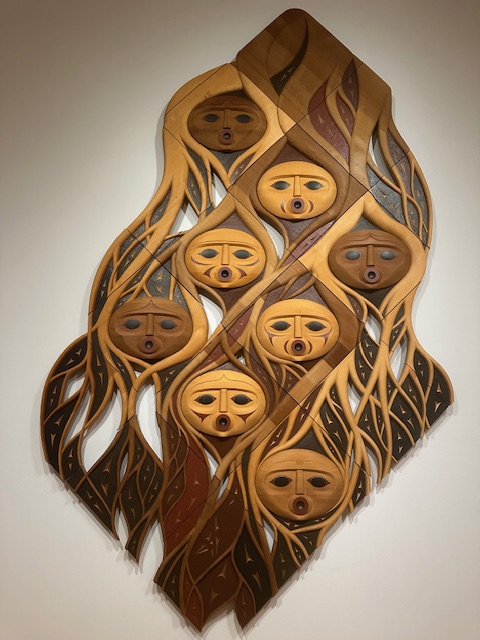
The First People. Susan Point, Musqueam, Canadian

International Women’s Day (IWD), March 8th, has a comprehensive theme – “Rights. Justice. Action. For All Women and Girls.” Despite the day’s U.S. origin, IWD is not uplifted enough in our culture, perhaps due to ongoing discrimination. Trace events to March 8, 1857, when hundreds of New York City’s women – mostly immigrants from garment and textile employment — protested sweatshop conditions. Many were school-aged girls who worked 12-hour days in cramped space with pennies for pay. Strict rules limited the use of a restroom or eating a meal. Their union, International Ladies Garment Workers Union, was male-only and named for the work setting; no women could participate at the bargaining table. Male immigrants also were overworked; they managed to receive concessions and a 10-hour workday through their trade unions.

Fifty years later in 1908, women protested in the streets of New York. Their ongoing issues were child labor practices, harsh work settings, and voting rights. They were met by police carrying hoses with ice water to cool down peaceful protesters. After ongoing attempts of women seeking justice in the work world, in 1980 President Carter proclaimed a national week in March to celebrate women’s sacrifices and contributions. In 1987 Congress expanded the honoring of women’s resilient leadership to the entire month of March. But where is equity hiding?

The National Women’s History Alliance set their 2026 theme as “Leading the Change: Women Shaping a Sustainable Future.” While pay progress occurred in the 1980’s/1990’s, glaring gaps continue in how women’s earnings stack up to men’s earnings. Women’s median earnings today are 80.9% of men’s median earnings for full-time, year-round workers (ages 15+). In 2023 this ratio was 84.6%. Why is this gender gap going in reverse?

Sustainability goes beyond one’s paycheck. Women often lead the forefront in systemic sustainability. They work and/or volunteer in community organizations that are inclusive in creating equitable chances for children’s futures. Many women invest volunteer time in building stronger communities. Women often lead environmental initiatives and work tirelessly on justice issues. These actions primarily are a labor of love with no pay.  

Data from the Pew Research Center finds that 48% of women feel the need to focus on home responsibilities (compared to 35% of men). Caregiving is a huge factor in the gender maze. Taking time away from careers to devote precious hours to caregiving often translates to fewer raises, fewer bonuses, and an overall slow-down in earnings over time.

Many women work in caregiving careers. According to the U.S. Census Bureau, 80% of elementary and middle school teachers are women. While teachers are among the country’s more educated employees, their earnings are far less on average than others with similar education. Earnings have declined for teachers since 2010.

Women’s rights keep getting sidelined. It must be a secret about who cares for caretakers.

Pearls of Peace (PoP) Quiz

478. Have you ever experienced discrimination in your employment pay?

479. How might you engage time and resources to build a more equitable society?

Everyone Needs SEL

Francesco Carta fotografo/Getty Images

March 2nd is SEL (Social Emotional Learning) Day 2026. This annual celebration highlights the many positive benefits of SEL immersion in all aspects of life. SEL Day is an international event that takes place during the first week of March each year with 88 countries onboard. The U.S. Senate introduced SEL Week in 2023 with a bipartisan resolution by Senators Susan Collins and Dick Durbin. The 2026 theme posts as “Skills for Community, Skills for Career.”

Social and emotional learning (SEL) is a proactive set of skills for children (and adults) to focus on mental health and well-being. The skills incorporate developing self-awareness, coping with emotions, setting and achieving positive goals, understanding and practicing empathy for others, building relationship competence, and making responsible decisions. An increasing need is for families, educators, business leaders, and whole communities to work together to promote SEL among students, our future leaders. A boost in academic learning is only one of the winners with such a systemic effort. SEL encompasses restorative justice, workforce readiness, and cultivating a lifelong growth mindset.

Russian psychologist Lev Vygotsky (1896-1934) set the stage for understanding one’s historical-cultural influence in their learning. He stressed the importance of one’s social environment – the attitudes and interactions – that each child is exposed to from their earliest years. His zone of proximal development espoused guiding children through a task rather than expecting them to work in isolation. He was a proponent of social negotiation as an essential step in a student’s mastery of concepts. Rather than traditional memorization methods, Vygotsky advocated a model of teacher-student questioning, clarifying, and predicting in a collaborative process.

The theory of scaffolding was applied to psychological arenas by cognitive psychologist Jerome Bruner in the late 1950’s. He used the construction term to outline young children’s oral language acquisition. Bruner’s principles also spotlighted social interactional support for students in learning new concepts; he believed that the temporary scaffolding could be removed, similar to construction scaffolding, when the support is no longer needed.

Building upon Vygotsky’s and Bruner’s thinking, school scaffolding in social and emotional learning (SEL) incorporates modeling, prompting and coaching by school staff. Emotional and social skills are introduced in a stepwise progression with the goal of gradually removing support as students exhibit competence and independence. This approach also applies to academics and athletics. 

It is a good idea to focus on scaffolding of children’s development of SEL. How might such scaffolding apply to adults who missed out on SEL in their schooling? This seems like our biggest challenge. In President Barack Obama’s words, “Learning to stand in somebody else’s shoes, to see through their eyes, that’s how peace begins. And it’s up to you to make that happen. Empathy is a quality of character that can change the world.”

SEL peer modeling, prompting and coaching for adults needs to be part of National SEL Week.

Pearls of Peace (PoP) Quiz

476. When do you use empathy?

477. What will you do to incorporate SEL for yourself this week?   

War OR Peace

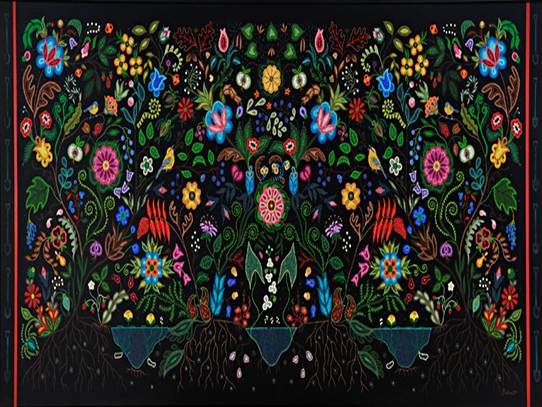
So Much Depends Upon Who Holds the Shovel, Christi Belcourt, 2008

Canadian Métis visual artist Christi Belcourt begins by painting her large canvas black. “I see war, but I paint flowers. I paint what I want for this world…May we live long enough to see humankind turn away from violence and greed…towards creating a world based on caring and giving. May we live long to see the world embrace global disarmament.”

Belcourt paints with a poignant and peaceful hand. An environmentalist and social justice advocate, Belcourt is primarily recognized for her large floral landscapes. Her peace-bearing paintings contain carefully crafted dots (with as many as 200,00 dots) to represent traditional Métis beadwork. She has admired First Nation women’s beadwork patterns since her childhood.

Dazzling circle shapes in Belcourt’s paintings are her symbols for the life cycle “as if they are both molecules and stars.” Her intended purpose is profound: “The roots in my paintings…indicate there is more to life than what we see.” She intends for viewers to detect the smallest of details in order to grasp a bigger picture. Many of her art pieces feature endangered species. For example, a bird on the extinction list is painted with an accompanying bird “calling out.”

Belcourt summarizes her art in simple terms: “My paintings are primarily calls to action…I see…all living beings, including humans, as one…[with] freedom and dignity, care and enough for all.”

Belcourt’s art reminds me of other significant dot art. Aboriginal dot paintings began in the Northern Territory of Australia. They also are symbolic. Aboriginal dots are not merely abstract art. They are meant to hold deeper, sacred meanings from the world’s oldest continuous culture. Aboriginal circles represent waterholes or campsites; their U-shapes stand for people sitting cross-legged. Sacred lands are what tie these different, yet similar, Aboriginal and Métis Nation art forms together.

The earliest form of Aboriginal art depicted tribal stories drawn in desert sand. Fearful of people from different regions “reading” their meanings, artists evolved their sand sketching into abstract dots on cardboard, metal, and other surfaces to preserve sacred stories. This art also conveyed warnings. One theme was displacement from original homelands when outsiders claimed ownership. Observers of Aboriginal art might sense the flat dot paintings appearing to leap off canvass in sparks of energy.

Belcourt speaks for many today: We are witness to the unbearable suffering of species, including humans. Much of this we do to ourselves. It is possible for the planet to return to a state of well-being, but it requires a radical change in our thinking…We are all a part of a whole…When we see ourselves as separate from each other and think of other species, the waters and the planet itself as objects that can be owned, dominated or subjugated, we lose connection with our humanity and we create imbalance on the earth.” 

War OR peace…that is a perennial conundrum.

Pearls of Peace (PoP) Quiz

474. When have you witnessed artwork that left an imprint to enliven you?

475. What calls for action impact you?    

AI vs. A Culture of Reading

The average American reportedly reads (but may not finish) 12-13 books a year according to a Gallop poll. However, this number is misleading because “heavy” readers skew the data. (I confess to being a “heavy” reader.) The median number is 2-5 books per year. An estimated 17-40% of adults in the U.S. read no books in a given year. Gallop reports that women read more than men (approximately 15.7 books versus 9.5). College graduates are more likely readers with 90% reading at least 1 book annually, while 34% of individuals with H.S. or less years of schooling read 1 book per year. Surveys in recent years report declining numbers of books read annually.

We have AI to read for us. Will the reading slippery slope become more pronounced? I wonder how AI affects students doing their own research of a topic. How might AI impact overall reading (learning) habits? Linguist Naomi S. Baron, Professor Emerita, American University, also has concerns. She is worried about AI “…accelerating an ongoing shift in the value people place on reading as a human endeavor.”

Yesterday’s Cliff Notes are today’s “Blinks.” Apparently meant to be in the blink of an eye, one can skim a years-in-the-making book in a 15-minute summary. BooksAI is another “reader” for reading assignments. With Google NotebookLM, AI compares 2 books for your student assignment with the addition of posing questions to look smart in class.

As a contrast, Iceland has a culture of readers. Often cited as the most literate nation in the world, over half of Icelandic residents read 8+ books a year and 1 in 10 publish a book in their lifetime. According to the Guinness Book of World Records, Iceland has the most writers per capita in the world. AI estimates that 1 in 5000 people publish a book in the U.S. despite a self-published-book rise.

There is an endearing tradition, Jólabókaflóð (The Christmas Book Flood), in Iceland each Christmas. Books are gifts on Christmas Eve. Each Icelander typically will receive at least one book. With no knowledge of Iceland, this is a tradition I began with my children years ago and I continue it annually. I applaud Iceland’s country-wide tradition.

With its long, dark winters, Iceland has long celebrated a tradition called kvöldvaka, an evening time of honoring storytelling in communal spaces. A person might read from a book, recite a poem, or re-tell a story from Iceland’s early history. Children learned to read and write in such a setting while honoring their country’s history and geography. At a time when many were poor, the literacy rate in Iceland was high.

This makes me wonder how Americans spend their winter evenings. Is every person glued to a solo digital gadget? Are students skimming AI summaries rather than reading books? How might these AI “traditions” affect our culture?

Can we embrace both AI and reading?

Pearls of Peace (PoP) Quiz

472. How do you use AI?

473. How many books and/or eBooks do you read a year?   

Are You a 12? I Am.

Forget about scoring 1-10 on the flawed scale rating women’s physical attractiveness. Actress and model Bo Derek rated 10. Much patriarchal banter leans toward sexism. I prefer the Seattle Seahawks’ (forced) inclusive “12’s.” Everyone rates as 12.

The Super-Bowl-LX-winning Seahawks did not have good attendance in the early days of Seattle’s franchise. A former owner even attempted to relocate to L.A. However, the Seahawks rallied, winning 4 consecutive division titles. Fans noticed.

In 1984 the Seahawks initiated the “12’s” when they retired the #12 jersey to give their fans a symbolic “12th  Man” position on the 11-player team on the field. The Seahawks began a tradition of raising a “12th Man” flag at home games in 2003. In 2014 a local mainstay sponsor, Boeing, painted a 747-cargo plane with the Seahawk icon; the number 12 appeared on the plane’s tail. By 2016 the team transitioned from “12th Man” to “12’s” to refer to fans. Fans noticed.

The “12’s” inclusivity applies to EVERYONE. There are no Red fans/Blue fans, no male fans/female fans, and no racist slurs are acceptable in U.S. football land (count how many Black team members are superstars). Anyone can wear a 12 jersey and “join” team spirit as a 12th person.

Those “12’s” in the stands create a fired-up energy for their team which adds chemistry to football games. Seahawk fans have set the Guinness World Record for loudest noise at a sporting event on several occasions. There is a term for this. It is called collective effervescence.

People experience feelings of connection and unity when they have a communal shared purpose, such as cheering for a favored team or applauding musicians upon their stage return for an encore. French sociologist Émile Durkheim coined the term collective effervescence: “The very fact of congregating is an exceptionally powerful stimulant. Once the individuals are gathered together, a sort of electricity is generated from their closeness and that quickly launches them to an extraordinary height of exaltation.”

If you have read this blog previously, you know that I like to get to the “story” behind the story. It turns out that the Seahawks did not invent the notion of the “12’s.” The origins come from Texas A&M in 1922. Their use of “The 12th Man” had been trademarked in 1996. A compromise was reached between the Seahawks and Texas A&M in 2016 when the Seahawks agreed to cease using this name in their marketing. The Seahawks became inclusive with “The 12’s.”

I know what collective effervescence stirs up — a belonging to something grand. In sports I experienced it with Bulls fans when Michael Jordon was at his peak. Whether the Guiness World Records showed the decibels of delicious joy at that time does not matter. Experiencing a stadium of cheering fans is riveting. Fans remember.

When might we gather together as Americans to cheer our beloved country?

Pearls of Peace (PoP) Quiz

470. When have you experienced collective effervescence?   

471. How often do you feel unity in any group?   

Black Herstory

Shirley Raines, social media creator and founder of the non-profit Beauty 2 The Streetz, died last week at age 58. Better known as Ms. Shirley to many who experienced homelessness in Los Angeles and Nevada, she had a 5 million TikTok-follower tribe. Ms. Shirley made a difference in people’s lives. She offered hygiene kits and beauty products to those on Skid Row, LA. When she posted pictures on TikTok of her offers to color people’s hair and do makeup, hair stylists and barbers as well as makeup companies donated their services and products. At one time Ms. Shirley cooked 400 meals a week in her apartment for Skid Row occupants. When the pandemic reached LA, she turned her soul soldier efforts to combat COVID with vaccinations for unhoused people.

Ms. Shirley was named CNN’s Hero of the Year in 2021. A defining part of her story involves mothering 6 children. One son died just days before his 3rd birthday from an accidental overdose from a relative’s prescription medications, a shattering experience that Ms. Shirley recalled in becoming “a very broken woman.” During the CNN award event, she put a positive spin on her grieving: “It’s important you know that broken people are still very much useful…I am a mother without a son, and there are a lot of people in the street that are without a mother. And I feel like it’s a fair exchange—I’m here for them.”

A 2025 survey reports that nearly 72,000 individuals were homeless (on any given evening) in Los Angeles County. Clearly, it takes more than one person to address the critical needs of so many, but Ms. Shirley was a tireless organizer of services for countless folks. She engaged people on the streets by offering them a turn at working with her as she provided free haircuts or handed out supplies and food.

February is Black History month in the U.S. and Canada. Gaining momentum, this honoring of achievements of persons of African descent is now celebrated in Ireland and the UK every October. This year is a particularly poignant time to honor both Black histories and Black herstories. Patriarchal norms focus most attention on men’s history. White patriarchal norms led to an executive order in 2025 demanding that the Smithsonian remove or modify exhibits that “divide Americans based on race” or “inappropriately disparage” U.S. history. One removal was Harriet Tubman’s hymnal, a worn-out time capsule of hymns sung as signals for slaves via Underground Railroad escapes.

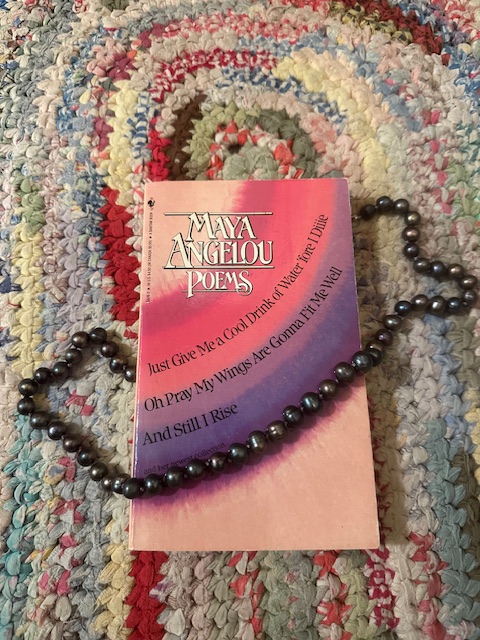
For inspiration in trying times, arm yourself with these quotes from wise author, poet, memoirist and civil rights activist Maya Angelou:

“You may not control all the events that happen to you, but you can decide not to be reduced by them.”

“Do the best you can until you know better. Then when you know better, do better.”

Pearls of Peace (PoP) Quiz

458. Is there a movement that you feel passionate about in 2026?

469. How might you honor Black History/Herstory this month?  

Peaceful Couples and Countries

There are peaceful societies in our world. How have they managed to live together in peace with their neighbors? A multidisciplinary group of scholars began gathering in 2014 to find answers. Social entrepreneurs and professors, Peter T. Coleman and Joshua D. Fisher, are part of the Advanced Consortium on Cooperation, Conflict and Complexity, and The Earth Institute at Columbia University. Their Sustaining Peace Project involves psychologists, anthropologists, philosophers, astrophysicists, environmental scientists, political scientists, and communication researchers. Just bringing such diverse disciplines together peacefully orchestrates a model for peace systems.

America currently is tuned into war systems. Globally, military spending is speeding up as more countries encounter violent conflict than in the previous 30 years. Peace systems are “clusters of neighboring societies that do not make war with each other.” For example, none of the 5 Nordic nations have made war inside or outside their borders for over 200 years. Unfortunately, this cannot be said for the U.S.

A possibility roadmap for peace was found by the collaborative scholars. It seems intuitive, but somehow people are not aware of the simple power of peace or how to get “there.” The inclusive work of the Sustaining Peace Project suggests that sustaining peace can be understood as a high ratio of positive intergroup reciprocity to negative intergroup reciprocity that is stable over time.”

On a micro-level, family systems co-exist peacefully with the same positivity-fueled reciprocity. Marriage researchers John and Julie Gottman study couples intensely. John Gottman began longitudinal work on couples in the 1970’s. Gottman Institute research finds that stable, happy couples have at least a 5:1 ratio of positive interactions to negative interactions, especially necessary in trauma and conflictual situations. Unhappy couples exhibit fewer positive interactions that might counterbalance negative communication. If their positive-to-negative ratio is 1:1 or less, a couple may be headed for break-up. High conflict, unhappy couples in their relationship’s end time engage in what Gottman refers to as “The Four Horsemen of the Apocalypse:”

  • Criticism – An attack on one’s partner and their character, not just a complaint comment.
  • Contempt – Disrespect that goes further than criticism; sarcasm or ridicule spews out, denoting a moral superiority over one’s partner.
  • Defensiveness – An excuse-making response to criticism that often includes reversing the blaming.
  • Stonewalling – A response which involves one individual withdrawing, often acting “busy” or engaging in obsessive and/or distracting behaviors.

While peaceful couples and countries have differing ways in which they cultivate peace, there are some commonalities. Peaceful groups have an overarching common identity (a shared national or regional identity that seeks commonalities between ethnic differences). There is focus on positive interconnectedness in terms of economics, ecology, and security. Peaceful societies commemorate successful peacemakers. Public spaces and institutions bring members of different groups together. The single-most critical contributor to peace is identified in non-warring norms, rituals, and values. Peace language and peace leadership call for dialogue and consensus-building.

Pearls of Peace (PoP) Quiz

466. How might you incorporate more peacefulness in your relationships?

467. What consensus-building success have you ever experienced?