Black History & Herstory Month

To Craft a Double Consciousness or Two-faced, Theaster Gates, 2018, Art Institute of Chicago

Black History month has a predominant focus on men who championed racial equality — with some exceptions.

On Rosa Parks’ birthday (2-4-25), Congresswoman Joyce Beatty (Ohio) spoke passionately about Parks’ enduring legacy in U.S. voting-rights progress. The Rosa Parks Commemorative Coin Act was initiated to honor the lifelong peaceful equal-rights activist.

In 1996 Parks was honored with the Presidential Medal of Freedom and the Congressional Gold Medal in 1999. A department store seamstress, Parks received a nearly 100% affirmation vote with only Representative Ron Paul (Texas) in dissent for her Gold Medal. Parks observed the voting from her Detroit home where she had moved due to the firing from her seamstress job and her family enduring threats.

Upon her death in 2005, Parks was honored to lie in state in the U.S. Capitol Rotunda. In 2013 the Postal Service recognized Parks’ “soft” power with a Forever Stamp on her 100th birthday and Congress approved Parks’ statue in Statuary Hall for her importance in “forming a more perfect union” and “establishing Justice.” Her seated granite statue, dressed similarly to that momentous day on the Montgomery, Alabama bus, was the first full-length statue of an African American individual in the Hall. Her statue joined busts of Martin Luther King, Jr. (1986 placement) and Sojourner Truth (2009 placement).

Rosa Parks was a member of the NAACP and was elected secretary. She had knowledge of many injustices in mandated racial segregation in public places. When she was ordered to give up her bus seat to a white passenger, she merely sat still. Arrested, she was pronounced guilty of “disorderly conduct and violating a local ordinance.”

As Joyce Beatty took the Congressional podium, she elaborated on the iconic memory of Parks refusing to give up her bus seat: “Rosa Parks was more than one moment… as America nears its 250th birthday, we must honor not only our founding fathers but also the mothers of our democracy.”

Let’s honor more mothers of democracy as “first” Black women to crack ceilings: Barbara Jordan – Black Southern woman elected to Congress, Rebecca Lee Crumpler – Black woman graduate in U.S. medical school, Ida Lewis – editor-in-chief of Essence magazine, Ruth Batson – Black woman on Democratic National Committee, Ketanji Brown Jackson – Black woman on Supreme Court, and Kamala Harris among others.

A first National Youth Poet Laureate, youth role model Amanda Gorman took another Washington, DC podium. Invited by Jill Biden to address the nation at President Biden’s inauguration, Gorman’s words from “The Hill We Climb” are especially poignant at this time in U.S. history/herstory:

“…We lay down our arms
so we can reach out our arms
to one another
We seek harm to none and harmony for all
Let the globe, if nothing else, say this is true:
That even as we grieved, we grew
That even as we hurt, we hoped
That even as we tired, we tried”

Pearls of Peace (PoP) Quiz

371. What story do you tell for “a more perfect union?”

372. How are you growing from grief?                     

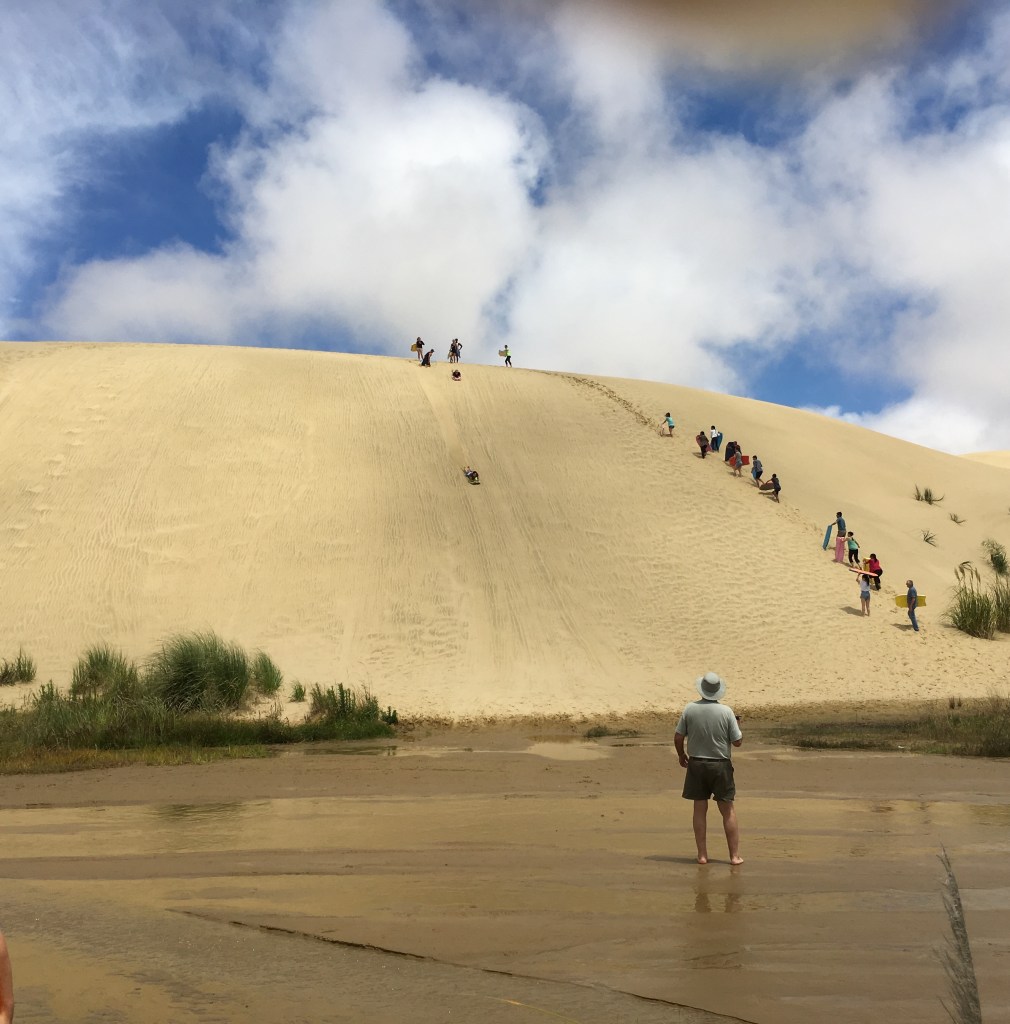
Hope for Your Hills

“The question is not so much ‘What do I learn from stories?’ as “What stories do I want to live?” suggests Zen teacher David Loy. What story meanings that you have heard throughout your lifetime do you want to live?

In Greek mythology stories, Sisyphus was punished by the gods with a sentencing to roll a boulder up a hill for eternity, only to have it roll back down every time he came close to the hilltop. Sisyphus was the Greek king of Ephyra (later named Corinth). According to one version of the story, Sisyphus was a tyrant who angered Greek gods by killing his visitors as a show of his power. He disobeyed xenia, a law of hospitality, considered vital to Greek culture both morally and politically.

One meaning of this myth is that life is an endless struggle, with no opportunity to ever achieve a goal. This is a hopeless version. According to some research, only 8% achieve their New Year’s goals by the end of the year. Is this true about you? All of us experience some stiff uphill climbs to reach certain goals, only to backslide, sometimes repeatedly, when “things” do not work out. Yet, there could be lessons, such as asking, “What is my part in this?” A second meaning of the Sisyphus myth is the importance of perseverance when one is faced with adversity. No story has only two sides. There are other meanings. Take your pick.

For now, let’s go with the second meaning. I’m a big believer in resilience and hope. One of my graduate school professors was keen on reminding newbie psychologists of the most important thing to accomplish by the end of each therapy session: “leave the client with hope.” I often reminded myself of this early lesson when in the middle of contentious family therapy sessions. If one’s therapist gives up, how can the client walk out the door with a silver-lining sliver of hope for themselves?

Recent recipient of the Presidential Medal of Freedom, conservationist Jane Goodall is another proponent of hope: “I do have reasons for hope: our clever brains, the resilience of nature, the indomitable human spirit, and above all, the commitment of young people when they’re empowered to take action.” Each generation holds out hope that the next generation will be more talented in fixing what ails families, communities, and countries. We will leave the younger set many hills to climb, but we can engender hope in them by continuing to be steady climbers ourselves.

Do not see your goals as Sisyphean or goals that are futile; see progress in taking baby steps. Babies do not give up when they learn to stand and take their first fledgling steps. They get up, repeatedly, and take their next best step.

Pearls of Peace (PoP) Quiz

357. What stories do you live by?

358. If you have lost hope, what is one baby step you can take in reviving a sense of hope for our collective future?

Compassion: The Peace Within

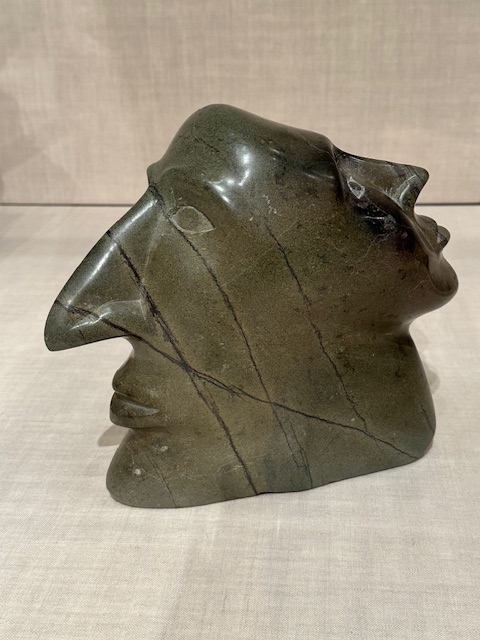
Inuit, Unknown carver, Art Institute of Chicago

Tania Israel, Professor of Counseling Psychology at University of California (Santa Barbara) is  author of the 2024 book, Facing the Fracture: How to Navigate the Challenges of Living in a Divided Nation. Rather than focusing on differences between voters, Israel takes a compassionate (and researched) approach: “We have more in common than we realize.”

  • There is a tendency to overestimate the distance between our viewpoints; two-thirds of Americans do not belong to either extreme of the political continuum. While voters may disagree on whether there is environmental climate change, many who voted for different candidates are exhausted by the divisiveness of today’s political climate.
  • Most Americans share core values, such as service, patriotism, and bipartisanship.
  • There are over 500 organizations that are working in earnest in the bridging movement to bring people together in the Listen First Project, a global nonpartisan nonprofit that was founded in 2013. The goal is to strengthen social cohesion and democratic principles.
  • Listen First conversations happen by following these 3 tips: 1) Listen with curiosity. 2) Speak from your own experience. 3) Connect with respect.
  • Our actions can change our beliefs. Look for unifying causes. Check out these brief You Tube clips: https://www.youtube.com/@ListenfirstprojectOrg/videos
  • Despite social media outlets that foster conflict, 53% of Americans across political lines report changing their social media diet in favor of more constructive choices.

Researchers are working on ways to reduce division. In a large study of online interventions, 23 of 25 reduced partisan animosity. Reducing support for undemocratic practices and partisan violence were intervention goals. Correcting misperceptions about “the other side” was one useful approach. Most individuals were found to value resilient and safe communities where healthy families can thrive.

Social psychologist Peter T. Coleman, Professor of Psychology and Education, Teachers College at Columbia University, initiated the Polarization Detox Challenge – a 20-day skill-building online experience designed to shape new habits for political tolerance and compassion. His ongoing research is one that you can join: https://startswith.us/pdc/exercises/

The Polarization Detox Challenge takes as little as 5 minutes a day. This is not an assignment! No one grades you. Dropping out is an option. Day One of The Detox Challenge is finding out (via a quick survey with results immediately) how much you believe in change. No surprise, I believe in people’s capacity for change!

“Research on more intractable conflicts has found that… when people believe that groups and situations are mutable and sometimes can change, they are much more likely to work to do so. Making this simple shift in mindset helps make it conceivable to see and realize possible solutions to problems where others see inevitable dead ends. The consequences of this simple difference have been shown by decades of research to be profound.”

Hanging on to a fixed mindset halts evolving problem-solving. Let’s correct any misperceptions with facts while embracing values that we hold in common. 

Pearls of Peace (PoP) Quiz

343. What are your thoughts about people who voted opposite from you?

344. How might you dialogue together?      

Big-picture Peace

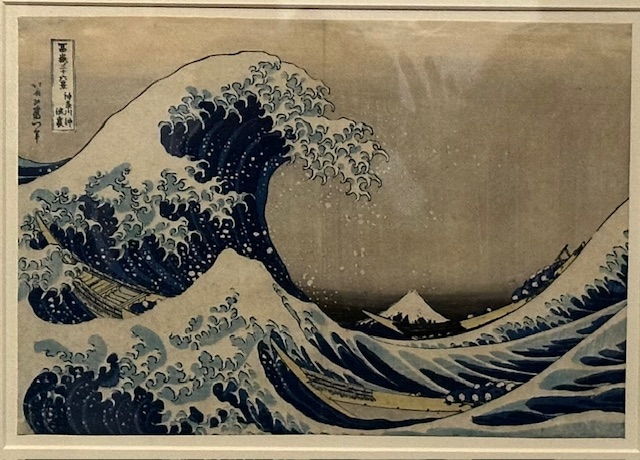
Under the Wave off Kanagawa, Katsushika Hokusai (1769-1849)

The United Nations International Day of Peace, annually set for September 21st, has a request: a 24-hour ceasefire of all hostilities on the planet. This year’s theme, “Cultivating a Culture of Peace,” calls for teaching the values of dialogue (see blog, “Mend Differences through Dialogue,” 8-19-24) and mutual respect to the 1.2 billion youth worldwide. Have we given up on adults knowing how to use dialogue and mutual respect in resolving conflicts?

It seems that adult problem-solving efforts to create peace on earth are like the tiny boats facing the looming giant wave in Katsushika Hokusai’s color woodblock print, Under the Wave off  Kanagawa. I must admit that the first time I saw this captivating image in Chicago’s Art Institute years ago, I was so focused on the wave action that initially I did not see the boats! Due to being on paper, the print is only on view for 3-4 months every 5 years. This original gem has re-surfaced from protective storage and again is on display (September 5, 2024–January 6, 2025) in the Art Institute’s Ando Gallery, my favorite room in the entire museum. This time, I knew to look for the boats. What if we are looking for world peace in all the wrong places?

Most museum visitors never see the Tadao Ando Gallery, or Gallery 109, as it sits in an innermost corner of the Art Institute’s Japanese collections. It is a compact space compared to many roomy galleries in other sections of the museum. Also, it is one of the few darkened spaces.

Ando was a self-taught architect. His haunting 16 free-standing wood columns in the womb-like environment compel one to slow down, take deeper breaths, and realize that this is a bodymind immersion into a different sense of time and space. Walking through the “forest” of oak pillars creates an atmosphere of peaceful reverence; the message is to refocus your gaze and get ready to look for what is beyond this “forest” grove.

We have English writer John Heywood to thank for his catchy proverb from 1546: “Can’t see the forest for the trees.” It seems to apply to many situations today, but especially to country leaders who lack the capacity to grasp the disastrous consequences of continuing wars. While dwelling solely on certain details, the big picture is often far from sightlines. Combating inequality, advocating for human rights, and championing climate actions for our planet are factors that lie beyond the immediate details of our international conflicts.

Re-look at Hokusai’s masterpiece. Mount Fuji holds still beyond the crashing wave. Again, we almost miss seeing beyond first details. This mountain is considered a spiritual place. How might we look for big-picture peace and create an interfaith spiritual culture for world dialogues? Isn’t peace first within a baby’s heart?

Pearls of Peace (PoP) Quiz 

327. When have you caught yourself missing some big-picture viewpoint?

328. How often do you refocus your gaze in looking for solutions to your personal sense of peace? 

Prevention is an Intervention

September is Suicide Prevention Month. While suicidal thoughts may be common among individuals, regardless of age, gender or background, they are the tip of an iceberg. Suicidal thoughts signal underlying issues that need attention.

Suicide is the cause of death of 49,476 individuals in the U.S. in the most recent year of verified records — 2022, making suicide the 11th leading cause of death. Even more concerning is CDC’s estimate of 1.6 million attempted suicides in 2022. These numbers reflect a massive call for help. The U. S. government stepped up and partnered with the CDC and SAMHSA (Substance Abuse and Mental Health Services Administration) to provide a 10-year strategy to tackle mental health and overdose issues in suicide. This Federal Action Plan sponsored by the Biden and Harris administration has a comprehensive approach to suicide prevention.

Systems thinker Peter Senge wisely suggests, “Today’s problem comes from yesterday’s solution.” Many “solutions” of yesterday were flawed. Wars are flawed. Of particular concern is the rise in suicides committed by veterans.

The 2023 annual report of the National Veteran Suicide Prevention effort (based on 2021 data) found that veteran suicide rates increased by 11.6% from 2020. This increase has escalated since the wars linked to 9/11 terrorism. Countless soldiers suffer from traumatic brain injury, PTSD, and other bodymind wounding.

This escalation translates into more than 17 veterans taking their own lives each day with the highest percentage occurring in ages 50 or older. This is twice the suicide rate for non-veteran individuals ages 55+. Guns are the chosen vehicle for 53% of all suicide deaths. Veterans were taught to use guns.

As Italian physician and educator Maria Montessori outlined, “Preventing war is the work of politicians, establishing lasting peace is the work of educators.” Each one of us can increase peace within ourselves and educate others about warning signs of suicide (https://www.nami.org/about-mental-illness/common-with-mental-illness/risk-of-suicide/):

  • Increased substance use (alcohol and drugs)
  • Aggressive behavior
  • Withdrawal from friends, family and community
  • Dramatic mood swings
  • Impulsive or reckless behavior

Possible behavior changes prior to suicide include:

  • Collecting and saving pills or buying a weapon
  • Giving away possessions
  • Tying up loose ends, like organizing personal papers or paying off debts
  • Saying goodbye to friends and family      

We know what is helpful in daily living:

  • A sense of purpose: feeling valued and contributing to a job, family, and/or community;
  • Social connections: positive relationships with co-workers, family, and friends;
  • Financial stability: financial security (helps but is not 100% protective);
  • Access to resources: access to mental health assistance;
  • Routine and structure: a daily routine through employment, taking classes, or volunteer work.

Let’s respectfully acknowledge those who have attempted suicide, died by suicide, and their families/friends.

The 988 Suicide and Crisis Lifeline has received more than 10.8 million calls, texts and chats since its 2022 launch. 988 is available 24/7 for anyone in crisis.

Pearls of Peace (PoP) Quiz 

325. Do you know anyone at risk for suicide?

326. How might you extend a lifeline to them?                     

Pearls of Labor

“School days, school days, good old golden rule days….” The kids are back in school, but how many educators pay heed to this 1907 phrase? Rather, the “…tune of a hick’ry stick” might be educators’ go-to behavior management, as corporal punishment is legal in private schools in every state except Illinois, Iowa, Maryland, New Jersey and New York. Furthermore, the outdated discipline is legal in public schools in 17 states and practiced in Alabama, Arkansas, Georgia, Louisiana, Mississippi, Oklahoma, Tennessee, and Texas. Students of color and those with disabilities disproportionately receive corporal punishment.

The Senate introduced the Protecting our Students in Schools Act of 2023, which would prohibit corporal punishment in schools that receive federal funding. Investments are recommended to transform school discipline with restorative justice practices. When students are taught problem-solving skills, benefits ripple into their lives beyond the classroom.

According to the August 2024 Centers for Disease Control and Prevention Report (Part IV), students’ health, mental health, and well-being has worsened over the past 10 years —  https://bit.ly/3T3JNv8. An increased percentage of U.S. adolescents report facing school-based violence and/or bullying. Absenteeism due to students’ safety concerns is a related issue. While eliminating school corporal punishment is not a total solution, adults model coping strategies for students. Hitting children is not a coping strategy. Hands are for helping, not hurting.

While pandemic levels were higher, current student mental health statistics suggest that schools might re-consider their methods:

  • 40% of students overall are experiencing persistent feelings of sadness/hopelessness with a higher percentage among female students (53%), some of whom have considered suicide;
  • 42% of Hispanic students feel persistently sad or hopeless, 26% experience poor mental health, 18% have considered suicide, and 16% have made suicide plans;
  • 10% of Black students have attempted suicide.

The 2023 statistics for female students and LGBTQ+ students are staggering:

  • Nearly 2 in 10 female students experienced sexual violence (1 in 10 being physically forced to have sex);
  • More than 3 in 5 LGBTQ+ students experienced persistent feelings of sadness/hopelessness;
  • Nearly 3 in 10 LGBTQ+ students were bullied at school;
  • 1 in 5 LGBTQ+ students attempted suicide during the past year.

As a former school psychologist, these statistics are disturbing. I worked in a progressive school system in Massachusetts where prevention was a main driver of my work. We administered kindergarten screening to each 5-year-old to provide appropriate help from day one. In second grade, each student was administered an individual IQ test. Later I worked in a progressive Illinois high school within a self-contained special education program with students who were in danger of becoming dropouts. Our labor-of-love Problem Solving Conferences were created to nurture and teach students how to dialogue about issues with teachers, classmates, and family members. While we did not call it modeling the golden rule, that is what we were doing.

Pearls of Peace (PoP) Quiz 

321. How many youth do you know who may be in need of problem-solving training?

322. What opportunities do you have for mentoring youth?    

Christmas Pearls

Christmas Eve 100+ years ago (2014) found German, British, Belgian and French soldiers celebrating the holiday by singing together in the midst of World War I. Territorial battlelines were crossed. Language borders were crossed. Soldier orders were crossed. The newly installed Catholic Pope, Benedict XV, had asked for a Christmas truce, but his earnest request did not receive any blessing from officers.

Reports from soldiers over the years have blurred war memories, but certain survivors remember a fragile peace on a moonlit night: “First the Germans would sing one of their carols and then we would sing one of ours until we started ‘O Come, All Ye Faithful,’ the Germans immediately joined in singing the same hymn to the Latin words Adeste Fideles, and I thought, well, this is really a most extraordinary thing…nations singing the same carol in the middle of a war.” Other versions of that extraordinary night focus on the singing of Silent Night, Holy Night. No one seems to know exactly where the first singers emerged.

I am reminded of words attributed to anthropologist Margaret Mead: “Never doubt that a small group of thoughtful, committed citizens can change the world; indeed, it’s the only thing that ever has.” It can take a long time to change the world, but never doubt that any small change has depth. This 100-year-old Christmas story provides a legacy blessing for our times.

On Christmas Day in 1914 some German soldiers ditched the precarious protection of their trenches and held up signs: “You no shoot, we no shoot.” Some soldiers traded gifts of cigarettes, food, buttons, and hats. The Christmas truce even delivered the ability to bury opposing fallen soldiers who were frozen in place, struck down in territory between trenches. Stories vary, but Adolf Hitler, a Corporal of the 16th Bavarians, reportedly reprimanded German soldiers: “Such a thing should not happen in wartime. Have you no German sense of honor?”

If you look up the word honor, the noun means “adherence to what is right or to a conventional standard of conduct.” As a verb, honor means “to regard or treat (someone) with admiration and respect.” An argument must be made that war defies what is “right” – killing, looting, and other horrors do not treat others with respect. Yet, Hitler found followers to tear down decency.    

Many people on our precious planet commit to peaceful problem solving where we build up one another in times of disaster. It is a possibility that more folks will become thoughtful citizens and change agents in the new year. Might we begin with school children on the playground? Before recess can kids create personal posters with their version of “You don’t shove, I don’t shove?”

A pearl can take from 6 months to 4 years for mature development. Surely, people are capable of maturity. It is our birthright.

Pearls of Peace (PoP) Quiz

249. How do you define what is honorable?

250. What peaceful problem solving will you engage in today?