Community Engagement

Poet Marge Piercy can pierce everyday thinking with her outer/inner connections:

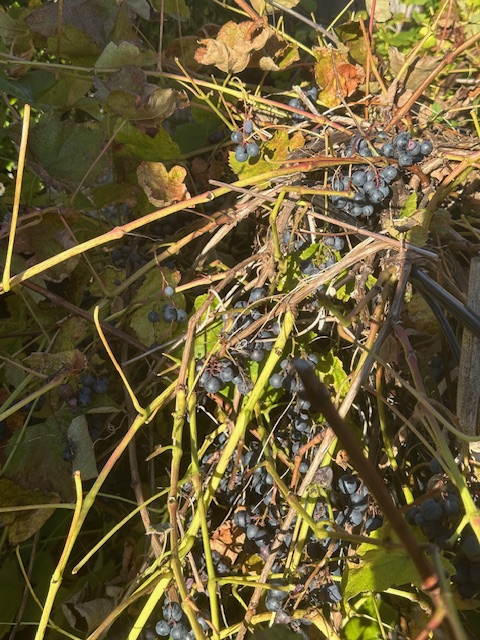
“Under a sky the color of pea soup / she is looking at her work growing away there / actively, thickly like grapevines / …Keep tangling and interweaving and taking more in / a thicket and bramble wilderness to the outside but to us / interconnected with rabbit runs and burrows and lairs….”

A garden is an interconnected community. Animal and human workers everywhere co-exist because of interconnected communities. If this is the way of our world, why are politicians not acting like an interconnected community?

I am heartened to learn about many interconnected nonprofit organizations in the U.S. One compassionate community organization was a one-man operation in Olympia, WA until people talked about “Souper Sunday” with their friends on social media. Online exposure catapulted a national sharing of Chris Hyde’s simple idea; using left-over vegetables from his garden, he invited folks over for homemade soup. “People were really divided and isolated,” he said of his 2023 brainstorm idea. “At first only a few people came out. But every week it grew. I soon had 20, 40, 80 people come.”

A neighbor commented on the power of Hyde’s actions: “I’m not naturally outgoing, and forming a sense of community has never come easily to me. When I moved here…I didn’t know a soul. But Chris’s group became my first real feeling…as my place, my home.” The volunteer soup-makers might deliver soup to neighbors with mobility challenges or those who have mental health issues. Their engagement not only reaches those with food insecurity but offers the nurturance of shared connections for both cooks and guests. The fledgling nonprofit expanded locally from 5-12 neighborhood chapters of Souper Sunday.

A nonprofit I have supported for decades is Parenthesis, now part of a larger nonprofit, New Moms, in Chicago. Parenthesis began with two compassionate women, Sunny Hall and Cathy Blandford, starting morning drop-in programming; parents obtained low-cost or no-cost childcare while participating in Parent Parlor workshops and/or finding quiet for some work hours. I delivered workshops, gave pro-bono supervision to social work staff, and served on an advisory board, along with many other volunteers. Now, New Moms not only enriches a previous shoestring budget, but provides housing for young single mothers with precious babes. Every child receiving the right dose of a secure attachment, a peaceful and safe home life, and adequate education lifts ALL families’ futures. Violence prevention begins in the cradle. It helps when nations create a peaceful zeitgeist.

I was privileged to hear ever-wise Buddhist monk Thich Nhat Hanh speak in Chicago in 2003: “…we need a brother or sister to assist us in difficult moments…one nation should have the opportunity to tell all the other nations about her own sufferings, difficulties and deep aspirations…[and have] every brother and sister listen….”

Can a planet survive without such interconnected engagement?

   Pearls of Peace (PoP) Quiz

444. What community engagement do you endorse?

445. How might you extend interconnected engagement globally?  
Purpose Pearls

At age 80 Betty Kellenberger becomes the oldest woman to ever hike the entire 2000-mile Appalachian Trail. While Kellenberger grew up in Michigan, she always had a fascination with seeing the Georgia-to-Maine landscape along the Appalachian Trail. Her imaginings materialized when she retired and had a 6-month timeframe to devote to her dream.

Like fulfilling many dreams, the reality of inevitable along-the-way struggles is daunting. Kellenberger faced bruising, dehydration, falling, a concussion, Lyme disease, and hurricane damage to trails in the South. She had to change her route heading north. Then cold weather forced a pause until spring. She also experienced inner pauses, both on the trail and upon completion: “You hike alone, and so you have your thoughts…You have so many emotions because you’re excited about finishing,” she recalled. “I was really looking forward to saying, ‘I am done.’ But you also know you’re going to miss this big-time. You’re not going to have what you have out on that trail. That peace, the serenity.”

Kellenberger’s decades-long teaching career was teaching English and social studies to seventh graders, along with night classes for adults. Having achieved her Appalachian Trail dream, she ponders what comes next. This transition time is where life’s dreams require rewiring. There are many choices of how to spend one’s time in retirement and how to create a sense of purpose.

Some, like 100-year-old Jiro Ono, famed chef and restaurant owner of Sukiyabashi Jiro in Tokyo, are never-retire advocates. While Ono has passed the baton to his son as head chef, he maintains that the secret to longevity is to keep working! And yet, he must rewire to accommodate his Centenarian body’s needs as he realizes that his hands “…don’t work so well…I can no longer come to the restaurant every day…but even at 100, I try to work if possible. I believe the best medicine is to work.”

Ono’s health habits include no alcohol, regular walks, and to no one’s surprise, eating well. He continues serving and eating sushi as the first sushi chef to earn 3 Michelin stars. He is the oldest head chef of a three-star restaurant. What possibly could be his next purpose? Yes, he has one! Ono wants to outlive Japan’s oldest man who died at age 113.  

Both Kellenberger and Ono are seasoned citizens who believe in living with purpose. Hopefully, purpose in one’s life starts at an early age, but an overarching purpose in one’s life can change. Life transitions often are a time of upheaval; they may signal either decline and/or renewal to dream big after a muddling-through stage. No matter what your current age or circumstances may be, start affirming purposes that have meaning for you. Please know that you can rewire at any age!

The following questions come from my book, Transforming Retirement: Rewire and Grow Your Legacy.

Pearls of Peace (PoP) Quiz

442. What are you doing with your precious time today?

443. What kind of rewiring might you tinker with today?

Inter-being Connections

Ugo Rondinone, Soul, Galerie Eva Presenhuber, Zurich, 2013

I read the book that my graduate school, Boston University, asked students to read as they began this new academic year. The choice was British novelist Samantha Harvey’s Orbital (2024 Booker Prize winner), about 6 astronauts on the International Space Station (actually 4 astronauts — American, Japanese, British, Italian — and 2 Russian cosmonauts). The novel was a fascinating blend of out-of-this-world details of living/working without benefit of gravity and the daydream/nightdream lives of the intrepid souls onboard.

Purposedly, I had not read the reviews before my own reading. I find that a reviewer’s comments often tell more about the reviewer than about a book. In any case, reviews were mixed. On the plus side, reviewers found Harvey’s writing “beautiful…contemplative.” She describes Earth as having fragility. Through the eyes of astronauts there were worries about personal fragility, like fending off nausea, while zooming around Earth 16 times a day in mind-dizzying circles.

Negative reviewers commented on “minimal plot,” a “lack of traditional character development” and finding “philosophical musings…lacking in substance.”

What caught my attention was how similar the international astronauts were in terms of their emotions. This should not be a surprise. The author places readers into a spacey, weightless interconnection with Planet Earth alongside the sacred space of weighty troubles of everyday people – a mother’s death, another’s unhappy marriage, and a third astronauts’ sick relative.

I agree with the reviewer who noted that the reader feels as if they “were up there with them” for the one day, a Tuesday, that the story unfurls in captivating description: “Over its right shoulder the planet whispers morning – a slender molten breach of light…they have each at some point been shot into the sky on a kerosene bomb, and then through the atmosphere in a burning capsule with the equivalent weight of two black bears upon them.” 

I appreciated a review from James Wood (in New York Times) commenting on earlier literary figures who longed to know what it would be like to travel in an airplane, but they were never afforded the opportunity: “…the poets and novelists who moved naturally from the mundane to the massive, who saw God and knew death and narrated time, who sensed that, beyond this ‘mundane egg’ (Blake) ‘This World is not Conclusion’ (Dickinson).”

Harvey’s haunting narrative can border on the poetic: “Some alien civilization might look on and ask: what are they doing here? Why do they go nowhere but round and round?”

Swiss sculpturer Ugo Rondinone also offers stark commentary on human nature in his Soul figures. While his primitive blocks of bluestone are not chiseled into perfection, as quarry trauma in the form of drill-holes and splits are visible, his overall repetition of forms makes a statement. Each individual sculpture is titled an emotional state – “The “Affectionate,” “The Surprised,” The Frisky,” “The Concerned.” We can identify. It’s called inter-being.

Pearls of Peace (PoP) Quiz

440. What are your views of space travel?

441. How do you interpret your own round-and-round days?    

Democracy Pearls

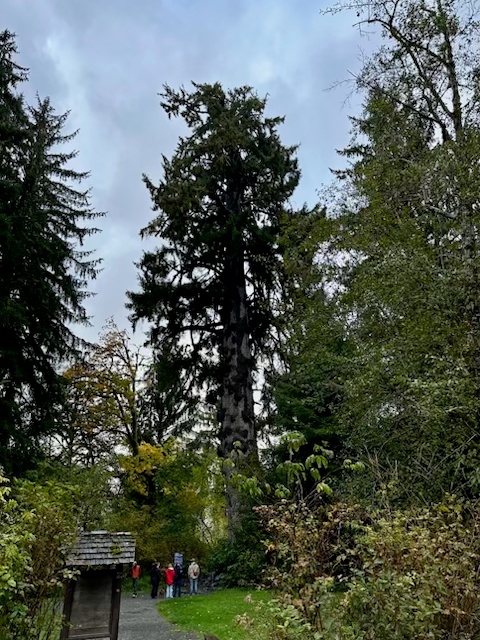
Sitka spruce tree, 1000 years old (191 ft. tall, 55 ft in circumference), Quinault Rain Forest, WA

Just as the “world’s largest spruce tree” appears to have a tilted top, democracy seems tilted these days. Let’s imagine that like the massive and strong roots of this magnificent Sitka spruce tree, the massive and strong roots of democracy can hold steady.

Stanford University is sponsoring a webinar series called “Reimaging Democracy.” When I first received the email invite, my unspoken question was to ponder why we have to “reimagine” something that we were taught –  from childhood onward – was an American birthright.

Professors of Law at Standford, Jud Campbell and Fred Smith, opined about whether our country is experiencing a “constitutional crisis.” This is unsettling territory. Neither of the professors believe that we have “crossed the Rubicon,” but each used phrases like these: “…a moment of transformation…a moment of uncertainty…there are increasing signs that we are at greater risk…people use politics to solve problems.” Interviewer Bernadette Meyler asked a burning question of each speaker: “What keeps you up at night?” Smith answered with his own question: “Are we going to have fair and free elections?” Campbell added, “I share that fear as well. To say something different, we have come out of differences before, but the information system today of divided opinion may not come together.”   

In an earlier webinar of this series, American political scientist Francis Fukuyama was featured. His book, The End of History and the Last Man combined philosophical notions from earlier centuries. A strong influence upon Fukuyama was Plato (428-347 B.C.) who is attributed with this idea of democracy: “…dealing with all alike on a footing of equality, whether they be really equal or not.” Add another 1000+ years, and a German philosopher, George Wilhelm Friedrich Hegel (1770-1831), was another influence with his vision that each period of history is an improvement on prior eras. Does such “old guard” thinking prevail today? Equality is challenged on many fronts. Can current history be considered an “improvement” from prior times?  

Is democracy up for grabs? If so, whose hands are going to catch a democracy that seems off-kilter, as if it were tossed into thin air?

I watched a kite flyer trying to maneuver strong headwinds and determined rain along the Pacific Ocean this weekend. The kite dipped and swerved with jagged and jerky motions as if it might plunge from the sky at any moment. However, despite kite trauma, I did not see the kite fall. I do not see democracy falling either. There are checks and balances in a democracy. It is up to each citizen to call for checks and balances in times of questionable circumstances.

Lyrics from Canadian singer-songwriter Leonard Cohen’s “Democracy” seem pertinent:

“Sail on, sail on

O mighty Ship of State!

To the Shores of Need

Past the Reefs of Greed

Through the Squalls of Hate

Sail on, sail on, sail on, sail on.

Pearls of Peace (PoP) Quiz

438. How do you define equality?

439. What does democracy mean to you?    

Saying YES to Hope

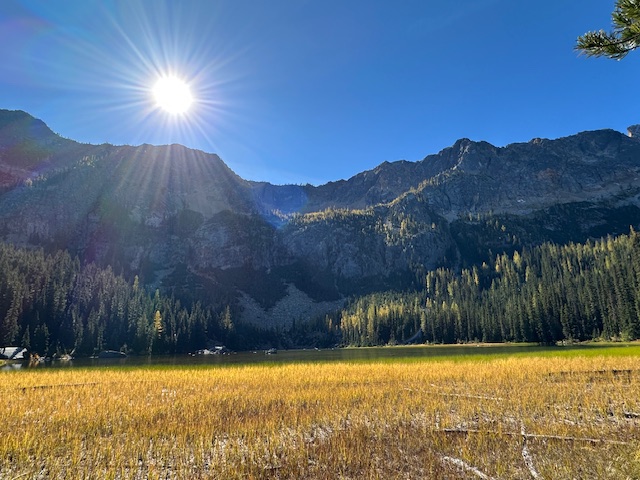
Cutthroat Lake (Named after the local cutthroat trout), North Cascades, WA

English primatologist and anthropologistJane Goodall is an inspirational leader. Her messages for planetary health were still percolating as she entered her 90’s. In celebrating her birthday in 2024, Goodall said in an interview on TODAY,” Slow down, Jane, you’re 90.”  Then she concluded, “I have to speed up because I don’t know how many years left I have.”

Goodall gave her final public interview just 8 days before she died on a U.S. speaking tour 10-01-25 at age 91. Longtime assistant Mary Lewis reported working with Goodall on a document at 10:30 PM just hours before Goodall died while sleeping.

UN Messenger of Peace Goodall found that the question most asked of her was this one: Do you honestly believe there is hope for our world…for the future of our children and grandchildren? Her answer was a stalwart YES — with a call to action: I believe we still have a window of time during which we can start healing the harm we have inflicted on the planet – but that window is closing. If we care about the future of our children and theirs, if we care about the health of the natural world, we must get together and take action…Many people understand the dire state of the planet – but do nothing about it because they feel helpless and hopeless.” 

Goodall sustained a keen sense of hope that can serve as a legacy. She exudes hope in The Book of Hope: A Survival Guide for Trying Times co-authored by Douglas Abrams, with Gail Hudson. Abrams proposed this dialogue-with-Jane book after his Book of Joy with The Dalai Lama and Archbishop Tutu.

Goodall lists 4 reasons for hope despite “a time of fear:”

  1. The amazing Human intellect; 2. The resilience of Nature; 3. The power if young people; and 4. The indomitable Human Spirit.

Roots & Shoots programming initiated by Goodall in 1991 is a prime example of youthful power. While the fledgling environmental project began with 12 high schoolers in Dar es Salaam, Tanzania, today Roots & Shoots hands-on programming exists in 100 countries. The purpose is to train youth to create positive changes for animals, the environment, and their local communities. It is the embodiment of hope.

Saying YES to hope is key to many present-day predicaments. Saying YES means taking power. In the children’s book, A Million YES’s, author D.J Corchin (with illustrator Dan Dougherty) describes the contagion of positive actions: “Word got around quickly. The girl suddenly made more and more friends who all lined up for her incredible YES’s.”

Jane Goodall was a practical and philosophical role model: “You won’t be active unless you hope that your action is going to do some good. So you need hope to get you going, but then by taking action, you generate more hope. It’s a circular thing.”

Say YES to active hope.

Pearls of Peace (PoP) Quiz

436. What gives you hope?

437. How might you say YES more often to make positive environmental changes?

Age-inclusion Please

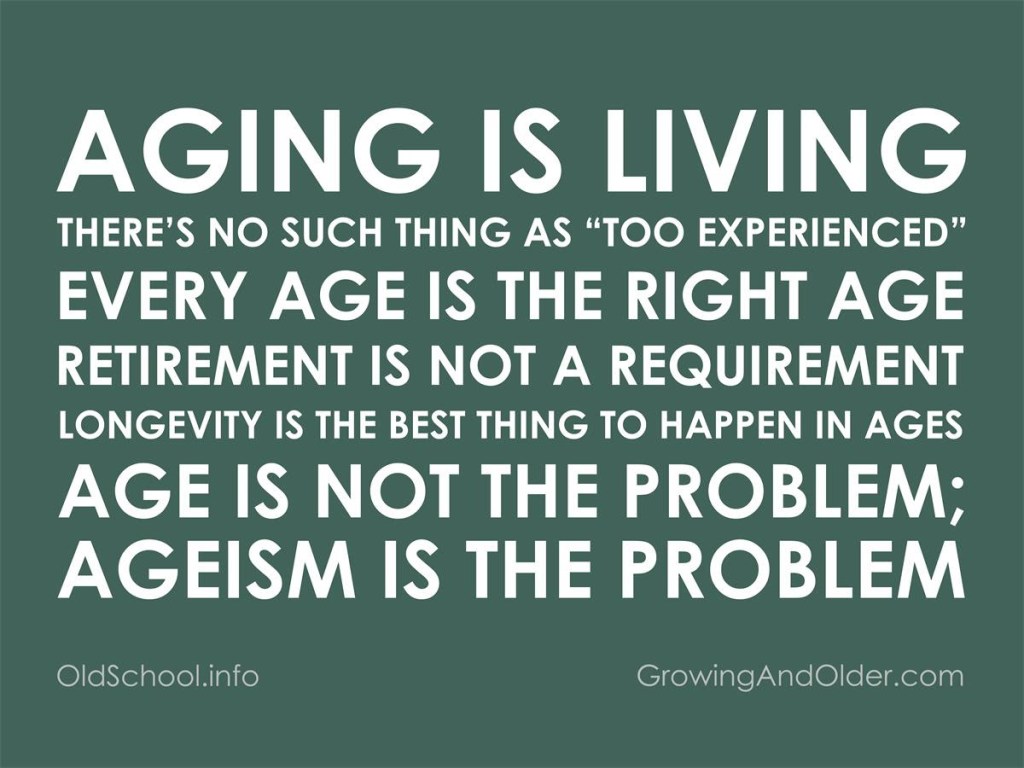
Ageism Awareness Day is October 9. The American Society on Aging (ASA) Ageism & Culture Advisory Council has a  Fact Sheet for those who want more details on ageism: https://asaging.org/wp-content/uploads/2025/09/Ageism-Awareness-Day-Fact-Sheet-2025.pdf

Ageism is common and yet overlooked as one of the most socially accepted forms of prejudice. A poll reported that 82% of adults in ages 50-80 experience ageism words or actions daily. And to make matters worse, we often are ageist about ourselves! Other highlights from the ASA report include these issues:

  • Ageism covers people of many ages, both as recipients of prejudice and offenders of prejudice.
  • By age 3 children pick up age stereotypes.
  • Ageism refers to stereotypes (how we think), prejudice (how we feel) and discrimination (how we act) toward others — or ourselves — based on age.
  • Cultural ageism slips into our movies, literature, songs, news reporting, and especially our jokes.
  • One research study found that a mere 1.5% of the characters on TV in the U.S. are older adults. If present, they tend to have minor roles and/or are portrayed in stereotypic ageist behavior.
  • Ageism is even more prevalent when it intersects with racism, sexism and ableism.
  • Those who experience multiple forms of ageism are reported to have more chronic health conditions and depression.
  • Ageism has economic implications; AARP estimates that $850 billion in lost gains to the CDP results from involuntary retirement, underemployment, and unemployment in older adults.
  • Older adults support the U.S. economy; ages 50+ support over 88 million jobs (through jobs they hold or create).
  • More than half of small business owners are 50+ years old.
  • Work contributions of older adults are overlooked: caregivers ages 65+ are often unpaid caregivers for their family, friends or neighbors.
  • In 2022 data, 1.1 million grandparents ages 60+ were providing most of the basic care of grandchildren living with them.
  • Older adults have longer periods of unemployment, face discrimination during the hiring process, and receive fewer professional development possibilities.
  • 64% of older workers report age discrimination in their place of work.
  • In one study 1 out of 5 adults over 50 experienced discriminations in their healthcare settings.
  • There are few geriatricians treating the older adult population; the average salary for a geriatrician is half of the salary for an anesthesiologist, cardiologist, or radiologist.
  • Medication-related problems are estimated to be one of the top 5 causes of death in older adults.

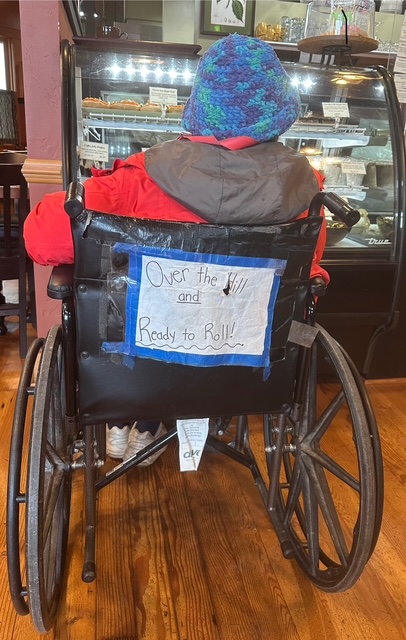
I have experienced ageism and while I know about the unconscious bias that exists in the U.S., it is still unsettling as I feel useful, not over-the-hill. I like author and poet Gertrude Stein’s approach: “We are always the same age inside.” Her statement can be taken in many ways, but there is a timeless quality to believing in a core self with an ability to have consciousness to each present moment. There are positive possibilities when we embrace age-inclusion.

Pearls of Peace (PoP) Quiz

434. Have you experienced ageism lately?

435. What do you say when you hear ageism bias tossed into conversations?

Nonverbal Cues as Personality Parts

Pablo Picasso. Bust of a Woman in a Flowery Hat (Dora Maar), 1943. Courtesy Lucien Paris. This painting existed in a private collection for 8 decades but entered public space this month and will be sold at auction October 24, 2025.

Picasso’s paintings of faces can intrigue or annoy. One does not move away quickly. There is a depth that holds one’s focus, allowing one’s mind to travel sideways. My mind travels to Internal Family Systems “parts” model (originated by marriage and family therapist Richard Schwartz). This evidence-based psychotherapy is one I studied and find practical in explaining human behavior.

When I look at Picasso’s portrayal of lover and muse Dora Maar, I see multiple parts of personality depicted. Picasso is a master painter of Rorschach-like faces. There is color shock, but more importantly, there is shock from differing facial details from what one expects. Was Picasso capturing complexities of Dora or was he projecting his own complexities onto canvas? Dora’s words would suggest the latter, referencing her lover’s fragmented renditions of her with disdain: “All his portraits of me are lies…they’re all Picassos. Not one is Dora Maar.”

Well, that is no surprise! We project our “stuff” (“parts” or feelings, beliefs, sensations and actions) all the time, although we often fail to “catch” what we are revealing about ourselves.

Have you ever watched a person’s face turn “colors” when they told you their story about an event? Did their ruby cheeks of embarrassment then shift into your own feelings of embarrassment about some time in your life? We frequently act as mirrors of one another. I see fear in the eyes of this painting. Is this because I have a fearful part about the current violence on our world stage? According to a Smithsonian report, Picasso had fears of Nazis in the time frame of both this painting and his anti-war Guernica masterpiece with its horse-eye fears. Both painter and observer project personality “parts” in varying degrees.

Have you noticed when a person is lying that they often do not maintain eye contact? (There are other possibilities for not keeping eye contact, but lying is one possibility). Other than eyes, perhaps the most obvious thing we watch in another is whether they are smiling at us and how wide their smile is. A smirk smile is vastly different from a friendship smile. These seemingly small details send nonverbal signals between individuals that there is safety, or not, in current relating.

One interpretation of the limited smile on the portrait of Picasso’s lover is intriguing: “[it] perhaps hints at the shadow of a faint, sorrowful smile,” states Agnés Sevestre-Barbé, a Picasso specialist. This painting occurred during World War II during Hitler’s reign when Nazis forces had surrounded Paris where Picasso’s studio was located. The time also coincided with an impending break-up of the 9-year relationship between Picasso and Maar. Picasso met Maar when he was 54 years-old and she was 28. The part plot thickens. Picasso reportedly left Maar after meeting his next conquest, 21-year-old Francoise Gilot.

Pearls of Peace (PoP) Quiz

432. When have you looked at another’s face and made an instant leap to “read” them?

433. Do you practice “catching” the part(s) of you projecting onto another?

Anger Remedies

As a long-time student of problem-solving and conflict resolution, I am troubled by the news cycle of raw conflicts in our country. Animosity too often turns to not-so-veiled threats or violent behavior against an imagined “other.” Political individuals report a slew of death threats and in some unbelievable instances, they or their family members have been violently attacked. Anger is palpable from town hall meetings to houses of worship.   

Margaret Cullen, a marriage and family therapist as well as a mindfulness teacher, identifies what is happening when anger’s slippery slope devolves into cruelty and/or violence. She gives a first-person accounting: “When I reflect honestly, I notice that my most volatile reactions are tied to things I hate in myself—places I’ve missed the mark or failed to live up to my own ideals. Outrage becomes a shield, a projection, a way of disowning what is hard to face internally…easier to demonize the other than to wrestle with my own complicity.”  Such truth-telling seems like a place to begin a much-needed remedy to anger.

Cullen’s upcoming book, Quiet Strength: Find Peace, Feel Alive, and Love Boundlessly Through the Power of Equanimity, might be required reading for politicians. As Cullen outlines her approach, an ethical value system is key: “Simply put: Unethical conduct breeds agitation; ethical conduct fosters peace. And agitation is fertile ground for outrage and projection to take root. Throw in some social media and global instability, and you are well on your way to zealotry. Peace is fertile ground for perspective and clarity to grow. Toss in some honest self-reflection and an intention for greater integrity, and you can harness the energy of outrage toward creative solutions and effective engagement.”

Yes, self-reflection, insight, and an awareness of one’s value system are always a good idea, whether the topic is anger or anything else. However, we do not see things clearly much of the time. We experience anger or some other strong emotion and imagine that it is “justified.” We do not recognize that our anger rides shotgun in the front seat of our personality pickup truck as a protector from fear, insecurity, and other tender parts of ourselves. I reflected upon this lack of self-clarity when I looked through a clouded-over glass window in a door in my new home. The murky window blocked my view of roses growing outside this doorway. Once the double-pane failed glass was replaced, roses could be appreciated with clear sightlines.   

I appreciate the metaphor in a Scottish tune, Looking at a Rainbow Through a Dirty Window (by Scottish Uilleann piper and flute player Calum Stewart, arranged for harp by Rachel Hair). Listening to peaceful music, especially with others, is a remedy for what ails. https://www.youtube.com/watch?v=Pyp3p3gRQcQ

Are you looking for rainbows and peaceful, creative solutions these days? I am.

Pearls of Peace (PoP) Quiz

431. When do you catch yourself projecting your own outrage onto an “other” person?

431. How might we best enhance ethical conduct in groups of people?                   

Women and Well-being

Following last week’s blog, Men and Well-being, it seems appropriate to address women’s well-being. First, here is a 4-point working definition of well-being that is supported by neuroscience research from the Center for Healthy Minds, University of Wisconsin-Madison:

  • Awareness: A heightened, flexible attentiveness to one’s environment and internal cues such as bodily sensations, thoughts and feelings.
  • Connection: A feeling of care and kinship toward other people that promotes supportive relationships through acknowledging and understanding another’s unique perspective.
  • Insight: A self-knowledge concerning how one’s emotions, thoughts and beliefs shape their experiences and sense of self.
  • Purpose: A keen understanding about one’s core values and deeper motivation to be capable of applying them in daily life.

Perhaps you know some women who embody these concepts. I know many women who are proficient in these ways of well-being. My theory about why this is so prevalent among women is that women are the ones who give birth to the future generation. Whether they have this opportunity or not, they often are responsible for educating precious children. These givers of life, liberty and the pursuit of happiness need their own well-being honed to be capable of being positive role models in guiding youth.

It is a huge benefit that women have a good amount of the hormone and neurotransmitter, oxytocin, sometimes referred to as the “love hormone.” Men have less of this hormone gem, although they do possess oxytocin. Couples in the early stages of a romantic attachment have significantly higher levels of oxytocin than singles! Oxytocin is an arousal helper. Levels of the hormone spike both during and after sex. Hugs, physical touch and meaningful eye contact all release oxytocin.

Oxytocin is not just related to reproduction; it is involved in many of the positive emotions that we experience. Research suggests that men with higher-than-average oxytocin levels show greater empathy, trust, and attachment in their ongoing relationships. Oxytocin helps parents form lifelong bonds with their children. Oxytocin also is effective as a natural stress-reliever, as it can lower blood pressure and improve circulation. It has anti-inflammatory possibilities.

Overall, oxytocin is a hormone that helps one feel balanced. When oxytocin levels are low, there are noticeable effects in an individual that are troublesome – a low ability in relating to others, a reduced empathy range, and/or greater-than-average feelings of loneliness and anxiety.  Practices like meditation, deep breathing, and yoga can help release oxytocin.

There is a great need for all of us to awaken to our birthright of well-being. This is our time, this present time, to bond with one another. Our planet depends upon it. Our country depends upon it. Our communities depend upon it. Our families depend upon it. As ballerina and member of the Osage Nation, Maria Tallchief reminded, “Very often you are in the right place, at the right time, but you don’t know it.”

Pearls of Peace (PoP) Quiz

429. When are you aware of experiencing well-being?

430. What purpose might you fulfill today?        

Men and Well-being

Family therapist Terry Real (yes, his real name) is the founder of Relational Life Therapy. His specialty for 40 years is men. He is the author of 4 books with titles such as I Don’t Want to Talk About It: Overcoming the Secret Legacy of Male Depression and How Can I Get Through to You? Reconnecting Men and Women. He has a reputation for “saving marriages” when hope for repair has dwindled to a couple’s last-ditch effort. “All relationships are about balance/unbalance/repair, harmony/unharmony/repair.”

Real believes men are depressed “because they are terrible at intimacy.” Furthermore, he considers that the U.S. is a “toxic culture of individualism” which does not include nurturing interpersonal relationships. He offers workshops for working with “grandiose men” who lack empathy for themselves as well as empathy for others.

What is a grandiose behavior? According to Real, a grandiose man is apt to minimize, deflect, blame, and rationalize. His grandiosity, similar to intoxication, greatly impairs his judgment. He often has experienced considerable hurt in his life and manages it through a “retreat to the one-up position…If you’re in the one-down, shame state—which is where most women are, overtly—at least you know it. But one of the insidious things about the flight from shame into grandiosity—which is where many men go—is that it doesn’t feel bad. In fact, it often feels pretty good.”   

Real’s experience is that a grandiose man will only change when his partner “starts walking.” If left unchecked, men’s grandiose behaviors often leave a legacy of crippled functioning to their offspring.

It is difficult being a man today (and difficult being a woman also). Online influencers in the “manosphere” blast misogynistic rhetoric alongside physical fitness tips. Women frequently are blamed for whatever ails a man. This toxic “manosphere” is developed through the interplay of certain chatrooms, websites, vlogs, TikTok channels, and gaming platforms. Cynthis Miller-Idriss, founder of Polarization, Extremism Research & Innovation Lab (PERIL) at American University, and author of Man Up, describes grandiosity in the manosphere as often mixed with anger: “They’re performing outrage, it’s salacious, it feels good, it’s like candy for guys who are angry.”

Consider the 18th century story, Robinson Crusoe by British writer, journalist, and spy, Daniel Defoe (1660-1731). Protagonist Crusoe is shipwrecked on a remote island. A sole survivor, he begins to feel regret (and perhaps develops some self-empathy) for his former choices. He does not have a smart phone to influence his thinking, only a Bible. He develops morality. He becomes grateful for his life. He keeps himself alive for 28 years despite harsh circumstances. He defends prisoners from cannibalism. Two of Defoe’s more famous quotes apply here: “All men would be tyrants if they could,” and more hopeful, “But it is never too late to be wise.”   

Pearls of Peace (PoP) Quiz

427. Have you experienced any kind of relationship (as a colleague, family member, or partner) with a grandiose man?

428. How might the U.S. invest in emotional fitness — for everyone?