Lost and Found Pearls

Joy and grief are a whirling wheel [attributed to Hindu philosophy].

The wheels of loss keep whirling, crisscrossing the globe with trails of grief. According to the Geneva Academy of International Humanitarian Law and Human Rights, 110 armed conflicts are being watched; some spill blood into the evening news, yet many escape coverage despite having lasted for decades. Why are there so many unchecked human-rights violations?

The answer is not just having more laws and lawyers trained in international law. International law seemingly cannot keep up with so many atrocities, especially concerning unattended children who cannot tell someone about being abducted and/or trafficked.

The United Nations reports a 25% rise in grave violations against children in the third consecutive year with escalating reported incidents. The report of the UN Secretary-General on Children and Armed Conflict describes a “blatant disregard for international law and the rights and special protections of children by all parties to conflict.” Children under 18 are to be prohibited from recruitment and use as soldiers, but protection edicts are not followed.

The Convention of the Rights of the Child celebrated its 35th anniversary in 2024, yet the crisis of human rights violations keeps whirling. We cannot be complacent and believe that other countries have more abuse of rights than the U.S. Just this past weekend another U.S. school shooting took place. This time the precious student lives lost or injured were college students at Brown University.

You might ask, when does the wheel turn to joy?

It seems that we will have to rely upon the very youth who have been victims of violations to get us out of our collective abyss. A survivor of the 2019 Margory Stoneman Douglas High School shooting in Parkland, FL, Cameron Kasky (now 25), is an ardent activist for gun control. Kasky commands attention and gives hope. He recently announced his bid to run for the Congressional seat of retiring Jerry Nadler.

After the Brown University shooting, Kasky delivered a passionate TV interview. He does not believe that the Parkland, FL perpetrator should be held solely responsible for the horror created. Systemic problems in America need to be addressed according to Kasky. It is joyful to see youthful power step forward with conviction and leadership.

I found posters inside the doors of women’s toilet stalls in the Orlando airport a few years ago: “Stop Human Trafficking – There is a Way Out.” Initially I shuddered to think that this was a necessary intervention. But acknowledging my second thought, I realized that each girl who finds this pearl of help and learns nonverbal hand signals for H (human) and T (trafficking) might save herself. Our youth will lead the way to human rights.

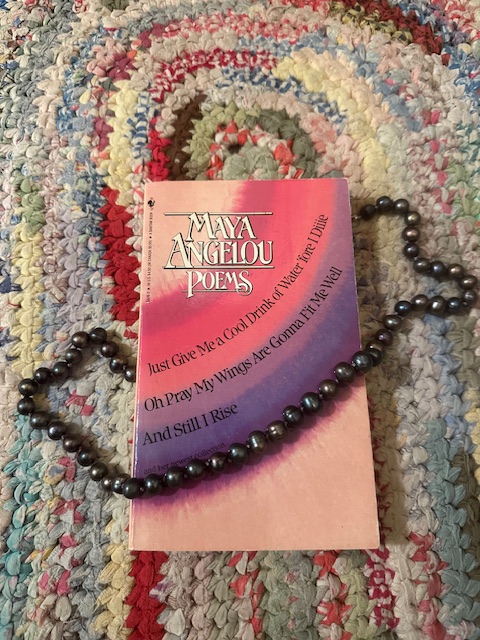
Poet and essayist Maya Angelou reminds us, “You may not control all the events that happen to you, but you can decide not to be reduced by them.” 

Pearls of Peace (PoP) Quiz

454. How might you participate in the promotion of human rights?

455. What is your first step?                   

Emodiversity Complexity

Computer Complexity

It turns out that negative emotions are useful. Whether you initially agree or not, stay tuned for a different slant on pesky emotions. Jordi Quoidbach has a Ph.D. in Psychology from University of Liège, Belgium, and spent several years as a Postdoctoral Fellow at Harvard; he studies happiness and decision-making. Quoidbach’s research into emodiversity (a piggyback idea from biodiversity) suggests, “…people who experience a diverse range of emotions…tend to be healthier, mentally and physically.” With increased emodiversity, his research found decreased depression, number of doctor visits, and days hospitalized per year in participants. 

Having emodiversity means acknowledging a variety of emotions in your day — allowing for frustration, disgust, jealousy, gratitude, tranquility, and elation. Quoidbach explains: “…it is not just having a diverse range of positive emotion, but we also find that having a diverse range of negative emotion is better than having a narrower range of negative emotion.”

My understanding of so-called “negative” emotions is that they are protectors, often shielding an individual from some unacknowledged small-t trauma situation (or a big-T trauma such as a natural disaster). When one can accept that there is a reason why a “negative” emotion pops into consciousness, there is a possibility of coping with one’s history. It is not useful to ban emotions when they can serve as maps that lead to problem solving. Often the mapping of a “negative” emotion takes one on a follow-the-memory consciousness back to an earlier year when some event triggered alarm. Such memories still sting from youngster years.

Quoidbach’s research relates to correlation, not causality. However, his steps to increase emodiversity might serve as stepping stones for a deeper dive down memory lane’s complexity:

  1. Create an Emotions Matrix
    • Audit your emotions for a week. Jot down each emotion you recognize in quadrants: 1. Pleasant, high-energy emotions (joy or excitement are examples); 2. Pleasant, low-energy emotions (perhaps serenity or relief); 3. Unpleasant, high-energy emotions ( such as anger or disgust); 4. Unpleasant, low-energy emotions (boredom or sadness are examples).
    • Ask, “Why am I not more diverse? Am I afraid of experiencing specific feelings? Maybe [that’s] because I’m afraid that some stuff will come out?”

       2. Put Yourself in Situations That Evoke Certain Emotions

    • Establish the areas in which you may want to expand your emotional life. Recognize how often you evoke those feelings.
    • Recognize if you never feel angry; it may suggest that some inner conversations could prove useful.
    • Also, if you are constantly chatty and cheerful, consider experiences that allow for you to be still and calm.

    3. Expand Your Emotional Vocabulary

    • Make an effort to name your emotions. Then expand your emotional vocabulary. It could prove useful to use words from ancestral native languages.
    • Quoidbach relates, “When you learn new words for emotions, you start paying attention to situations differently… you expand the range of emotions you experience.”

    Pearls of Peace (PoP) Quiz

    452. When are you most aware of your emotions?

    453. Are there times when you feel shame for an emotion?

    Swimming Times

    As I watched salmon swim upstream to spawn last week, I marveled at their persistence. Salmon are genetically programmed to swim to the precise water of their birth to lay their eggs. Salmon hatch in a fresh-water birth before migrating downstream to the saltwater ocean for about 4 years. Through magnetoreception and their sense of smell, most salmon know how to swim back to their birthplace. They spawn in the stones of gravel beds of small creeks. Some eggs are not under gravel for protection; I saw sea gulls trolling a stream for a take-out order of the small-pea-sized snack.

    Each female salmon can lay up to 3000 eggs. After several months the eggs hatch into larvae with attached lunch bags; each “sac” holds some remaining yolk for feeding. When they run out of yolk, they must leave their gravel nest and begin eating plankton. It takes up to 3 years to become good swimmers and gain their camouflage spots. They also grow silvery scales to visually confuse future predators. Their resilience and adaptability are impressive despite dire odds. An estimate is that out of one salmon’s 2000-3000 eggs, only 4-5 survive for an ocean adulthood.

    Salmon form “schools” or community with other salmon; they swim far from spawning territory to find deep-sea feeding. In returning “home” they stop eating. Despite their great stamina, they face many trials. They experience exhaustion. Death from high temperatures, parasites, and disease are possibilities for those that escaped predators such as seals, sea lions, sharks, orca whales and human fishing. The Pacific salmon and most Atlantic salmon die within a couple of weeks post-spawning. In the circle of life, salmon decomposing bodies release inorganic nutrients to the plankton. Scavenger animals descend. Change is constant.

    We can identify with salmon and their challenging upstream-swimming effort. Adaptability and resilience are requirements for human constant changes.

    Weather changes deliver spontaneous opportunities for adaptability. During a 1-hour morning trip to Seattle, there were 4 periods of fog suddenly dropping a dusty curtain that felt as though dusk was fast approaching. Fog is visually confusing. Cars adjusted their speed initially. With similar weather stealth, brilliant sunshine swept the highway clean each time. Sightlines were sparkling again.

    Isn’t this the way one’s consciousness drifts from cognizant present time to murky moments where timely vision seems impaired? Weather changes are as sudden as consciousness changes. When murky moments take over, there can be dire consequences.

    Perhaps our most important moments occur when we catch ourselves losing track of clear-sightedness. We must choose our focus. We must find our swimming community. We must be persistent. As Bob Dylan reminded us in 1964, The Times They Are A-Changin’ — “If your time to you is worth saving / Then you better start swimmin’ or you’ll sink like a stone.”

    Pearls of Peace (PoP) Quiz

    450. When you realize your murky moments settling like thick fog, how do you emerge from this state of mind?

    451. How might you increase your resilience and adaptability?    

    Tender Gratitude

    “Thankfulness finds its full measure in generosity of presence, both through participation and witness. We sit at the table as part of every other person’s world…this is the essence of gratefulness…Thanksgiving happens when our sense of presence meets all other presences. Being unappreciative might mean we are simply not paying attention” (Canadian American cultural writer David Brooks, How to Know a Person: The Art of Seeing Others Deeply and Being Deeply Seen).  

    Another writer’s definition of gratitude also aligns with the importance of attention in the present moment: “Gratitude is not a passive response to something we have been given; gratitude arises from paying attention, from being awake in the presence of everything that lives within and without and beside us. Gratitude is not necessarily something that is shown after the event, it is the deep, a-priori state of attention that shows we understand and are equal to the gifted nature of life” (Irish poet David Whyte, Consolations: The Solace, Nourishment and Underlying Meaning of Everyday Words).  

    Yes, “presence” is key to the experience of gratitude! As Thanksgiving emerges this week into present time, it is a reminder that we might consider being present to gratitude more of the year than on the annual Thursday holiday when many of us gather together to contemplate our blessings. I am reminded that not everyone in America celebrates this day. The distorted narrative of the Pilgrims feasting with indigenous people — who had long settled this land prior to the newcomers’ landing — is disturbing.

    On our precious planet we need to be “tender narrators,” a phrase delivered by Polish psychologist-turned-novelist Olga Tokarczuk when she received the Nobel Prize in Literature for her entire writing in 2018. A tender narrator considers the big picture: “…a perspective from where everything can be seen. Seeing everything means recognizing the ultimate fact that all things that exist are mutually connected into a single whole, even if the connections between them are not yet known to us…[it] also means a completely different kind of responsibility for the world, because it becomes obvious that every gesture ‘here’ is connected to a gesture ‘there,’ that a decision taken in one part of the world will have an effect in another part of it, and that differentiating between ‘mine’ and ‘yours’ starts to be debatable.” Is American soil “mine” or “ours?”

    In gratitude for her genetic roots, Tokarczuk recalls curiosity about everything. Her wide-eyed life view enables her to make connections that may not be obvious initially. While she invents stories for her novels, she sums up what I endorse as a writer of nonfiction and blogs: “…I made it into a general belief…that our task is to synthesize and consolidate the world, looking for connections, both overt and hidden, and building an image of the world as a complex whole full of mutual relations.” Let’s be grateful for mutual relations.

    Pearls of Peace (PoP) Quiz

    448. What prompts gratitude in you?

    449. How often do you express gratitude out loud?   

    Rewiring our Democracy Pearl

    Are you rewiring this autumn? Anytime works for rewiring your thinking for your well-being and others’ well-being, although one might devote more energy to brain rewiring with more indoor time in autumn’s cooldown temperatures. Daylight is less available (depending on one’s location). I embrace this perception from John Steinbeck’s 1941 book, The Pearl: “It is the hour of pearl—the interval between day and night when time stops and examines itself.” It has been decades since I read this novella, but Steinbeck’s story about a Native American pearl diver, Kino, seems important to lift up in these times. Kino’s insecure income, healthcare refused due to a lack of money, and the tested values of a man who finds sudden wealth, are relatable themes today.

    This is the hour to reimagine the pearl of democracy, a precious concept that appears under threat. In simple terms, democracy is about empowering citizens to hold free/fair elections and upholding the rule of law which promises equal protection for all. The well-being of all people is implied. The Statue of Liberty does not discriminate. Emma Lazarus’ welcoming words represent the underpinnings of democracy: “Give me your tired, your poor, Your huddled masses yearning to breathe free, The wretched refuse of your teeming shore, Send these, the homeless, tempest-tossed to me, I lift my lamp beside the golden door!”

    I have listened to a weekly 6-part series of lectures from Stanford University on “Reimaging Democracy.” The final guest speaker in the series was former Secretary of State Condoleezza Rice. Her words sting with a sharp truth: “The Congress is not working very well, not legislating well…the executive branch puts out orders; the judicial court challenges. We only have two branches working. We are windshield wiping back and forth.”   

    It is a stormy season in our democracy. But change can come after tough times. Often it is in our rugged struggles that we might be inclined to examine our actions. Dr. Rice advises that folks discard the (fixed) mindset, “Because I think it, it must be true.”  She advocates that learning to listen is key. This was a bit of synchronicity for me, as I was preparing for my volunteer activity with a YMCA-sponsored after-school project at a local middle school. My focus was on listening and resilience exercises. These young adolescents appeared more perceptive than many adults regarding their thoughts on listening! Their candid comments set a truth learning-curve for all. One boy offered that he pretends to listen to someone when he is NOT listening. What if we had this degree of candor in Congress? Is Listening 101 ever discussed there?   

    The Statue of Liberty’s original copper torch was leaking from rainstorms and corrosion. It was determined that the damaged torch should be replaced (7-4-1984). A rewired torch was installed. Let’s reexamine and rewire democracy.

    Pearls of Peace (PoP) Quiz

    446. When have you pretended to listen to another person, but you knew you were NOT listening?

    447. What does reimagining democracy mean to you? 

    Community Engagement

    Poet Marge Piercy can pierce everyday thinking with her outer/inner connections:

    “Under a sky the color of pea soup / she is looking at her work growing away there / actively, thickly like grapevines / …Keep tangling and interweaving and taking more in / a thicket and bramble wilderness to the outside but to us / interconnected with rabbit runs and burrows and lairs….”

    A garden is an interconnected community. Animal and human workers everywhere co-exist because of interconnected communities. If this is the way of our world, why are politicians not acting like an interconnected community?

    I am heartened to learn about many interconnected nonprofit organizations in the U.S. One compassionate community organization was a one-man operation in Olympia, WA until people talked about “Souper Sunday” with their friends on social media. Online exposure catapulted a national sharing of Chris Hyde’s simple idea; using left-over vegetables from his garden, he invited folks over for homemade soup. “People were really divided and isolated,” he said of his 2023 brainstorm idea. “At first only a few people came out. But every week it grew. I soon had 20, 40, 80 people come.”

    A neighbor commented on the power of Hyde’s actions: “I’m not naturally outgoing, and forming a sense of community has never come easily to me. When I moved here…I didn’t know a soul. But Chris’s group became my first real feeling…as my place, my home.” The volunteer soup-makers might deliver soup to neighbors with mobility challenges or those who have mental health issues. Their engagement not only reaches those with food insecurity but offers the nurturance of shared connections for both cooks and guests. The fledgling nonprofit expanded locally from 5-12 neighborhood chapters of Souper Sunday.

    A nonprofit I have supported for decades is Parenthesis, now part of a larger nonprofit, New Moms, in Chicago. Parenthesis began with two compassionate women, Sunny Hall and Cathy Blandford, starting morning drop-in programming; parents obtained low-cost or no-cost childcare while participating in Parent Parlor workshops and/or finding quiet for some work hours. I delivered workshops, gave pro-bono supervision to social work staff, and served on an advisory board, along with many other volunteers. Now, New Moms not only enriches a previous shoestring budget, but provides housing for young single mothers with precious babes. Every child receiving the right dose of a secure attachment, a peaceful and safe home life, and adequate education lifts ALL families’ futures. Violence prevention begins in the cradle. It helps when nations create a peaceful zeitgeist.

    I was privileged to hear ever-wise Buddhist monk Thich Nhat Hanh speak in Chicago in 2003: “…we need a brother or sister to assist us in difficult moments…one nation should have the opportunity to tell all the other nations about her own sufferings, difficulties and deep aspirations…[and have] every brother and sister listen….”

    Can a planet survive without such interconnected engagement?

       Pearls of Peace (PoP) Quiz

    444. What community engagement do you endorse?

    445. How might you extend interconnected engagement globally?  

    Purpose Pearls

    At age 80 Betty Kellenberger becomes the oldest woman to ever hike the entire 2000-mile Appalachian Trail. While Kellenberger grew up in Michigan, she always had a fascination with seeing the Georgia-to-Maine landscape along the Appalachian Trail. Her imaginings materialized when she retired and had a 6-month timeframe to devote to her dream.

    Like fulfilling many dreams, the reality of inevitable along-the-way struggles is daunting. Kellenberger faced bruising, dehydration, falling, a concussion, Lyme disease, and hurricane damage to trails in the South. She had to change her route heading north. Then cold weather forced a pause until spring. She also experienced inner pauses, both on the trail and upon completion: “You hike alone, and so you have your thoughts…You have so many emotions because you’re excited about finishing,” she recalled. “I was really looking forward to saying, ‘I am done.’ But you also know you’re going to miss this big-time. You’re not going to have what you have out on that trail. That peace, the serenity.”

    Kellenberger’s decades-long teaching career was teaching English and social studies to seventh graders, along with night classes for adults. Having achieved her Appalachian Trail dream, she ponders what comes next. This transition time is where life’s dreams require rewiring. There are many choices of how to spend one’s time in retirement and how to create a sense of purpose.

    Some, like 100-year-old Jiro Ono, famed chef and restaurant owner of Sukiyabashi Jiro in Tokyo, are never-retire advocates. While Ono has passed the baton to his son as head chef, he maintains that the secret to longevity is to keep working! And yet, he must rewire to accommodate his Centenarian body’s needs as he realizes that his hands “…don’t work so well…I can no longer come to the restaurant every day…but even at 100, I try to work if possible. I believe the best medicine is to work.”

    Ono’s health habits include no alcohol, regular walks, and to no one’s surprise, eating well. He continues serving and eating sushi as the first sushi chef to earn 3 Michelin stars. He is the oldest head chef of a three-star restaurant. What possibly could be his next purpose? Yes, he has one! Ono wants to outlive Japan’s oldest man who died at age 113.  

    Both Kellenberger and Ono are seasoned citizens who believe in living with purpose. Hopefully, purpose in one’s life starts at an early age, but an overarching purpose in one’s life can change. Life transitions often are a time of upheaval; they may signal either decline and/or renewal to dream big after a muddling-through stage. No matter what your current age or circumstances may be, start affirming purposes that have meaning for you. Please know that you can rewire at any age!

    The following questions come from my book, Transforming Retirement: Rewire and Grow Your Legacy.

    Pearls of Peace (PoP) Quiz

    442. What are you doing with your precious time today?

    443. What kind of rewiring might you tinker with today?

    Inter-being Connections

    Ugo Rondinone, Soul, Galerie Eva Presenhuber, Zurich, 2013

    I read the book that my graduate school, Boston University, asked students to read as they began this new academic year. The choice was British novelist Samantha Harvey’s Orbital (2024 Booker Prize winner), about 6 astronauts on the International Space Station (actually 4 astronauts — American, Japanese, British, Italian — and 2 Russian cosmonauts). The novel was a fascinating blend of out-of-this-world details of living/working without benefit of gravity and the daydream/nightdream lives of the intrepid souls onboard.

    Purposedly, I had not read the reviews before my own reading. I find that a reviewer’s comments often tell more about the reviewer than about a book. In any case, reviews were mixed. On the plus side, reviewers found Harvey’s writing “beautiful…contemplative.” She describes Earth as having fragility. Through the eyes of astronauts there were worries about personal fragility, like fending off nausea, while zooming around Earth 16 times a day in mind-dizzying circles.

    Negative reviewers commented on “minimal plot,” a “lack of traditional character development” and finding “philosophical musings…lacking in substance.”

    What caught my attention was how similar the international astronauts were in terms of their emotions. This should not be a surprise. The author places readers into a spacey, weightless interconnection with Planet Earth alongside the sacred space of weighty troubles of everyday people – a mother’s death, another’s unhappy marriage, and a third astronauts’ sick relative.

    I agree with the reviewer who noted that the reader feels as if they “were up there with them” for the one day, a Tuesday, that the story unfurls in captivating description: “Over its right shoulder the planet whispers morning – a slender molten breach of light…they have each at some point been shot into the sky on a kerosene bomb, and then through the atmosphere in a burning capsule with the equivalent weight of two black bears upon them.” 

    I appreciated a review from James Wood (in New York Times) commenting on earlier literary figures who longed to know what it would be like to travel in an airplane, but they were never afforded the opportunity: “…the poets and novelists who moved naturally from the mundane to the massive, who saw God and knew death and narrated time, who sensed that, beyond this ‘mundane egg’ (Blake) ‘This World is not Conclusion’ (Dickinson).”

    Harvey’s haunting narrative can border on the poetic: “Some alien civilization might look on and ask: what are they doing here? Why do they go nowhere but round and round?”

    Swiss sculpturer Ugo Rondinone also offers stark commentary on human nature in his Soul figures. While his primitive blocks of bluestone are not chiseled into perfection, as quarry trauma in the form of drill-holes and splits are visible, his overall repetition of forms makes a statement. Each individual sculpture is titled an emotional state – “The “Affectionate,” “The Surprised,” The Frisky,” “The Concerned.” We can identify. It’s called inter-being.

    Pearls of Peace (PoP) Quiz

    440. What are your views of space travel?

    441. How do you interpret your own round-and-round days?    

    Democracy Pearls

    Sitka spruce tree, 1000 years old (191 ft. tall, 55 ft in circumference), Quinault Rain Forest, WA

    Just as the “world’s largest spruce tree” appears to have a tilted top, democracy seems tilted these days. Let’s imagine that like the massive and strong roots of this magnificent Sitka spruce tree, the massive and strong roots of democracy can hold steady.

    Stanford University is sponsoring a webinar series called “Reimaging Democracy.” When I first received the email invite, my unspoken question was to ponder why we have to “reimagine” something that we were taught –  from childhood onward – was an American birthright.

    Professors of Law at Standford, Jud Campbell and Fred Smith, opined about whether our country is experiencing a “constitutional crisis.” This is unsettling territory. Neither of the professors believe that we have “crossed the Rubicon,” but each used phrases like these: “…a moment of transformation…a moment of uncertainty…there are increasing signs that we are at greater risk…people use politics to solve problems.” Interviewer Bernadette Meyler asked a burning question of each speaker: “What keeps you up at night?” Smith answered with his own question: “Are we going to have fair and free elections?” Campbell added, “I share that fear as well. To say something different, we have come out of differences before, but the information system today of divided opinion may not come together.”   

    In an earlier webinar of this series, American political scientist Francis Fukuyama was featured. His book, The End of History and the Last Man combined philosophical notions from earlier centuries. A strong influence upon Fukuyama was Plato (428-347 B.C.) who is attributed with this idea of democracy: “…dealing with all alike on a footing of equality, whether they be really equal or not.” Add another 1000+ years, and a German philosopher, George Wilhelm Friedrich Hegel (1770-1831), was another influence with his vision that each period of history is an improvement on prior eras. Does such “old guard” thinking prevail today? Equality is challenged on many fronts. Can current history be considered an “improvement” from prior times?  

    Is democracy up for grabs? If so, whose hands are going to catch a democracy that seems off-kilter, as if it were tossed into thin air?

    I watched a kite flyer trying to maneuver strong headwinds and determined rain along the Pacific Ocean this weekend. The kite dipped and swerved with jagged and jerky motions as if it might plunge from the sky at any moment. However, despite kite trauma, I did not see the kite fall. I do not see democracy falling either. There are checks and balances in a democracy. It is up to each citizen to call for checks and balances in times of questionable circumstances.

    Lyrics from Canadian singer-songwriter Leonard Cohen’s “Democracy” seem pertinent:

    “Sail on, sail on

    O mighty Ship of State!

    To the Shores of Need

    Past the Reefs of Greed

    Through the Squalls of Hate

    Sail on, sail on, sail on, sail on.

    Pearls of Peace (PoP) Quiz

    438. How do you define equality?

    439. What does democracy mean to you?    

    Saying YES to Hope

    Cutthroat Lake (Named after the local cutthroat trout), North Cascades, WA

    English primatologist and anthropologistJane Goodall is an inspirational leader. Her messages for planetary health were still percolating as she entered her 90’s. In celebrating her birthday in 2024, Goodall said in an interview on TODAY,” Slow down, Jane, you’re 90.”  Then she concluded, “I have to speed up because I don’t know how many years left I have.”

    Goodall gave her final public interview just 8 days before she died on a U.S. speaking tour 10-01-25 at age 91. Longtime assistant Mary Lewis reported working with Goodall on a document at 10:30 PM just hours before Goodall died while sleeping.

    UN Messenger of Peace Goodall found that the question most asked of her was this one: Do you honestly believe there is hope for our world…for the future of our children and grandchildren? Her answer was a stalwart YES — with a call to action: I believe we still have a window of time during which we can start healing the harm we have inflicted on the planet – but that window is closing. If we care about the future of our children and theirs, if we care about the health of the natural world, we must get together and take action…Many people understand the dire state of the planet – but do nothing about it because they feel helpless and hopeless.” 

    Goodall sustained a keen sense of hope that can serve as a legacy. She exudes hope in The Book of Hope: A Survival Guide for Trying Times co-authored by Douglas Abrams, with Gail Hudson. Abrams proposed this dialogue-with-Jane book after his Book of Joy with The Dalai Lama and Archbishop Tutu.

    Goodall lists 4 reasons for hope despite “a time of fear:”

    1. The amazing Human intellect; 2. The resilience of Nature; 3. The power if young people; and 4. The indomitable Human Spirit.

    Roots & Shoots programming initiated by Goodall in 1991 is a prime example of youthful power. While the fledgling environmental project began with 12 high schoolers in Dar es Salaam, Tanzania, today Roots & Shoots hands-on programming exists in 100 countries. The purpose is to train youth to create positive changes for animals, the environment, and their local communities. It is the embodiment of hope.

    Saying YES to hope is key to many present-day predicaments. Saying YES means taking power. In the children’s book, A Million YES’s, author D.J Corchin (with illustrator Dan Dougherty) describes the contagion of positive actions: “Word got around quickly. The girl suddenly made more and more friends who all lined up for her incredible YES’s.”

    Jane Goodall was a practical and philosophical role model: “You won’t be active unless you hope that your action is going to do some good. So you need hope to get you going, but then by taking action, you generate more hope. It’s a circular thing.”

    Say YES to active hope.

    Pearls of Peace (PoP) Quiz

    436. What gives you hope?

    437. How might you say YES more often to make positive environmental changes?