Lost and Found Pearls

Joy and grief are a whirling wheel [attributed to Hindu philosophy].

The wheels of loss keep whirling, crisscrossing the globe with trails of grief. According to the Geneva Academy of International Humanitarian Law and Human Rights, 110 armed conflicts are being watched; some spill blood into the evening news, yet many escape coverage despite having lasted for decades. Why are there so many unchecked human-rights violations?

The answer is not just having more laws and lawyers trained in international law. International law seemingly cannot keep up with so many atrocities, especially concerning unattended children who cannot tell someone about being abducted and/or trafficked.

The United Nations reports a 25% rise in grave violations against children in the third consecutive year with escalating reported incidents. The report of the UN Secretary-General on Children and Armed Conflict describes a “blatant disregard for international law and the rights and special protections of children by all parties to conflict.” Children under 18 are to be prohibited from recruitment and use as soldiers, but protection edicts are not followed.

The Convention of the Rights of the Child celebrated its 35th anniversary in 2024, yet the crisis of human rights violations keeps whirling. We cannot be complacent and believe that other countries have more abuse of rights than the U.S. Just this past weekend another U.S. school shooting took place. This time the precious student lives lost or injured were college students at Brown University.

You might ask, when does the wheel turn to joy?

It seems that we will have to rely upon the very youth who have been victims of violations to get us out of our collective abyss. A survivor of the 2019 Margory Stoneman Douglas High School shooting in Parkland, FL, Cameron Kasky (now 25), is an ardent activist for gun control. Kasky commands attention and gives hope. He recently announced his bid to run for the Congressional seat of retiring Jerry Nadler.

After the Brown University shooting, Kasky delivered a passionate TV interview. He does not believe that the Parkland, FL perpetrator should be held solely responsible for the horror created. Systemic problems in America need to be addressed according to Kasky. It is joyful to see youthful power step forward with conviction and leadership.

I found posters inside the doors of women’s toilet stalls in the Orlando airport a few years ago: “Stop Human Trafficking – There is a Way Out.” Initially I shuddered to think that this was a necessary intervention. But acknowledging my second thought, I realized that each girl who finds this pearl of help and learns nonverbal hand signals for H (human) and T (trafficking) might save herself. Our youth will lead the way to human rights.

Poet and essayist Maya Angelou reminds us, “You may not control all the events that happen to you, but you can decide not to be reduced by them.” 

Pearls of Peace (PoP) Quiz

454. How might you participate in the promotion of human rights?

455. What is your first step?                   

Rewiring our Democracy Pearl

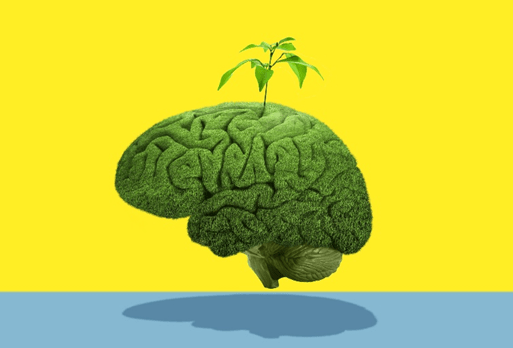
Are you rewiring this autumn? Anytime works for rewiring your thinking for your well-being and others’ well-being, although one might devote more energy to brain rewiring with more indoor time in autumn’s cooldown temperatures. Daylight is less available (depending on one’s location). I embrace this perception from John Steinbeck’s 1941 book, The Pearl: “It is the hour of pearl—the interval between day and night when time stops and examines itself.” It has been decades since I read this novella, but Steinbeck’s story about a Native American pearl diver, Kino, seems important to lift up in these times. Kino’s insecure income, healthcare refused due to a lack of money, and the tested values of a man who finds sudden wealth, are relatable themes today.

This is the hour to reimagine the pearl of democracy, a precious concept that appears under threat. In simple terms, democracy is about empowering citizens to hold free/fair elections and upholding the rule of law which promises equal protection for all. The well-being of all people is implied. The Statue of Liberty does not discriminate. Emma Lazarus’ welcoming words represent the underpinnings of democracy: “Give me your tired, your poor, Your huddled masses yearning to breathe free, The wretched refuse of your teeming shore, Send these, the homeless, tempest-tossed to me, I lift my lamp beside the golden door!”

I have listened to a weekly 6-part series of lectures from Stanford University on “Reimaging Democracy.” The final guest speaker in the series was former Secretary of State Condoleezza Rice. Her words sting with a sharp truth: “The Congress is not working very well, not legislating well…the executive branch puts out orders; the judicial court challenges. We only have two branches working. We are windshield wiping back and forth.”   

It is a stormy season in our democracy. But change can come after tough times. Often it is in our rugged struggles that we might be inclined to examine our actions. Dr. Rice advises that folks discard the (fixed) mindset, “Because I think it, it must be true.”  She advocates that learning to listen is key. This was a bit of synchronicity for me, as I was preparing for my volunteer activity with a YMCA-sponsored after-school project at a local middle school. My focus was on listening and resilience exercises. These young adolescents appeared more perceptive than many adults regarding their thoughts on listening! Their candid comments set a truth learning-curve for all. One boy offered that he pretends to listen to someone when he is NOT listening. What if we had this degree of candor in Congress? Is Listening 101 ever discussed there?   

The Statue of Liberty’s original copper torch was leaking from rainstorms and corrosion. It was determined that the damaged torch should be replaced (7-4-1984). A rewired torch was installed. Let’s reexamine and rewire democracy.

Pearls of Peace (PoP) Quiz

446. When have you pretended to listen to another person, but you knew you were NOT listening?

447. What does reimagining democracy mean to you? 

Saying YES to Hope

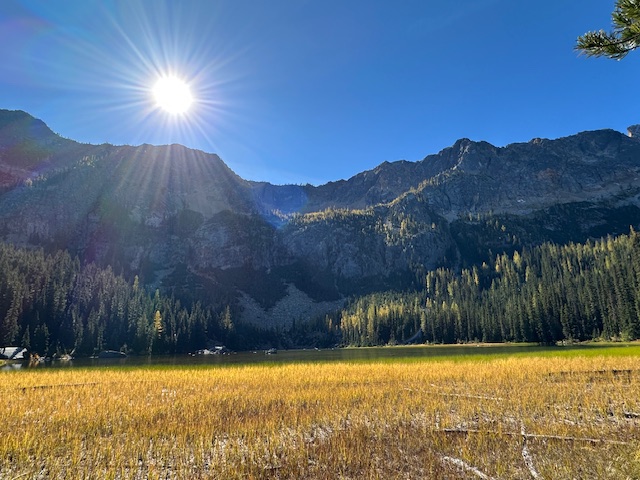
Cutthroat Lake (Named after the local cutthroat trout), North Cascades, WA

English primatologist and anthropologistJane Goodall is an inspirational leader. Her messages for planetary health were still percolating as she entered her 90’s. In celebrating her birthday in 2024, Goodall said in an interview on TODAY,” Slow down, Jane, you’re 90.”  Then she concluded, “I have to speed up because I don’t know how many years left I have.”

Goodall gave her final public interview just 8 days before she died on a U.S. speaking tour 10-01-25 at age 91. Longtime assistant Mary Lewis reported working with Goodall on a document at 10:30 PM just hours before Goodall died while sleeping.

UN Messenger of Peace Goodall found that the question most asked of her was this one: Do you honestly believe there is hope for our world…for the future of our children and grandchildren? Her answer was a stalwart YES — with a call to action: I believe we still have a window of time during which we can start healing the harm we have inflicted on the planet – but that window is closing. If we care about the future of our children and theirs, if we care about the health of the natural world, we must get together and take action…Many people understand the dire state of the planet – but do nothing about it because they feel helpless and hopeless.” 

Goodall sustained a keen sense of hope that can serve as a legacy. She exudes hope in The Book of Hope: A Survival Guide for Trying Times co-authored by Douglas Abrams, with Gail Hudson. Abrams proposed this dialogue-with-Jane book after his Book of Joy with The Dalai Lama and Archbishop Tutu.

Goodall lists 4 reasons for hope despite “a time of fear:”

  1. The amazing Human intellect; 2. The resilience of Nature; 3. The power if young people; and 4. The indomitable Human Spirit.

Roots & Shoots programming initiated by Goodall in 1991 is a prime example of youthful power. While the fledgling environmental project began with 12 high schoolers in Dar es Salaam, Tanzania, today Roots & Shoots hands-on programming exists in 100 countries. The purpose is to train youth to create positive changes for animals, the environment, and their local communities. It is the embodiment of hope.

Saying YES to hope is key to many present-day predicaments. Saying YES means taking power. In the children’s book, A Million YES’s, author D.J Corchin (with illustrator Dan Dougherty) describes the contagion of positive actions: “Word got around quickly. The girl suddenly made more and more friends who all lined up for her incredible YES’s.”

Jane Goodall was a practical and philosophical role model: “You won’t be active unless you hope that your action is going to do some good. So you need hope to get you going, but then by taking action, you generate more hope. It’s a circular thing.”

Say YES to active hope.

Pearls of Peace (PoP) Quiz

436. What gives you hope?

437. How might you say YES more often to make positive environmental changes?

Anger Remedies

As a long-time student of problem-solving and conflict resolution, I am troubled by the news cycle of raw conflicts in our country. Animosity too often turns to not-so-veiled threats or violent behavior against an imagined “other.” Political individuals report a slew of death threats and in some unbelievable instances, they or their family members have been violently attacked. Anger is palpable from town hall meetings to houses of worship.   

Margaret Cullen, a marriage and family therapist as well as a mindfulness teacher, identifies what is happening when anger’s slippery slope devolves into cruelty and/or violence. She gives a first-person accounting: “When I reflect honestly, I notice that my most volatile reactions are tied to things I hate in myself—places I’ve missed the mark or failed to live up to my own ideals. Outrage becomes a shield, a projection, a way of disowning what is hard to face internally…easier to demonize the other than to wrestle with my own complicity.”  Such truth-telling seems like a place to begin a much-needed remedy to anger.

Cullen’s upcoming book, Quiet Strength: Find Peace, Feel Alive, and Love Boundlessly Through the Power of Equanimity, might be required reading for politicians. As Cullen outlines her approach, an ethical value system is key: “Simply put: Unethical conduct breeds agitation; ethical conduct fosters peace. And agitation is fertile ground for outrage and projection to take root. Throw in some social media and global instability, and you are well on your way to zealotry. Peace is fertile ground for perspective and clarity to grow. Toss in some honest self-reflection and an intention for greater integrity, and you can harness the energy of outrage toward creative solutions and effective engagement.”

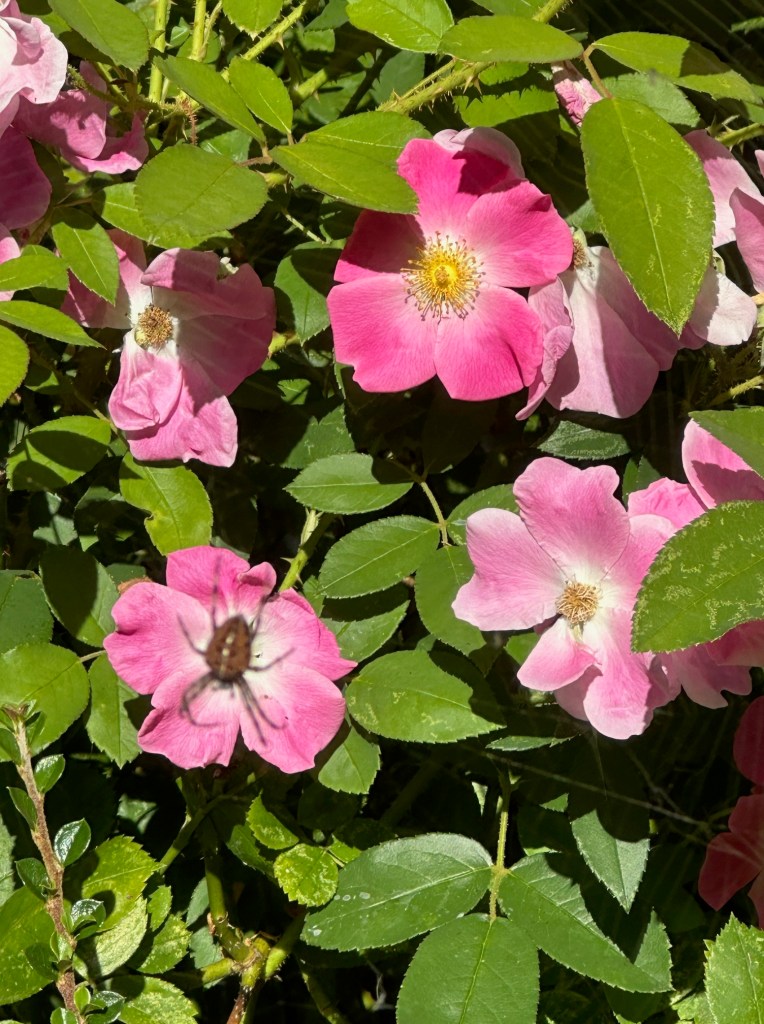
Yes, self-reflection, insight, and an awareness of one’s value system are always a good idea, whether the topic is anger or anything else. However, we do not see things clearly much of the time. We experience anger or some other strong emotion and imagine that it is “justified.” We do not recognize that our anger rides shotgun in the front seat of our personality pickup truck as a protector from fear, insecurity, and other tender parts of ourselves. I reflected upon this lack of self-clarity when I looked through a clouded-over glass window in a door in my new home. The murky window blocked my view of roses growing outside this doorway. Once the double-pane failed glass was replaced, roses could be appreciated with clear sightlines.   

I appreciate the metaphor in a Scottish tune, Looking at a Rainbow Through a Dirty Window (by Scottish Uilleann piper and flute player Calum Stewart, arranged for harp by Rachel Hair). Listening to peaceful music, especially with others, is a remedy for what ails. https://www.youtube.com/watch?v=Pyp3p3gRQcQ

Are you looking for rainbows and peaceful, creative solutions these days? I am.

Pearls of Peace (PoP) Quiz

431. When do you catch yourself projecting your own outrage onto an “other” person?

431. How might we best enhance ethical conduct in groups of people?                   

Every Day is Earth Day

We celebrate our 55th anniversary of Earth Day with its theme, “Our Power, Our Planet.” The global focus for this year is energy – solar, wind, hydroelectric, geothermal, and ocean tidal-generated energy. Themes chosen each year gather collective plans for facing facts on ticking-clock climate awareness where it seems most needed. President of EarthDay Organization, Kathleen Rogers, delivers a summons: “The collective power of a billion voices is vast and one billion people speaking out on an issue is hard for governments, institutions, or industry to ignore.” Yes, but how many believe (or care) there is climate change?

Earth Day was initiated by Wisconsin U.S. Senator Gaylord Nelson. His foresight of impending climate issues led Americans in 1970 to advocate for environmental reforms. Establishing the Environmental Protection Agency (EPA) has roots in this movement. By 1990 Earth Day extended to 141 countries. In 2016 the Paris Agreement signed by 175 countries at the United Nations was a commitment to limit global temperature rise. The 192 countries currently observing Earth Day make it the largest global secular celebration.

Some celebrations are short-lived. On Earth Day, April 22, 2025, EPA reduction-in-force letters reached nearly 200 employees who were in limbo since their placement on “administrative leave” in February. They worked for the Office of Environmental Justice and External Civil Rights, or translated, they worked on “protecting low-income and minorities most at-risk from air and water pollution.” One employee, Ellie Hagen, received her layoff notification at 5 PM. Her whole team (Environmental Justice Community Health) was deemed “wasteful.” Hagen’s non-partisan work was to reduce lead exposure in Ohio family homes. It seems ironic that these government edict letters were delivered on Earth Day.

In March there was a rollback of environmental regulations. EPA’s “reorganization”has a proposed 65% budget-cut figure. Meanwhile, China has the world’s largest investment, as well as production, of renewable energy relying mainly on hydroelectric energy. Costa Rica has produced 98% of their electricity from renewable sources for 10 years. Sweden’s powerhouse goal is to reach 100% renewable energy by 2040.

Our precious Earth has limits. According to the Chicago Botanic Garden, one-third of plant species in the U.S. are at risk of extinction. The World Wildlife Fund (WWF), a Swiss-based international non-governmental organization (the world’s largest conservation organization), calculates that between 10,000-100,000 species become extinct each year. It is so unclear what the actual number may be. What is clear is that the current rate of extinction is due to a single species causing it – people. According to WWF, humans use 25% more natural resources than are sustainable on Earth. https://wwf.panda.org/discover/our_focus/biodiversity/biodiversity/

Whatever the actual extinction numbers are, Earth and her citizens are suffering from a biodiversity crisis. Put Earth Day on your calendar every day.

It is bloom time for the short-lived forget-me-not. 

                                                                 Pearls of Peace (PoP) Quiz

389. Is there some movement that you might join to caretake Earth for future generations?

390. What personally will you do today to return care for Mother Earth? 

Eustress/Distress: A Brain Teeter-totter

April is Stress Awareness Month (since 1992) with sponsorship by The Health Resource Network, founded by Mort Orman, M.D. https://healthresourcenetwork.org/ A non-profit in the UK, The Stress Management Society, joined sponsorship in 2023.

The theme for 2025 is #LeadWithLove. This is not some far-fetched notion but realize that “love” takes many brain moves. Love entails daily practice.  

Dr. Orman’s mission is to promote knowledge about stress and life mastery skills to cope with inevitable challenges of life. Orman lists 30 key mastery skills. Consider how often you light-up your brain for bodymind health: Emotions mastery, Relationships mastery, Advanced stress mastery, Self-discipline, Happiness creation, Honesty, Humility, Telling the truth, Integrity, Personal responsibility, Critical thinking/reasoning, Wisdom, Values, Purpose, Commitment, Communications skills, Leadership skills, Self-love, Self-esteem, Compassion, Exercise enjoyment, Love of learning, Fearless public speaking, Healthy lifestyle, Money/finances, Success mindset, Understanding human beings, Helping others, Leaving a legacy, Personal power.

Orman uses the American Psychological Association’s definition of stress: “…a normal reaction to everyday pressures but [stress] can become unhealthy…stress involves changes affecting nearly every system of the body, influencing how people feel and behave.  By causing mind-body changes, stress…affects mental and physical health, reducing quality of life.”

Most people consider stress to lead to burnout or exhaustion, but that is an incomplete understanding of stress. Stress is more similar to a brain teeter-totter; it can move in one direction, then abruptly reverse course. Stress can motivate you; it is not always negative. From a book chapter I wrote, “Families in Stress” [In S. Wadhwa Editor, Stress in the Modern World: Understanding Science and Society], there is a range to stressors in your life:  

“Endocrinologist Hans Selye made the word stress a household staple, suggesting that life would be boring without stress. Many positive family situations entail stress. Selye labeled positive stress as eustress and negative stress as distress. He created the word stressor to describe the stimulus or event that precipitates a stress response. Examples of positive stressors in the family are a child’s piano recital or sporting event, and a parent’s new job. Family distress ranges from community natural disasters like Hurricane Katrina, to inside-the-family reactions to death or illness of a loved one, to juggling a myriad of everyday decisions and deadlines. Parents need to learn how to detect smoke before their own reactions, and/or their child’s stress reactions, blaze out of control.”

Simply, we need more adults in the room, whether as models for youngsters, or as companions to other adults who have their own melt-down reactions. We all vacillate when the flames of stress reach us, but biological stress responses can save your life. Fight/fight/freeze stress reactions are biological survival mechanisms in the animal world as well as the human world.

Psychological survival is less clearcut. Many stressors relate to fear, both real and imagined future fears. “Name it to tame it,” advises psychiatrist Dan Siegel.

Pearls of Peace (PoP) Quiz

387. What is a stressor for you?

388. Is your approach lead-with-love? If not, why not? 

Attachment in Deeds

“Soft power” in politics, especially in international politics, is the practice of shaping another’s point of view through non-coercive means — as opposed to the “hard power” of coercion.  Political scientist Joseph S. Nye Jr., Professor Emeritus and former Dean of Harvard’s Kennedy School of Government, popularized the term in his 1990 book, Bound to Lead: The Changing Nature of American Power.  He further explored his theory in his 2004 book, Soft Power: The Means to Success in World Power. Nye once served as Assistant Secretary of Defense for International Security Affairs in the US. According to Nye, a country’s soft power depends upon 3 important factors in that country:

  • Culture (as attractive to others),
  • Political values (when upheld both at home and abroad), and
  • Foreign policies (when others view them as legitimate as well as possessing moral authority).

I suspect that a leader is far more capable of exercising “soft power” if they possess a secure attachment (See Pearls of Peace blogpost 02-03-25).

On a small scale compared to international political diplomacy, but no less important, let’s understand how one might participate in “soft power.” As I explained in my “Attachment in Words” blog, it is possible to develop a secure attachment even when that is not a caretaker gift offered in earliest childhood.

Let’s consider teddy bear power. I found a teacher example of transforming school discipline into a version of super-soft power. Good teachers mentor in multiple directions. In 2022 New York City middle school teacher Karen Feldman wanted to change the climate among her students. She noticed a rise in hate speech and wanted to take proactive steps. Partnering with Bear Givers, a 501(c)(3) non-profit with a “Leading with Kindness Initiative,” Feldman guided her students in detention in decorating teddy bears to be given to hospitalized children. The students added art and messages on the teddy T-shirts. They attached supportive letters.

The motto of Bear Givers is Making life more bearable (yes) through giving & receiving.” Feldman grasped the importance of having students focus on others’ plight. School populations catching onto this “soft power” approach now extend to students beyond detention walls. Teddy-bear diplomacy has included groups outside schools, such as Bar/Bat Mitzvah, Confirmation, Sweet Sixteen, and others. Bear Givers has donated over 500,000 bears and 500+ charity events have been sponsored with 100+ partnerships. https://www.beargivers.org/about

Mother Bear Project is an international 501(c)(3) non-profit that gives hand-knit or crocheted bears to children, predominantly orphans and those affected by HIVAIDS in Africa. Mother Bear knitters are individuals from all over the US and the world; both women and men knit — from ages ranging from 6-99! While there is one pattern, each creation is unique and bears (yes) the name of it’s Mother Bear. “Mother Bear” Karen McDowell, a retired teacher, shares her photo of some of her bears awaiting shipment. http://motherbearproject.org/

Pearls of Peace (PoP) Quiz

369. When have you exercised “soft power”?

370. What are your ideas for “leading with kindness?”    

Attachment in Words

Are you aware of how your words land on a listener’s ear? Words can be like poison arrows or love letters. Both your flying-missile words and thoughtful spoken or written words of caring have staying power. They are not taken back easily. Words can boomerang across generations.

Whose words are you speaking on a regular basis? We do not ask ourselves this question, as we may not be aware of the answer.  I can recall the stunned look on a client’s face when she admitted that she suddenly caught herself “sounding just like her mother” in a heated exchange with her feisty teenager in my therapy office. Her insight provided an incredible starting place for real change in the parent-child relationship. Admitting that her lashing-out response was not what she had intended, but it just “slipped out,” was a healing moment for broader family dynamics.

Much of the time adults attempt to manage activated parts of their personalities with little recognition that they replicate another’s response patterns. Generations share not only DNA but some embedded ways of speaking to one another. Rage reactions do not “come out of the blue,” but often are solidly anchored in caretaker attachment issues. Early relationships in childhood can set the pace for later attachments.

Neuropsychiatrist Dan Siegel suggests that (as early as age 7) children pick up on attachment patterns of adults in their world. Based on the early theory of British psychiatrist John Bowlby and later research by American-Canadian psychologist Mary Ainsworth and others, there are four attachment patterns. Here are representative take-away words from each pattern:

  • Secure — “People will respect what I say.”
  • Avoidant/dismissive – “I did not get what I needed; I don’t need anybody for anything.”
  • Anxious/ambivalent – “I don’t know if you are my friend or not.”
  • Disorganized – “I can’t regulate my emotions; I fragment. Under stress I can’t think straight.”

Michigan poet Will Carleton cautions: “Boys flying kites haul in their white winged birds; you can’t do that when you’re flying words. ‘Careful with fire,’ is good advice we know. ‘Careful with words,’ is ten times doubly so.”

Dan Siegel believes that parents are capable of creating secure attachments with their children even if they did not receive such caring from their caretakers. The key is being aware of an honest and coherent narrative of one’s own upbringing.

Siegel’s 4 S’s remind us how to foster secure attachments. ALL adults can improve their approach to family life and work life. Employers, heads up!

What a different world we would have if parents and employers had secure attachments!

Pearls of Peace (PoP) Quiz

367. What are your words for making sense of your childhood?

368. How do you view your attachment pattern today?     

Broaden-and-build Purls and Pearls

I cannot give away my grandmother’s crochet hook…yes, this is a scarcity mindset at work (see Pearls of Peace, 1-13-25). I am hooked on warm memories of my childhood hours in my grandparents’ home. I recall many hours that Grandma sat in her rocker, wearing her hand-sewn apron and dress, making one doily after another to gift the many females in her family and friend network. I never learned knit-and-purl stitches, but I watched with fascination as Grandma created with her crochet hook, building one stitch upon the next to broaden her handiwork. Handmade gift-giving was on her unofficial resume.  

Psychologist Barbara Frederickson created her broaden-and-build theory when she realized that there was a greater amount of research on negative emotions than positive emotions. For every positive emotion, there appear to be 3 negative ones! The reason for this disparity is that negative emotions are linked to our survival in big and small ways.

The broaden-and-build theory emphasizes that the expression of positive emotions can expand one’s repertoire of psychological, social, cognitive, and physical resources. Positiveness improves one’s resilience. It may help one’s coping skills. This approach is not meant to erase negative emotions but instead allows for the co-existence of both kinds of emotions.

A negative emotion is a protective signal that something does not “feel right.” When such emotions are brushed off, sometimes there could be dire consequences. The bodymind is a listening machine, always on lookout to protect one from physical and/or psychological harm. The idea with broaden-and-build theory is to make space for ALL emotions.

Expressing frustration in a trusted relationship is often necessary before gaining access to a more centered space where one can choose a positive action. The key is having an awareness of your positive emotions so that you can repair touchy situations. Building upon a growth mindset reminds one that others roll with negative emotions also.    

Here is a list of positive emotions that you can broaden-and-build for more resiliency. You probably do not need a list of negative emotions, as they seem ever-ready for action. However, you may miss out on positivity time if you do not have these positives tucked in your pocket for ready use:  

  • Admiration  
  • Affection
  • Altruism
  • Amusement
  • Anticipation
  • Awe
  • Cheerfulness
  • Confidence
  • Enjoyment
  • Enthusiasm
  • Euphoria
  • Gratitude
  • Happiness
  • Hope
  • Inspiration
  • Interest
  • Joy
  • Love
  • Optimism
  • Pride
  • Relief
  • Serenity
  • Surprise

Best of all, positive emotions are keep-on-giving gifts. I took interest in “crewel” (Welsh word for wool) embroidery when I was in graduate school dealing with a dissertation committee at odds with one another. I needed to broaden my outlook to create something that was positive, one stitch after another, for my own well-being. I realized that one situation is not destiny. Looking back on Grandma’s knit-and-purl self-therapy, I wonder what she was working through in her mind.  

Pearls of Peace (PoP) Quiz

361. When have you used an art form to increase your positive coping skills?  

362. How often do you catch yourself with an initial negative emotion in situations?

Big-picture Peace

Under the Wave off Kanagawa, Katsushika Hokusai (1769-1849)

The United Nations International Day of Peace, annually set for September 21st, has a request: a 24-hour ceasefire of all hostilities on the planet. This year’s theme, “Cultivating a Culture of Peace,” calls for teaching the values of dialogue (see blog, “Mend Differences through Dialogue,” 8-19-24) and mutual respect to the 1.2 billion youth worldwide. Have we given up on adults knowing how to use dialogue and mutual respect in resolving conflicts?

It seems that adult problem-solving efforts to create peace on earth are like the tiny boats facing the looming giant wave in Katsushika Hokusai’s color woodblock print, Under the Wave off  Kanagawa. I must admit that the first time I saw this captivating image in Chicago’s Art Institute years ago, I was so focused on the wave action that initially I did not see the boats! Due to being on paper, the print is only on view for 3-4 months every 5 years. This original gem has re-surfaced from protective storage and again is on display (September 5, 2024–January 6, 2025) in the Art Institute’s Ando Gallery, my favorite room in the entire museum. This time, I knew to look for the boats. What if we are looking for world peace in all the wrong places?

Most museum visitors never see the Tadao Ando Gallery, or Gallery 109, as it sits in an innermost corner of the Art Institute’s Japanese collections. It is a compact space compared to many roomy galleries in other sections of the museum. Also, it is one of the few darkened spaces.

Ando was a self-taught architect. His haunting 16 free-standing wood columns in the womb-like environment compel one to slow down, take deeper breaths, and realize that this is a bodymind immersion into a different sense of time and space. Walking through the “forest” of oak pillars creates an atmosphere of peaceful reverence; the message is to refocus your gaze and get ready to look for what is beyond this “forest” grove.

We have English writer John Heywood to thank for his catchy proverb from 1546: “Can’t see the forest for the trees.” It seems to apply to many situations today, but especially to country leaders who lack the capacity to grasp the disastrous consequences of continuing wars. While dwelling solely on certain details, the big picture is often far from sightlines. Combating inequality, advocating for human rights, and championing climate actions for our planet are factors that lie beyond the immediate details of our international conflicts.

Re-look at Hokusai’s masterpiece. Mount Fuji holds still beyond the crashing wave. Again, we almost miss seeing beyond first details. This mountain is considered a spiritual place. How might we look for big-picture peace and create an interfaith spiritual culture for world dialogues? Isn’t peace first within a baby’s heart?

Pearls of Peace (PoP) Quiz 

327. When have you caught yourself missing some big-picture viewpoint?

328. How often do you refocus your gaze in looking for solutions to your personal sense of peace?